
Most temples in Korea make you climb a mountain. Jogyesa Temple makes you cross a street. It sits two blocks from Insadong, hemmed in by office towers and bus lanes, and it is the head temple of Korea’s largest Buddhist order. Entry is free, the gates never close, and lanterns hang over the courtyard for much of the year. If you want one real, working temple in central Seoul, this is the easy yes.
The catch? It is a city temple, not a mountain retreat. Below is what you get, when to time it, and whether it deserves a slot in your Jongno day.
- 📍 Address: 55 Ujeongguk-ro, Jongno-gu, Seoul (서울 종로구 우정국로 55)
- 🕗 Hours: Grounds open 24 hours. Main halls roughly 04:00–21:00 (some visitors report later; times can shift around ceremonies)
- 💰 Price: Free. Lantern and candle offerings are optional
- 🚇 Getting there: Line 3 → Anguk Station, Exit 6, about 5 minutes. Or Line 1 → Jonggak Station, Exit 2, about 5–7 minutes
- ⏱ Time needed: 45 minutes for the grounds; 2 hours or more in lantern or chrysanthemum season
- 🔗 Pair it with: Insadong (4–5 min walk) and Ikseon-dong (10–12 min walk)
- Verified as of September 2026
Why Jogyesa Temple earns a slot in your Jongno day 🏮
Jogyesa Temple is the headquarters of the Jogye Order. That means it is busy with real worship, not staged for tourists. You will see people bowing in the main hall, lighting candles and tying wishes to lanterns. Nobody minds if you are not Buddhist. Plenty of foreign visitors walk in every day, and the mood stays warm and open.
The grounds are small enough to loop in 20–30 minutes. That is part of the charm. You can drop in for twenty minutes between Insadong and Gyeongbokgung, and it still feels like a proper stop. Step through the gate and the traffic noise fades more than you would expect.
The main hall, two old trees and small rituals
The star building is Daeungjeon, the main Dharma hall. It went up in 1938 in pine timber and was renovated in 2002–2006. Inside sit three huge gilded Buddhas, each close to five meters tall. They were freshly re-gilded in 2025, so the gold really glows.
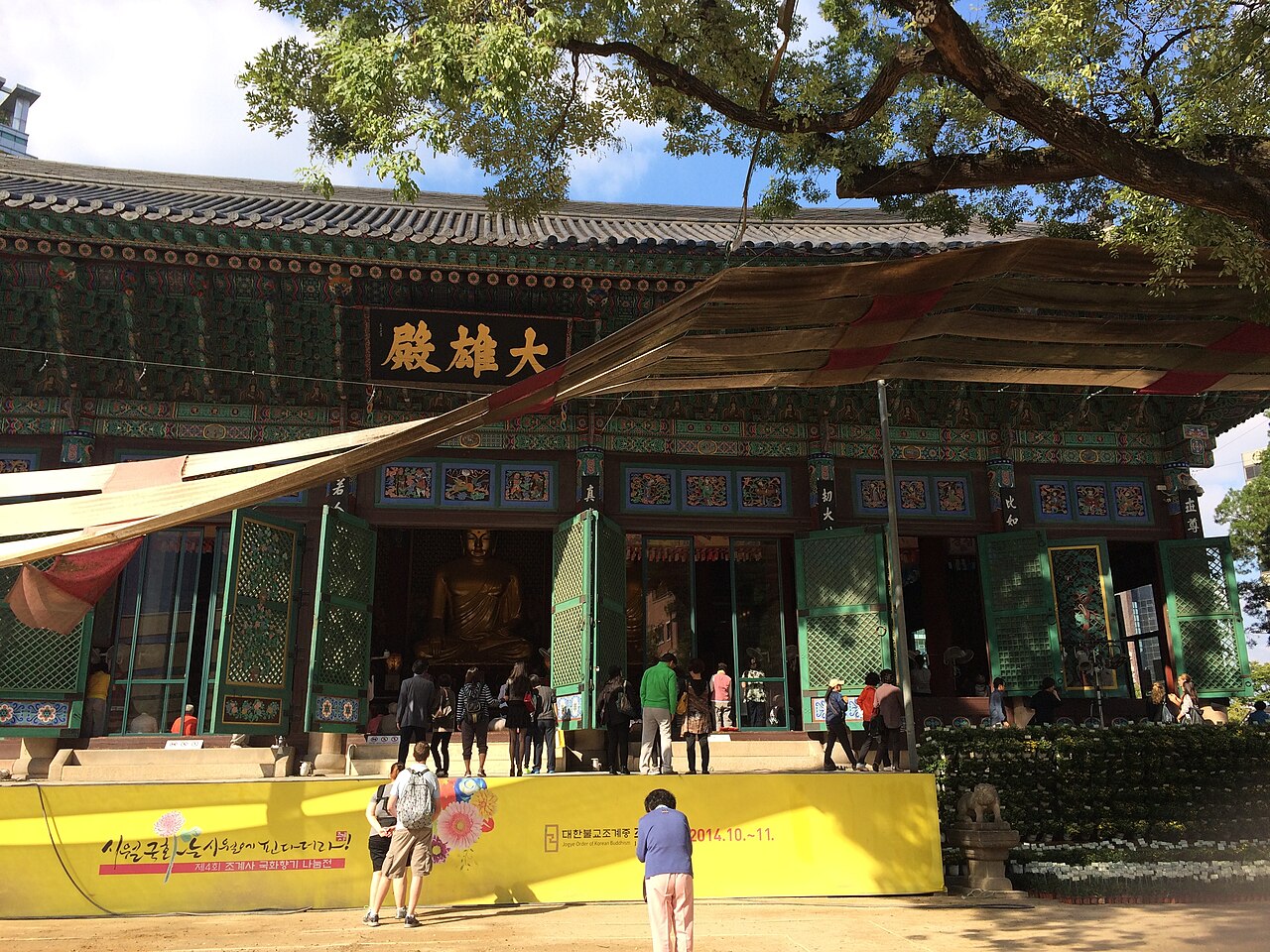
Daeungjeon, the 1938 main hall, sits right beside the temple’s centuries-old trees. Photo: Michael Sean Gallagher, CC BY-SA 2.0 / Source: Wikimedia Commons
Right beside the hall stands a lacebark pine with pale, patchy bark. It is about 500 years old and a protected Natural Monument. Sadly it is in poor health, and only the branches on the hall side still live. Look but don’t touch. Nearby, a Chinese scholar tree of around 450 years towers over the courtyard. Students and parents pray under it before big exams.
Want to do something, not just look? Light a candle or write a wish. During festivals, a drum sometimes stands by the entrance for visitors to strike three times for luck. Visitors have reported candles at about ₩7,000 and wish lanterns at about ₩30,000, but prices change. Both are optional, and nobody will push you.
Lanterns, lotuses and chrysanthemums: timing your visit 🌼
Jogyesa Temple changes its outfit through the year, and timing matters more here than at most temples. The famous sight is the lantern canopy. Thousands of colored lanterns hang over the courtyard like a painted sky, with wind chimes ringing under them. It peaks in the weeks before Buddha’s Birthday.
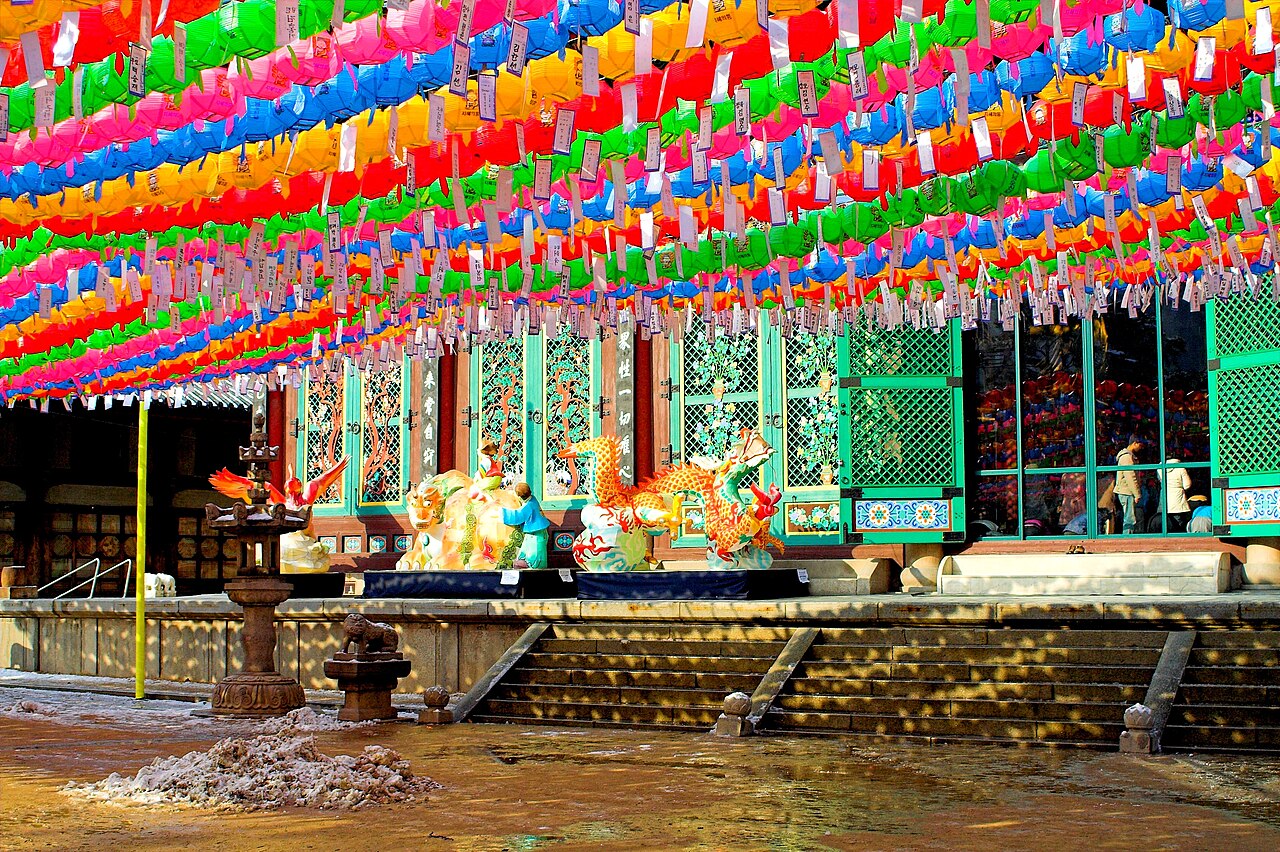
In lantern season, thousands of paper lotus lanterns roof the courtyard in front of the main hall. Photo: parrhesiastes (Flickr), CC BY 2.0 / Source: Wikimedia Commons
The 2026 lantern season and the Lotus Lantern Festival parade are already over. The next big canopy comes in spring 2027, roughly from April to mid-May (Buddha’s Birthday falls on 13 May 2027). Some lanterns stay up the rest of the year, but the full effect is seasonal.
Visiting this autumn? You are in luck. The chrysanthemum festival usually fills the grounds from early or mid-October into early November. Expect flower sculptures, themed zones and golden blooms around the main hall. The 2026 dates have not been announced yet, so check the temple’s notices before you go.
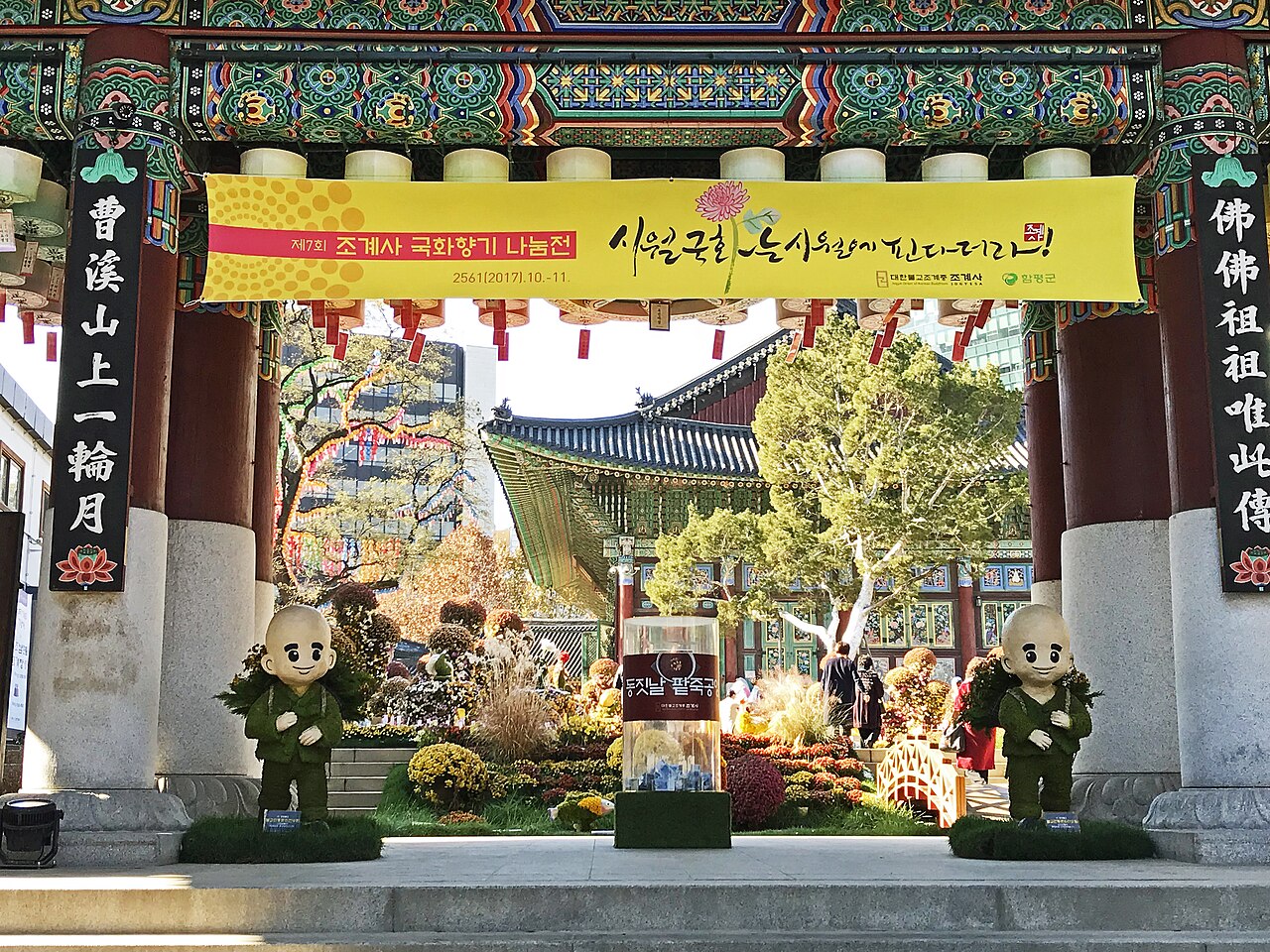
Each autumn the chrysanthemum festival fills the gate area and courtyard with flower displays. Photo: Flashpacker Travelguide, CC BY-SA 2.0 / Source: Wikimedia Commons
| Season | What you’ll see | My take |
|---|---|---|
| Late April–May | Full lantern canopy, Buddha’s Birthday events | Peak beauty, peak crowds |
| July–September | Lotus festival with potted lotuses | Pretty but small; hot |
| October–early November | Chrysanthemum festival | My pick for right now |
| Winter | Quiet grounds, fewer lanterns | Calm, but less of a show |
The honest downsides of Jogyesa Temple
This is a great stop, but it is not for every mood. Here is what might let you down.
- It can get crowded. Lantern season, festivals, evenings and weekends bring a steady buzz. Go on a weekday morning if you want space.
- It is an urban temple. Office towers and traffic sit right outside the walls. You get a calm pocket, not mountain silence.
- The lotus festival is modest. There is no pond. The lotuses grow in pots and tanks across a small area.
- The lantern magic is seasonal. After Buddha’s Birthday, the full canopy comes down, and off-peak visits feel less dramatic.
- Summer is hot. Outside lantern season, the stone courtyard has little shade.
- Photos have limits. Skip photos inside Daeungjeon during services, and keep your camera away from people praying.
Thinking about an overnight templestay here? Know the trade-offs. Dinner is early and light, so bring a snack. The building locks around 9–10pm (guests get a door code), and the elevator stays off until 4am. Discounted and weekend dates also sell out fast. Solo guests may share a room, which can mean snoring and noise. Some rooms face the parking lot rather than the temple.
Temple manners in 60 seconds 🙏
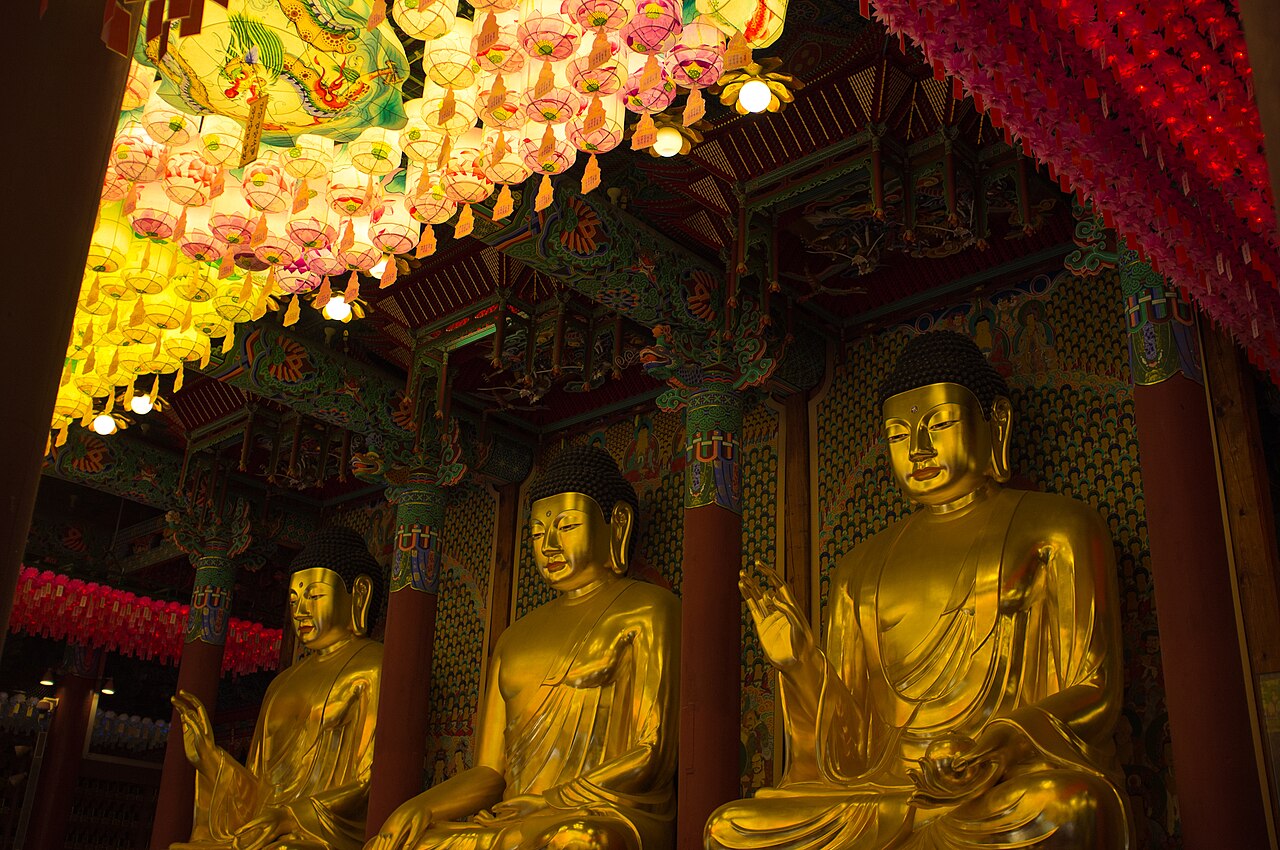
The three gilded Buddhas inside Daeungjeon. Skip photos during services and keep your distance from worshippers. Photo: Severin.stalder, CC BY-SA 3.0 / Source: Wikimedia Commons
Jogyesa Temple is a place of worship first, so a little care goes a long way. These basics cover almost everything.
- Keep your voice low, especially near the halls.
- Take your shoes off before you enter a hall. Socks help.
- Cover your shoulders and knees.
- Use the side doors. The center door is for monks.
- No photos inside during services, and no close-ups of worshippers.
Should you go? My straight answer
Go if you are in Jongno anyway, you love lanterns, or you want an easy first look at living Korean Buddhism. It is free, central and open around the clock. Night owls and first-timers get the most out of it.
Skip it if you want forest paths and deep quiet. For a calmer city temple with more room to wander, try Bongeunsa Temple in Gangnam. Better still, head out to a mountain temple for a day.
| Jogyesa | Bongeunsa | |
|---|---|---|
| Setting | Flat, compact, downtown | Hillside, next to COEX |
| Best for | Lanterns, quick visits, nights | Quiet walks, giant Buddha statue |
| Pairs with | Insadong, Ikseon-dong | COEX, Starfield Library |
What I’d actually do around Jogyesa Temple
If I had an afternoon in Jongno, I’d start in Insadong around 3pm and browse the craft shops. Then I’d walk four minutes to Jogyesa Temple late in the day, as the light softens. Stay for the bell and drum, then watch the lanterns glow.
For dinner, cross the street. Balwoo Gongyang, a former Michelin one-star, serves temple-food courses from about ₩36,000 to ₩120,000. Dinner runs 18:00–20:20 (last order 19:10), so book a table and time it with the lanterns. It’s closed on Sundays. The Templestay Information Center shares the building. Its English-speaking staff can help with programs and etiquette.
Prefer a lively night? Walk 10–12 minutes east to the hanok alleys of Ikseon-dong for cafés and bars. Gyeongbokgung is about 10 minutes west, and Tapgol Park is about 10 minutes southeast. Bukchon is a 15–20 minute uphill walk; its residential core limits tourist visits to 10:00–17:00.
Want to stay the night? You book overnight templestays through the official templestay website. Regular rates run roughly ₩70,000–100,000 a night, but check current prices. For more temples, palaces and old sites, browse our Heritage Sites guides.
Pingback: Incheon Airport to Seoul: Every Way In (2026)
Pingback: Bongeunsa Temple: A Free Calm Escape in Gangnam
Pingback: Deoksugung Palace: Seoul's East-Meets-West Palace Guide