
If a visitor has time for only one hanok neighborhood that still feels alive rather than museum-quiet, Ikseon-dong Hanok Village is the one most travelers single out. Tucked behind Jongno 3-ga, this knot of century-old alleys has been reborn as Seoul’s most caffeinated, most photographed hanok district: tiled roofs over flat whites, soft-serve queues, and tiny boutiques squeezed into old courtyard homes.
It is small, it is busy, and it leans hard into the camera. But given one unhurried afternoon, most first-timers understand why locals and travelers keep circling back. Below is what the place actually is, how to make the most of an afternoon, and when it is fair to skip it altogether.
A 1920s working-class hanok grid, reinvented
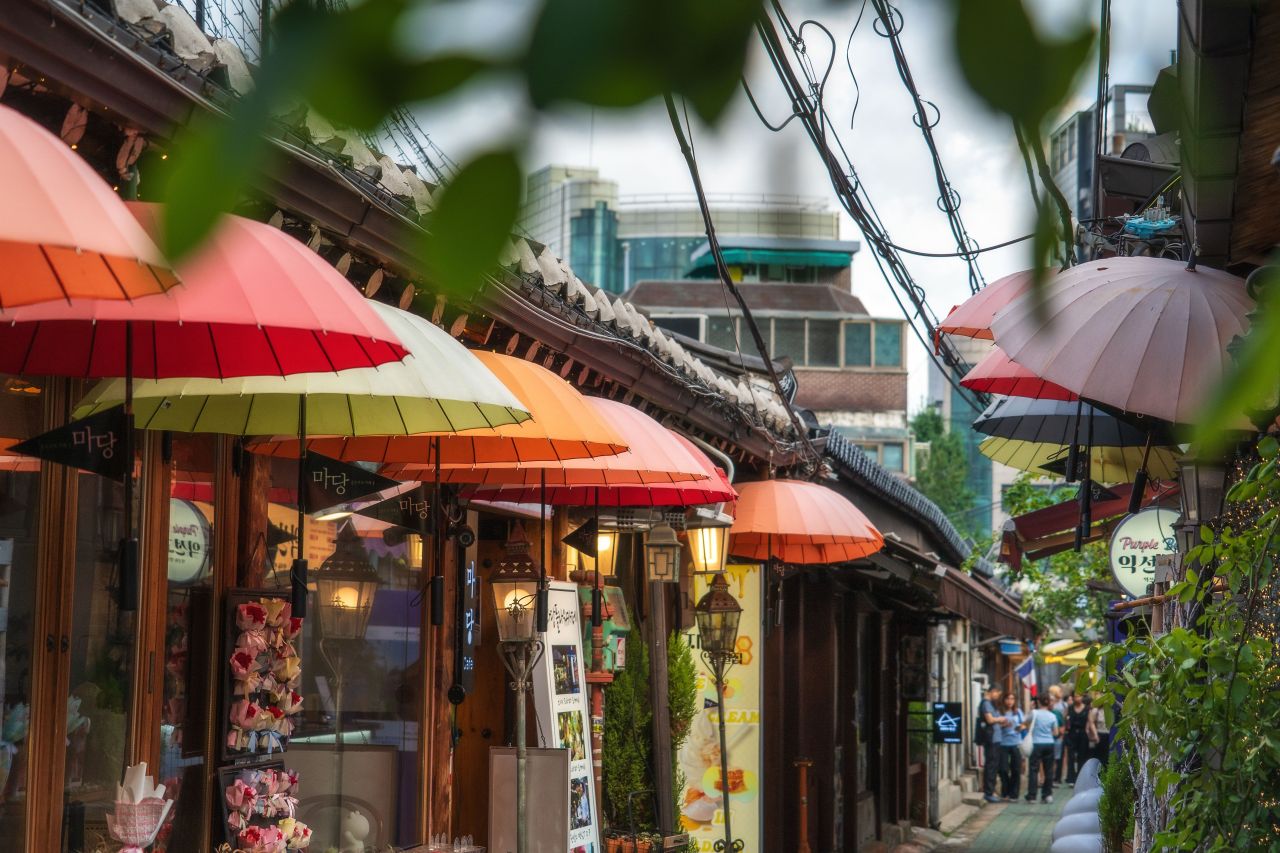
Photo: Ikseon-dong’s lantern-and-umbrella alleys, where old hanok meet new shops. Source: Korea Tourism Organization 관광사진갤러리 (KOGL Type 1)
Ikseon-dong is roughly 100 years old. Developers laid it out in the 1920s as rows of small, affordable hanok for ordinary Seoulites, not for aristocrats. Today it packs in about 119 traditional homes, which gives it the highest hanok density in the whole city, tighter even than Bukchon or Seochon.
For decades the area sat under the threat of redevelopment. Then in 2018 the city scrapped those plans and protected the district, so it is now often called Seoul’s “last” hanok village. The real turn came in the 2010s, when owners converted the old houses into fusion cafés, dessert bars, restaurants, and shops. That is the key thing to understand: Ikseon-dong is the commercialized hanok district. It is the opposite of quiet, residential Bukchon, and that contrast is exactly its appeal.
The tension between old shell and new energy is the whole point. The bones are still genuinely historic; the doorways are low, the courtyards are tiny, and the roof tiles are the real thing. But step inside almost any of them and you will find a barista, not a family. Whether that delights or disappoints depends on the visitor, but it is unlike anywhere else in Seoul.
- Address: 17 Donhwamun-ro 11ga-gil, Jongno-gu, Seoul (the alley cluster around Ikseon-dong)
- Hours: Alleys open 24/7, free. Most cafés and shops run roughly 11:00–22:00; some close on Mondays.
- Price: Free to wander. Coffee ₩4,500–7,300; desserts ₩2,500–13,000; sit-down meals ₩22,000–40,000 at the trendier spots.
- Getting there: Jongno 3-ga Station (Lines 1, 3, 5), Exit 4, then a 2-minute walk (~140 m).
- ⏱ Time needed: 1.5–3 hours, more if you café-hop or sit down for a meal.
- 🔗 Nearby pairing: Insadong (7 min), Jongmyo Shrine (6 min), Changdeokgung Palace (10 min), or Bukchon (15 min) for a hanok comparison day.
- Verified as of June 2026.
Finding the Ikseon-dong Hanok Village alley entrances
Navigation is simpler than the maze suggests. Aim for Jongno 3-ga Station, a large interchange on Lines 1, 3, and 5, and take Exit 4; the alley entrances are about a two-minute stroll away. Travelers arriving from the Bukchon side can instead use Anguk Station (Line 3) Exit 6, roughly a seven-minute walk. One practical note on the transfer station itself: Jongno 3-ga is a deep interchange with long connecting corridors, so allow a few extra minutes if you are changing lines. Follow signs for Exit 4 rather than the closer Exit 6, which lets out on the far side of the main road.
How an afternoon unfolds
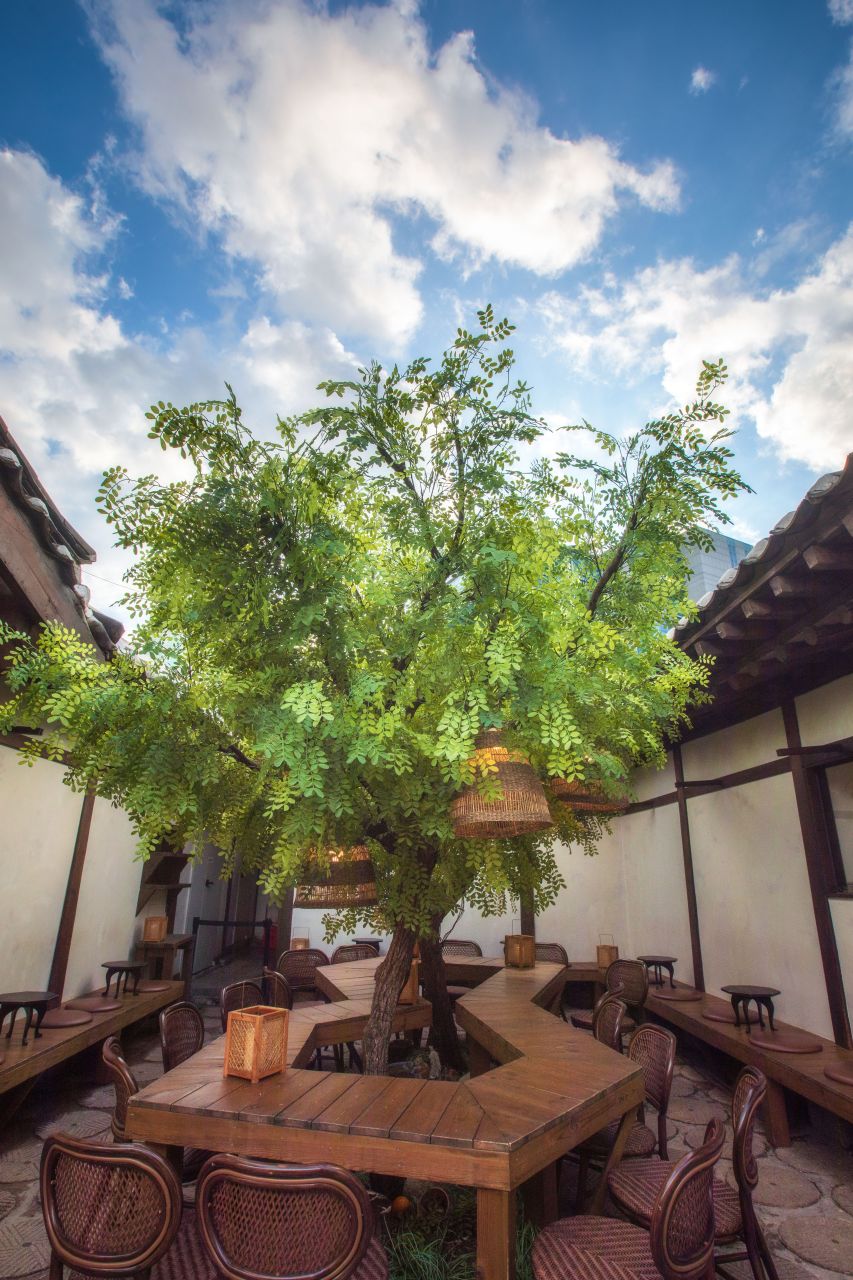
Photo: A café tucked into a restored hanok in Ikseon-dong. Source: Korea Tourism Organization 관광사진갤러리 (KOGL Type 1)
The whole appeal is the wander. The alleys twist for only about 800 meters, so getting truly lost is unlikely, and every few steps a converted hanok pulls you in. One door opens to a moody coffee bar; the next hides a Korean-French dessert house; around the corner, a line forms for the well-known soft-serve, mostly for the photo.
A common approach among regulars is to skip a formal lunch and graze instead. A pastry at one spot, a coffee at another, then a dessert to split. The cafés are the main event, and the interiors, all exposed beams and little courtyards, are half the reason to come. Most of the smaller cafés take cards, but a few counters still prefer cash. Carrying a modest amount avoids awkward pauses.
The thing to plan around at Ikseon-dong Hanok Village is the queue. At the better-known places here, waiting is the default rather than the exception, and it is not only a weekend problem. Weekday peak hours draw lines too, and turning up before five in the afternoon is no protection. An hour is a normal wait at a popular restaurant. Two habits cut it down. Join the list as a table-turnover wave leaves, roughly on the hour, rather than in the middle of a sitting. And aim for the flat part of a weekday afternoon, around one o’clock or half past three, when regulars report twenty minutes or two parties ahead.
Locals mostly avoid standing in the Ikseon-dong Hanok Village alleys at all by using a remote queueing app. The main one, CatchTable, has an English version called CatchTable Global. It signs up with a Google or Apple account and takes a foreign card, so it works without a Korean phone number. The catch is coverage. It lists a few thousand restaurants nationwide, and plenty of the small owner-run hanok cafés in these alleys are not among them. Check before you set out, and treat the paper list on the door as the fallback.
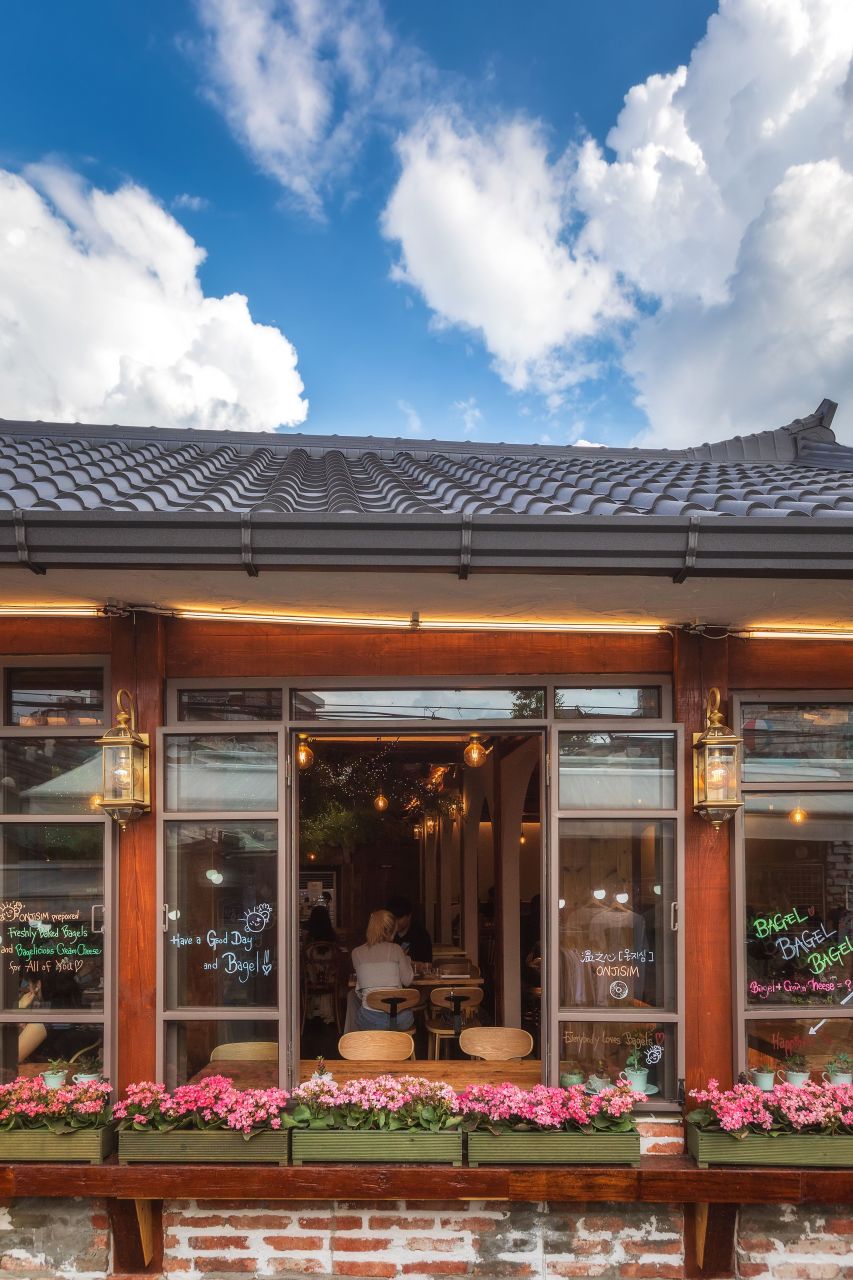
Photo: A hanok courtyard turned into café seating in Ikseon-dong. Source: Korea Tourism Organization 관광사진갤러리 (KOGL Type 1)
For those wanting more than caffeine, the fusion restaurants serve solid sit-down meals, though they cost more than an average Seoul lunch. There is also a retro arcade, hanbok rental, and a few photo-booth and shooting-game spots for something playful. The district is worth a second look after dark, too. The lanterns and warm shopfront glow make the evening version noticeably prettier, which is why it is such a popular date stroll.
When to come, season by season
The seasons shift the mood. Spring and autumn are the sweet spots, with mild air that makes alley-hopping easy. Summer turns humid, and the tight lanes trap the heat, so an air-conditioned café between stops is welcome. Winter is cold but quieter, and the lit alleys look their cosiest. Whatever the month, building in some slack pays off; the pleasure here is drifting, not marching to a schedule.
Ikseon-dong or Bukchon: how they differ
This comparison comes up constantly, so here is a simple way to decide. Ikseon-dong Hanok Village and Bukchon are different moods, not better-or-worse.
| Ikseon-dong | Bukchon | |
|---|---|---|
| Vibe | Trendy cafés, food, shopping | Historic, residential, quiet |
| Best for | Eating, hanging out, dates | Photos, traditional architecture |
| Crowds | Busy, lively | Busy, but people actually live there |
| Time | 1.5–3 hrs | 1–2 hrs |
In short: Ikseon-dong to do things, Bukchon to look at things. And since they sit a 15-minute walk apart, the practical answer is often just “both, same day.”
What to know about Ikseon-dong Hanok Village: the honest caveats
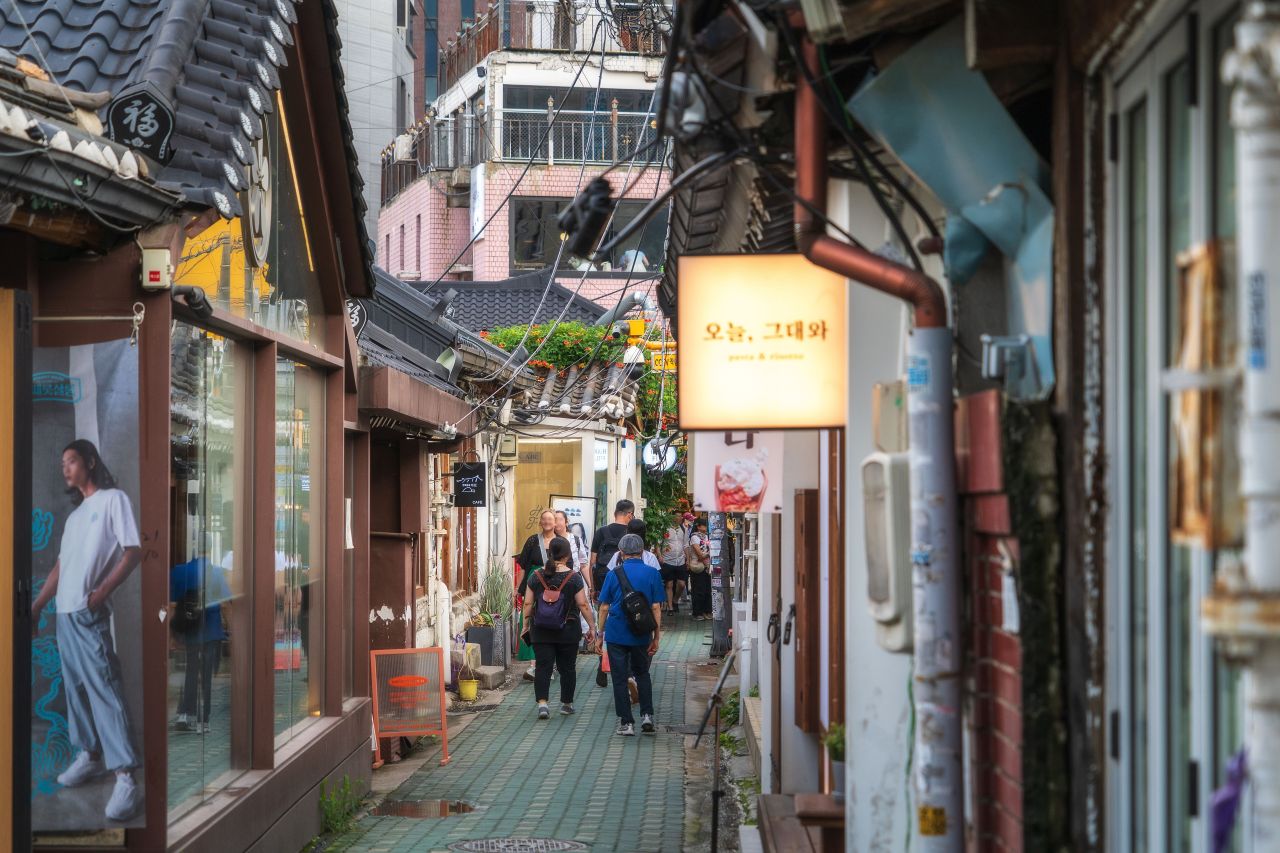
Photo: A narrow Ikseon-dong alley, complete with the overhead wires that complicate the classic rooftop shot. Source: Korea Tourism Organization 관광사진갤러리 (KOGL Type 1)
A few expectations are worth setting, because some visitors leave disappointed. First, the crowds. On weekends and at peak meal times the alleys get so packed that two people can barely pass. Photos turn tricky, and the charm fades fast when you are shuffling shoulder to shoulder.
The squeeze at Ikseon-dong Hanok Village does not stop at the door either. These are hundred-year-old rooms, so the converted cafés and restaurants are small inside. Tables sit close enough that you will follow your neighbours’ conversation, and the styled wooden stools are prettier than they are comfortable. Anyone picturing a hushed, spacious hanok tearoom should adjust. The interiors here are charming and cramped in equal measure.
Second, it is genuinely small. Anyone picturing a sprawling “village” is often surprised how quickly they have seen it all. Some visitors also find it over-commercialized, more open-air shopping lane than living heritage site. And the classic rooftop photo is harder than it looks, partly because an overhead power line cuts across the prettiest angle.
A few practical gripes round it out. Prices at the trendy cafés run higher than the Seoul average. Public restrooms are scarce, and there is no parking, since the alleys are too narrow for cars, so the subway is the sensible choice. At the busier takeaway counters, watch for two separate lines: one to pay and one to collect. People routinely join the pickup queue first and lose their place. None of this is a deal-breaker, but going in clear-eyed makes the visit better.
The right traveler for Ikseon-dong Hanok Village
Ikseon-dong Hanok Village suits visitors who love café culture, want a lively old-meets-new neighborhood, or need a relaxed afternoon between heavier sights like the palaces. It also makes a low-effort, atmospheric evening for couples.
It is easier to skip for anyone chasing pristine, crowd-free traditional architecture, or working with a single day better spent on a marquee site. In that case, Bukchon is the quieter walk, or browse more options in our Hanok Villages guides.
The fair verdict: Ikseon-dong Hanok Village is not a museum and never pretends to be. It is a hundred-year-old neighborhood that learned to make a great cup of coffee. Treated as a relaxed graze-and-wander rather than a box to tick, it is one of the most enjoyable easy afternoons in central Seoul.
Pingback: 3 Days in Seoul: First-Timer's Itinerary (2026)
Pingback: Hahoe Folk Village, Andong: Honest Day-Trip Guide