
Okay—let’s answer the question in the title straight away. Nami Island is worth the trip, but almost certainly not for the reasons your guidebook gave you. Forget the K-drama pilgrimage, and forget the checklist of sights. Really, this is a big riverside park where you walk under tree avenues, get quietly mugged by tame squirrels, and take a lot of photos.
Get the day right and Nami Island is one of the nicest things you can do within two hours of Seoul. Get it wrong — noon arrival on an autumn Saturday, no ticket bought, driving yourself — and you’ll spend the day annoyed. The difference is entirely in the planning.
- Address: 1 Namiseom-gil, Namsan-myeon, Chuncheon-si, Gangwon State. You board at the Gapyeong wharf: 1024 Bukhangangbyeon-ro, Gapyeong-eup. (Yes, the island is legally in Chuncheon. The pier isn’t.)
- Hours: Open every day of the year. Ferries run roughly 08:00 to 21:00, every 10–20 minutes through the middle of the day, with later boats on summer and peak-autumn weekends. Check the notice board at the wharf for the current timetable.
- Price: ₩19,000 adult at the gate, and that includes the round-trip ferry. Book online and you’ll pay closer to ₩13,000–16,500.
- Getting there: ITX-Cheongchun from Cheongnyangni to Gapyeong, about 40 minutes, ₩5,700 with a reserved seat. Or the Gyeongchun Line metro for around ₩2,500. From Gapyeong Station it’s 1.5km to the wharf: 20 minutes on foot, about ₩5,000 by taxi.
- ⏱ Time needed: 3–4 hours on the island is the honest minimum. Budget 7–9 hours door to door from Seoul. This is a full day out.
- 🔗 Nearby pairing: Garden of Morning Calm (25 minutes away) or Petite France (10–15 minutes). One of them, not both.
- Verified as of August 2026
The Nami Island ferry queue is a myth 🚤
English guides love to warn you about the 40-minute wait for the boat. Ignore that. Two large ferries run in rotation and the crossing takes about five minutes. Korean visitors describe boarding almost immediately, even at 9am on a peak-foliage Sunday.
Instead, the real bottlenecks sit elsewhere — and nobody warns you about them.
The first is parking. On weekends the official lots fill by around 10am. People report circling for the better part of an hour. On top of that, official parking costs ₩4,000–6,000, so the maths on driving looks bad before you even start.
The second is leaving. The outbound queue builds through the late afternoon, and the drive back to Seoul on a Sunday evening is worse than the drive out. If you came by car, aim to be back at the wharf before 16:00 or plan to stay until well after the rush.
Honestly? Take the train. It sidesteps both problems and costs less.
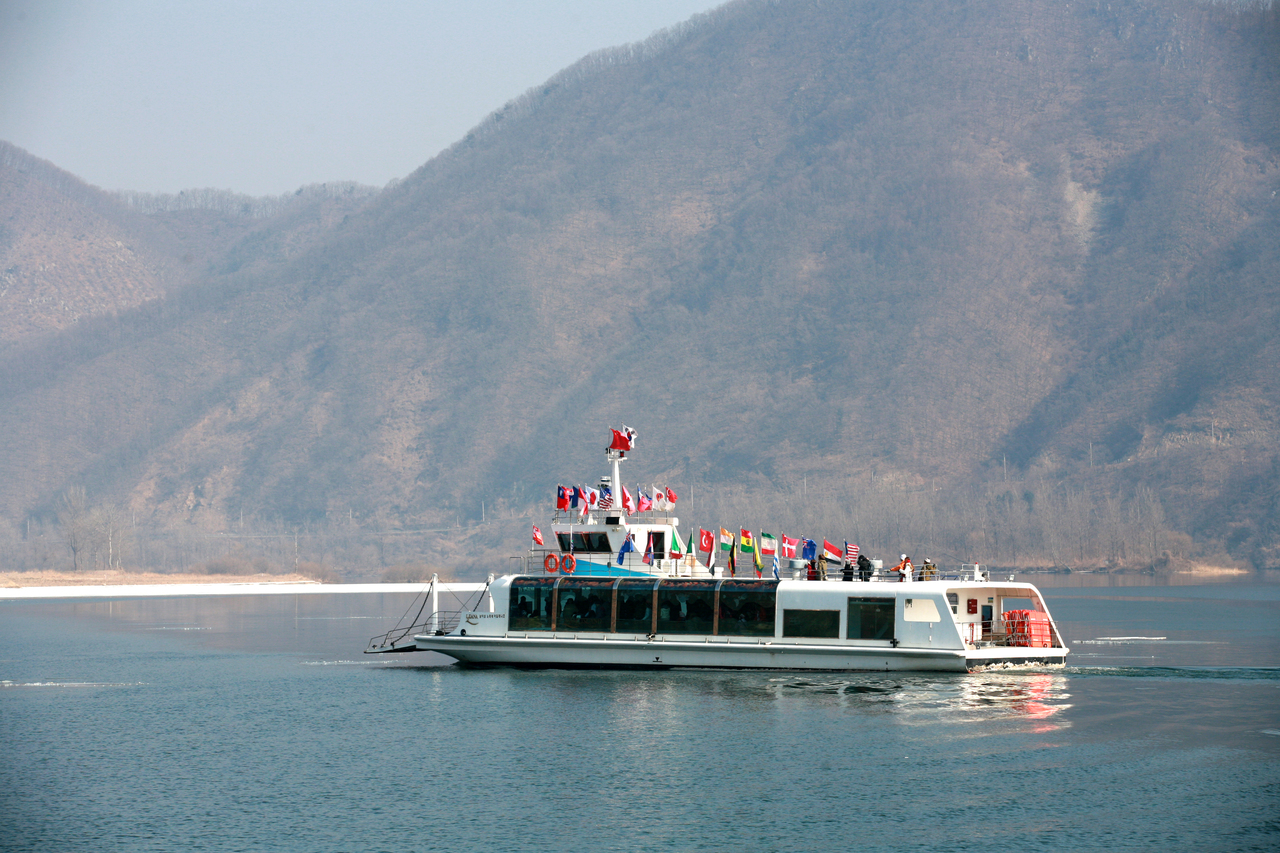
Photo: 남이섬 / Source: Korea Tourism Organization 관광사진갤러리 (KOGL Type 1)
Nobody pays ₩19,000
The gate price is ₩19,000 for an adult, ferry included. It’s a list price, and turning up without a ticket is a self-inflicted cost.
So book ahead, because every honest visitor does. Klook sits around ₩13,000, Trip.com lands in the ₩14,500–16,500 range, and Naver’s booking takes a couple of thousand off. There’s even a discount QR booth standing right beside the physical ticket window, which tells you everything.
Two other price notes. Children aged 3 to elementary pay ₩13,000. And there’s a cheap late-entry ticket after 18:00 — which is a trap, and I’ll come back to it.
The animals are the actual attraction 🐿️
Here’s the thing English coverage misses completely. Ask Korean visitors what they remember and they talk about the animals more than the trees.
Ostriches, peacocks, rabbits, squirrels and chipmunks roam free across Nami Island. None of them are remotely afraid of people. One resident ostrich has a local reputation for stealing lunchboxes. Kids lose their minds; so do most adults, quietly.
The tree avenues do deliver too. Metasequoia Lane is the one everybody photographs — those trees went in back in 1977 and they’ve had time to become monumental. Ginkgo Lane runs about 100 metres and turns gold in late October. There’s a Korean pine lane and a maple walk as well.
What there isn’t: alpacas, or rail bikes. Both get attached to Nami Island online and both are somewhere else.
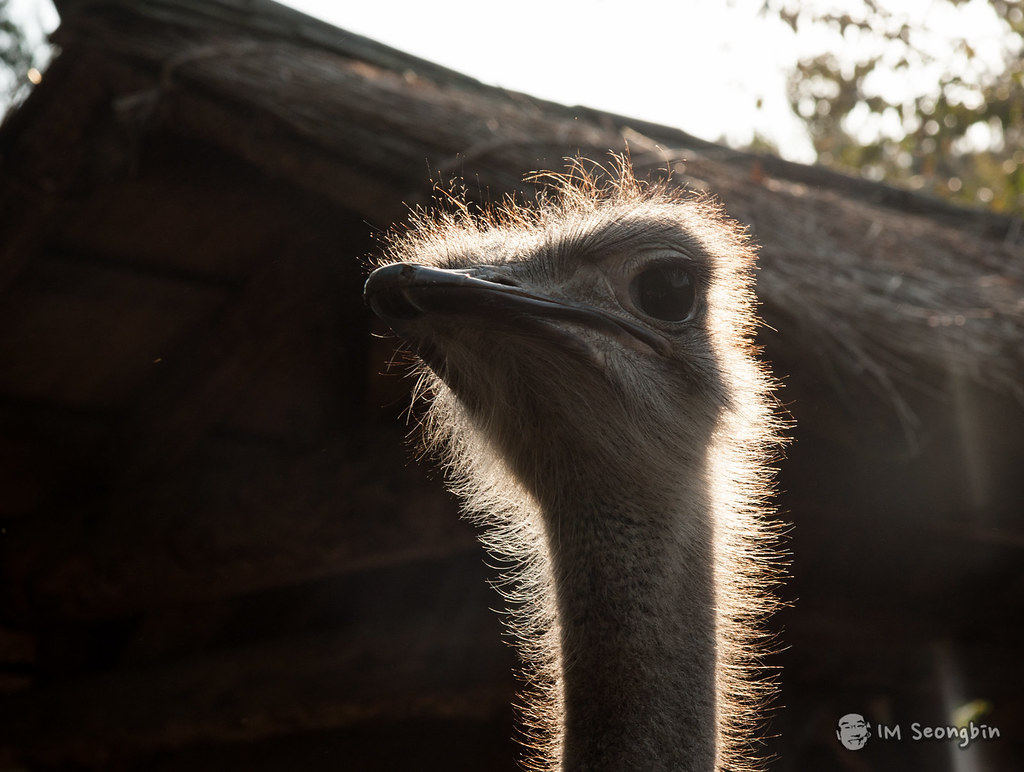
Photo: Fur (털) — golbenge (골뱅이), CC BY-SA 2.0 via Flickr
It’s a walking park, not a sightseeing stop
Nami Island’s perimeter runs 5–6km, and there’s no set route. Grab the paper map at the tourist information office by the entrance, because the island is bigger than people expect.
Most visitors stay two to four hours. Two feels rushed, while four gets you a full loop with stops.
A genuinely useful trick: crowds pile onto the central lanes and thin out fast on the outer riverside loop. Even on a holiday you can find quiet within a ten-minute walk. If you like your green space uncrowded, our other parks and nature guides follow the same logic.
For anyone with limited stamina, the narrated Story Tour Bus (₩10,000, 20–30 minutes) earns its money. It orients you and shows you where to walk back to. Bike rental gets pushed hard in English guides; plenty of visitors skip it.
The zipwire deserves a mention because it isn’t a side activity — it’s an alternative entrance. ₩55,000–58,000 covers admission plus the return ferry, and it flies you onto the island one way. Book about a week ahead, because it sells out.
And Winter Sonata? The statue and the bench are still there. But it barely registers with recent visitors, so it shouldn’t factor into your decision at all.
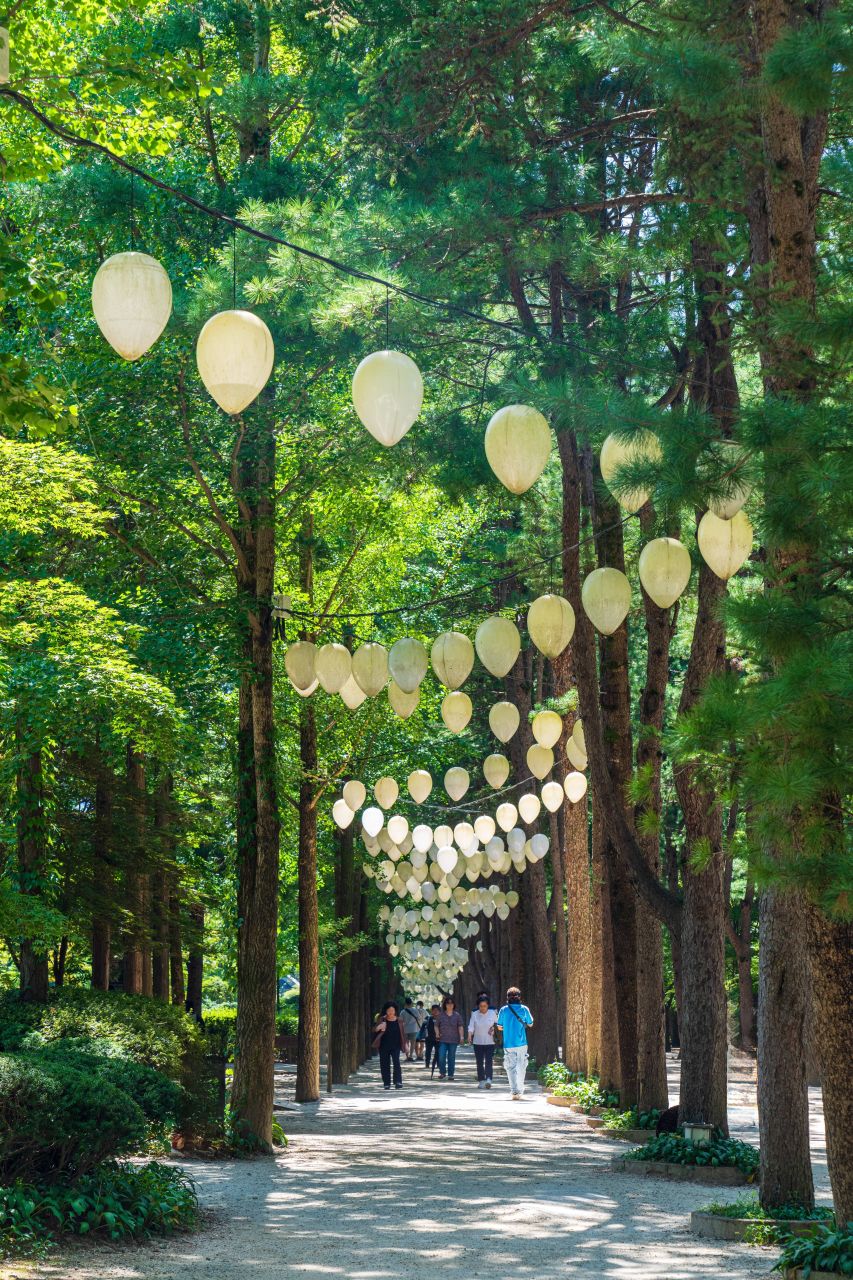
Photo: 남이섬 / Source: Korea Tourism Organization 관광사진갤러리 (KOGL Type 1)
When to visit Nami Island 🍁
Autumn is the season on Nami Island, although the window falls later and tighter than most guides claim.
A visit on 26 October found the maples only 60–70% turned. By 23 November most leaves were down. The reliable stretch is the last days of October through the first week of November.
| Season | What you get | Verdict |
|---|---|---|
| Spring (Apr–May) | Cherry blossom early April, then fresh green. Best walking weather. | Underrated. Far fewer people. |
| Summer (Jun–Aug) | Dense green on Metasequoia Lane. Also heat, humidity and monsoon rain. | The weakest season. |
| Autumn (late Oct–early Nov) | Peak foliage, gold ginkgo, red maple. | The best, and the busiest. |
| Winter (Dec–Feb) | Bare symmetrical trunks, braziers, a free sledding slope, smallest crowds. | Beautiful, but snow isn’t guaranteed. |
One more thing on weather: rain doesn’t ruin this place. In fact a wet visit feels atmospheric and much quieter. So bring a jacket rather than cancelling.
Honest downsides of a Nami Island day trip
Weekends are genuinely unpleasant. The central lanes get heavy, and more than one visitor has concluded they simply wouldn’t come back on a Saturday. So go midweek if you possibly can.
Island food is captive-audience food. Coffee runs ₩5,500. A ₩21,000 pine-nut cream pasta arrives tasting of no pine nuts. Pizza gets described as frozen. Weekend lunch also means queueing. So eat before you board, or eat at 11:00.
Summer is rough. The ferry’s upper deck has no shade, the open lanes bake, and sunburn is common. Bring a hat, sunscreen and a handheld fan.
Much of the island is unpaved dirt path. That means a lot of walking on loose ground. Expect hard work with a compact stroller or wheeled luggage, dust on windy days, and tired legs for older visitors. And if you’re bringing a stroller, bring a full-size one rather than a compact.
Evenings are dead for day visitors. Restaurants close around 19:00–19:30 and the mini-mart shuts by 20:00. There’s nothing to see after dark. That cheap late-entry ticket only makes sense if you’re sleeping on the island.
Rentals stop early. Bikes and duck boats wind down well before the last ferry, so an afternoon arrival loses the activities.
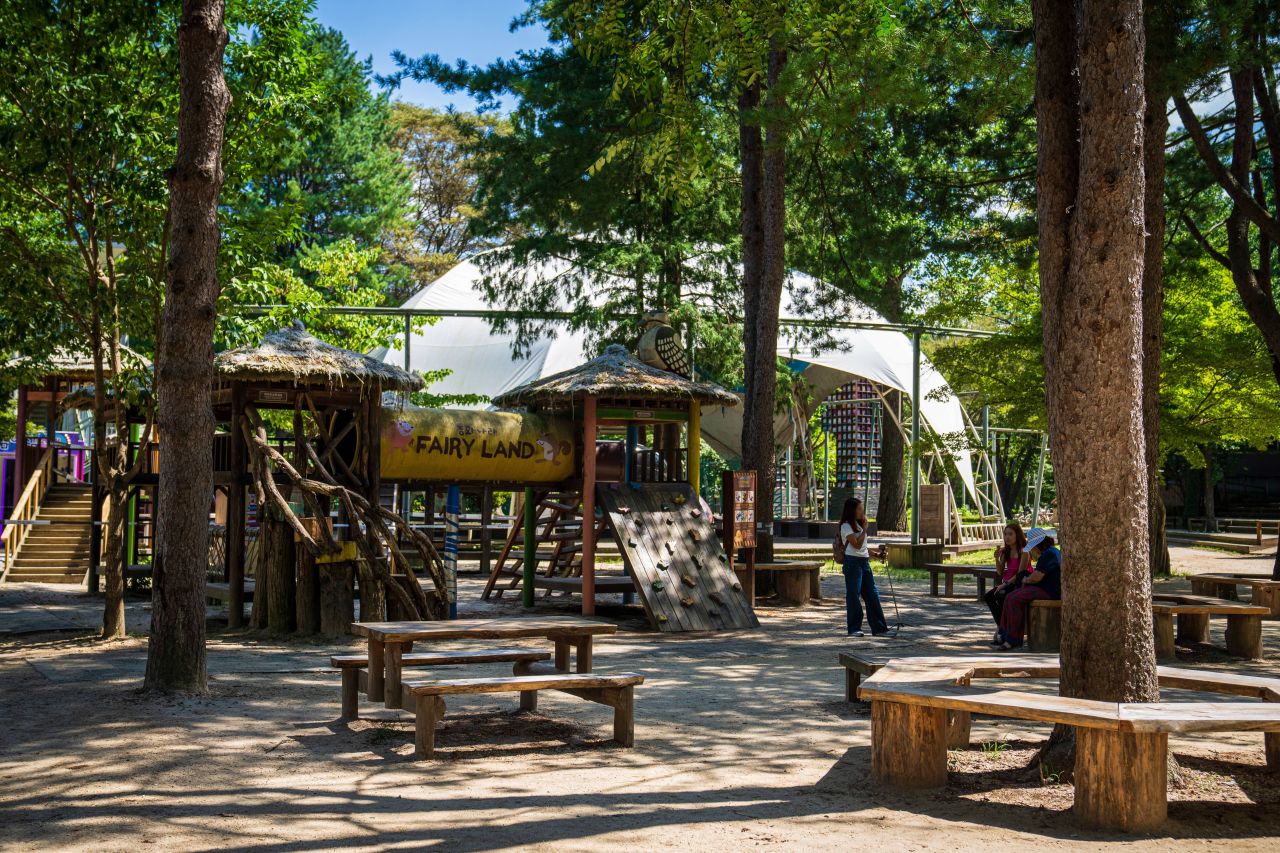
Photo: 남이섬 / Source: Korea Tourism Organization 관광사진갤러리 (KOGL Type 1)
Go if… skip if…
Go if you enjoy walking for its own sake, if you’re travelling with kids who’d love free-roaming animals, or if you want one full day of green after a week of city. Photographers should go, obviously.
Definitely go if you have a dog. Nami Island is unusually dog-friendly for a Korean attraction: leashed dogs under 20kg get in free and are allowed on the ferry, there’s an off-leash park open 10:00–17:00, and several restaurants and villas welcome them. Korean owners rate it highly and English guides barely mention it.
Skip it if you’re on a short Seoul trip and counting hours — seven to nine hours is a lot to spend on a park. Similarly, give it a miss if you need paved, accessible paths, or if you came for Winter Sonata. And avoid a weekend visit in peak autumn unless crowds genuinely don’t bother you.
If I had one day near Gapyeong, I’d take the 08:00-ish train, eat dakgalbi by the wharf, then spend late morning until mid-afternoon walking Nami Island. After that, the Garden of Morning Calm. That’s a very good day out. Just buy the ticket before you leave the house.
Pingback: Bukhansan National Park: Seoul's Best Day Hike
Pingback: Seonyudo Park: Seoul's Water-Plant Island Garden
Pingback: Banpo Hangang Park: Seoul's Rainbow Fountain Night Guide
Pingback: Gyeongui Line Forest Park: Seoul's Yeonnam Stroll
Pingback: Inwangsan: Seoul's Best Short Historical Hike