
Seoul is not short on parks, but Olympic Park earns its place for a simple reason: it does three things at once and does each of them well. It is a sprawling green escape, an open-air sculpture collection left over from the 1988 Games, and the site of a 1,500-year-old Baekje fortress. Add the seasonal flower fields and one famously solitary tree, and the result is an easy half-day that costs nothing to enter. For a relaxed morning in eastern Seoul, few spots offer this much variety in a single fenced perimeter.
This is not a 30-minute photo stop. It rewards a slower, wander-and-breathe pace, so most first-timers do best arriving with comfortable shoes and no fixed schedule.
- Address: 424 Olympic-ro, Songpa-gu, Seoul (서울 송파구 올림픽로 424), Bangi-dong
- Hours: Free public park. Pedestrians and cyclists 05:00–22:00 daily; vehicles 06:00–22:00; no entry after 22:00. Peace Plaza and Encounter Square stay open 24h. Indoor venues (SOMA, Olympic Museum, Hanseong Baekje Museum) keep their own hours and usually close Mondays—verify each.
- Price: Park is free year-round. Some museums and concert venues (Olympic Hall, KSPO Dome) charge separately.
- Getting there: Olympic Park Station (Lines 5 & 9), Exit 3, for the tree-lined approach to Rose Plaza and the World Peace Gate. Heading straight for the Lonely Tree? Mongchontoseong Station (Line 8), Exit 1, is closer. Hanseong Baekje Station (Line 9), Exit 2, drops you near the Baekje museum.
- ⏱ Time needed: 2–3+ hours; half a day if you want it all.
- 🔗 Nearby pairing: Lotte World Tower and Lotte World theme park (Jamsil, ~1–2 km, right on the skyline) and Seokchon Lake for cherry blossoms (~2 km).
- Verified as of June 2026.
One park, four very different visits
Olympic Park spreads across roughly 88 hectares—about 1.45 square kilometers—in Songpa-gu, eastern Seoul. It was built for the 1988 Summer Olympics, and that legacy is visible at every turn. More than 200 outdoor sculptures are scattered across the lawns, which places it among the largest sculpture parks anywhere.
The appeal is in the layering. Ancient earthen ramparts roll beneath modern art. Flower fields sit beside an artificial lake. Visitors can picnic, jog, cycle, or simply chase the next photograph. It rarely reads as a single attraction, which is exactly why it holds up to a longer visit.
One planning note before setting off: the park has several gates, and they are far apart. The northwest side, around the World Peace Gate, is the ceremonial main entrance and the easiest to reach. The southeast side, near Mongchontoseong Station, lands closest to the fortress and the Lonely Tree. Choosing an entrance that matches your priority saves a long trek across the grounds.
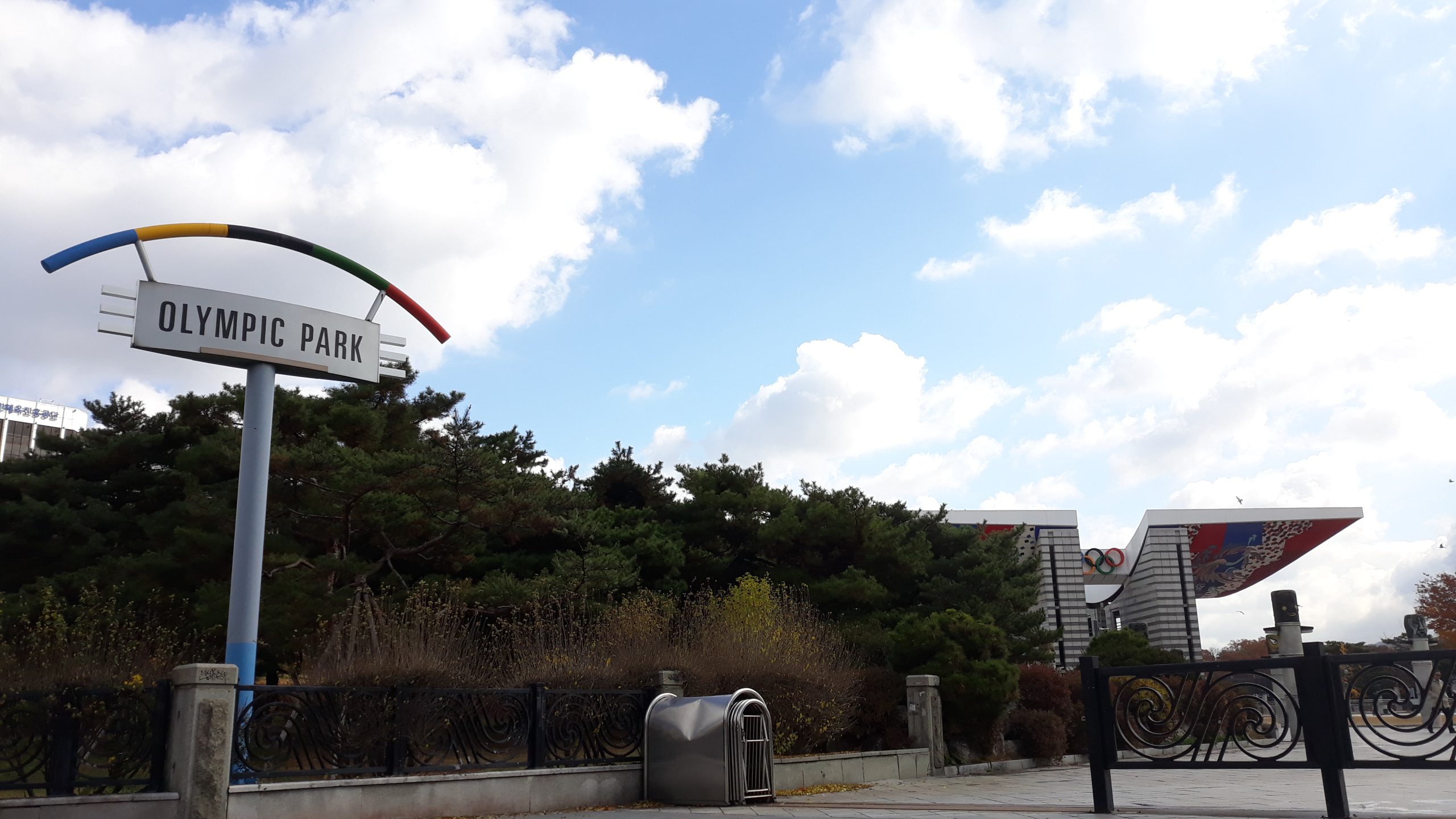
Photo: Olympic Park Seoul — Silas Low, CC BY-SA 4.0 via wikimedia (Source: https://commons.wikimedia.org/w/index.php?curid=95144759)
The Lonely Tree, and why the queue forms
The Lonely Tree (나홀로나무) is the reason many people come. A single tree stands on a grassy rise inside the old fortress grounds, and it has become one of Seoul’s most photographed subjects. Framed against an open sky, its pull is immediate.
Visitors report it is rarely quiet. A line of photographers usually forms, each waiting a turn for a clean shot. The quieter option is to arrive at opening or at golden hour, when the crowd thins and the light softens. From the Peace Gate it is roughly a 15–20 minute walk in.
Flowers by the calendar: what blooms when
The Wildflower Field (Deulkkot Madang) is the park’s other headline draw, and it shifts with the season. Spring brings poppies and rapeseed in May and June. Autumn turns it to yellow Sensation cosmos that ripple in the wind. Timed well, the fields alone justify the trip.
Rose Plaza sits nearby, themed around the twelve Olympian gods, with about 165 varieties and some 18,500 bushes. Roses peak in May, with festivals in both May and October. Autumn also delivers pink muhly grass and kochia shrubs that turn from green to fiery red through September and October.
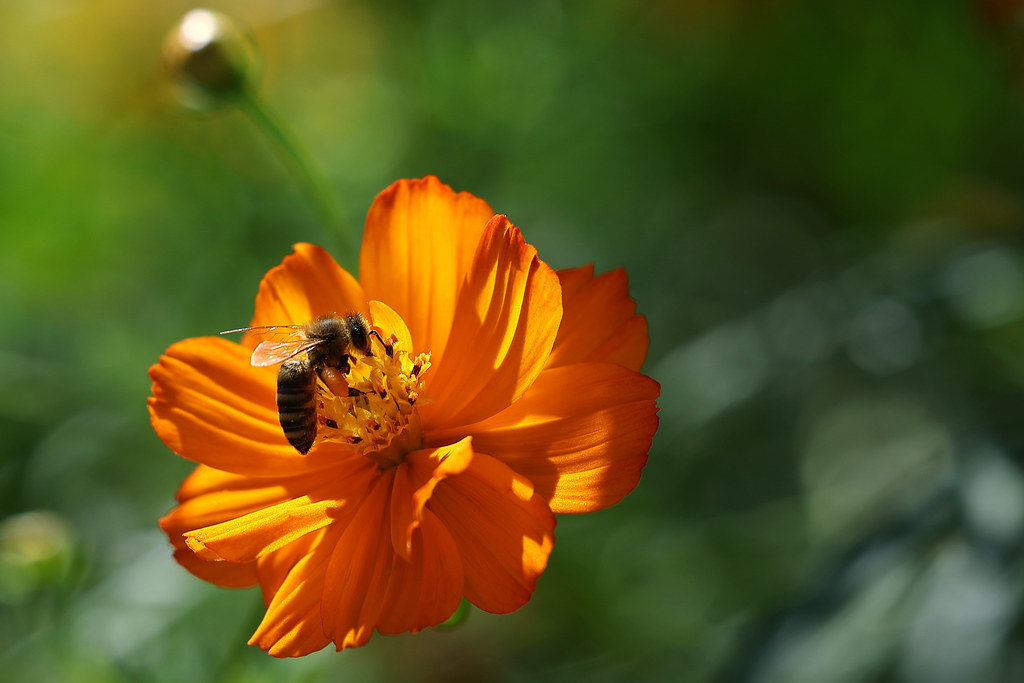
Photo: Wild_Flower_Garden_05 — KOREA.NET – Official page of the Republic of Korea, CC BY-SA 2.0 via flickr (Source: https://www.flickr.com/photos/42438955@N05/54018237385)
For the park at its peak, the two windows to target are late March to early April for cherry blossoms, and mid-September through mid-November for the cosmos, muhly, and foliage. A useful rule of thumb: the muhly and Sensation cosmos tend to hold their color best in the first half of October, so plan around then rather than a specific weekend. Outside those windows the grounds are still pleasant—just quieter on the wow factor.
Mongchontoseong: 1,500 years underfoot
This is the part many visitors overlook. The gentle green hills are not landscaping—they are Mongchontoseong, a Baekje-era earthen fortress from Korea’s Three Kingdoms period. It is the most historic corner of the park, and walking the soft ramparts is a genuine pleasure.
The nearby Hanseong Baekje Museum fills in the story for those who want context. No background in Korean history is required to enjoy the walk, but knowing you are strolling on 1,500-year-old defenses adds a quiet thrill.
Sculptures, 88 Lake, and the great gate
The sculptures turn up everywhere, and the SOMA Museum of Art anchors the collection for anyone wanting to head indoors. Several are striking enough to stop you mid-stride.
88 Lake, an artificial lake, is dotted with around 13 sculptures, including the signature “Wing-beat.” The World Peace Gate at the northwest entrance is hard to miss: a 24-meter structure by architect Kim Chung-up, holding the eternal flame from the 1988 Paralympics. The surrounding Peace Plaza stays open 24 hours.
Because the grounds are so spread out, a bicycle makes a real difference. Locals cruise the wide paths on rental bikes, and it turns a tiring slog between zones into an easy glide. Walkers should simply accept that one visit won’t cover everything—and that is fine. A common approach is to pick three or four spots, link them in a loose loop, and let the rest go.
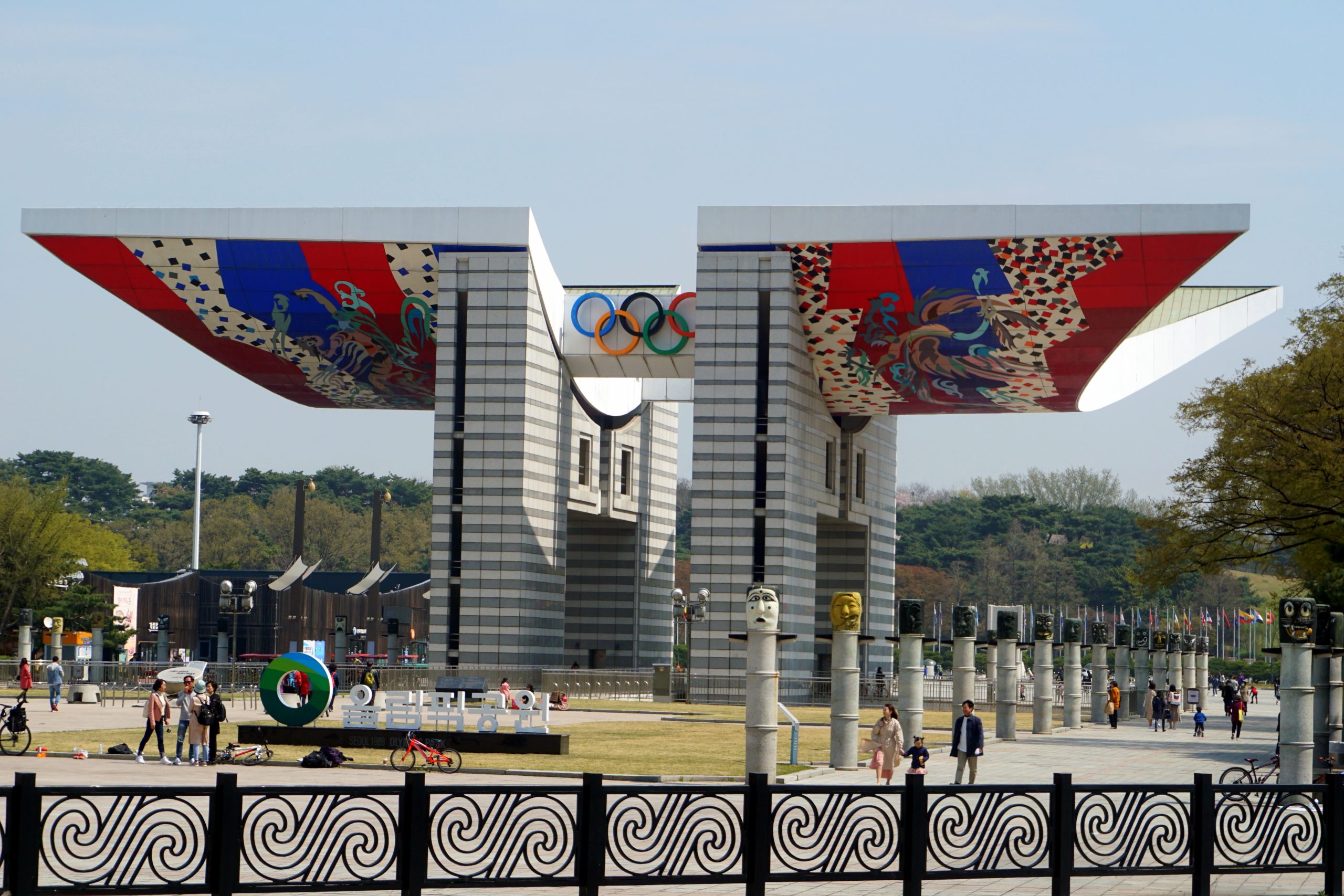
Photo: Seoul Olympic Park, Songpa-gu (49175274122) — Matt Kieffer from London, United Kingdom, CC BY-SA 2.0 via wikimedia (Source: https://commons.wikimedia.org/w/index.php?curid=177377275)
What to know about Olympic Park Seoul: the honest caveats
Olympic Park Seoul is genuinely large. Attractions sit far apart, and connecting them means a lot of walking—tiring, especially with children or in summer heat. Planning a loop rather than zigzagging, and budgeting more time than the map suggests, both help.
The Olympic Park Seoul Lonely Tree is never lonely. That is the honest headline, and it catches people out. The tree stands alone; the hill around it does not. On a fine weekend midday you queue behind other photographers, and a shot with nobody else in frame takes real patience. Some visitors come away calling the tree itself underwhelming once the crowd is factored in. Early morning is the only reliable fix at Olympic Park Seoul. Weekends, flower festivals, and concert days at the venues fill the whole park, so the calm escape can become a busy one.
Two Olympic Park Seoul attractions that oversell themselves
The Rose Plaza disappoints as often as it delivers. Bloom is uneven — sunlit sections come out while shaded stretches sit bare, so half the plaza can look unfinished on the same day. Several visitors also arrive picturing a wide open square and find something more enclosed. Check what is actually flowering before you build a trip around it, and treat the plaza as a bonus rather than the reason to come.
There is also the shoulder-season reality at Olympic Park Seoul: outside peak bloom, some visitors find it “just a big park.” Whether that counts as a drawback depends on what you came for. Those after lawns and quiet will call it the point; those chasing a specific photo should check what is actually blooming before making the trip.
Parking is tighter than the size of Olympic Park Seoul suggests. The Mongchontoseong-side lot in particular is small and fills fast on good weekends. The upside is that Olympic Park Seoul handles a sunny Saturday better than the Han River parks do — no long queue to park, and finding a patch of lawn for a mat is far easier here. Still, the subway is the low-stress option.
Is Olympic Park your kind of morning?
It suits slow mornings, picnics, photography, and anyone who likes mixing a little history and art into their green time. Families, joggers, cyclists, and anyone craving open space in central Seoul tend to leave happy. Pairing it with Lotte World Tower makes a full, easy day in the east.
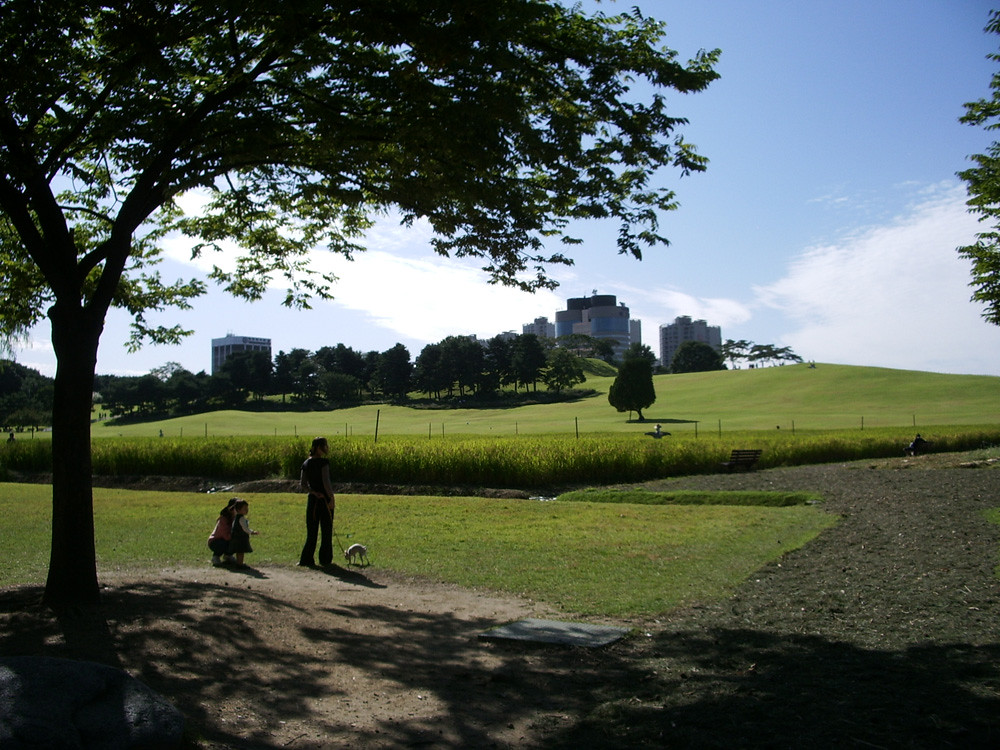
Photo: 몽촌토성 夢村土城 Mongchontoseong (fortress), Olympic Park, Seoul — InSapphoWeTrust, CC BY-SA 2.0 via flickr (Source: https://www.flickr.com/photos/56619626@N05/5478399586)
It makes less sense—or a shorter visit—for travelers tight on time, those visiting in deep winter or high summer with nothing in bloom, or anyone with energy for only one big walk who would rather spend it elsewhere. For more green escapes around the city, browse our Parks & Nature guides to find one that fits your day.
The editorial steer: come early on a weekday, walk a loose loop from the World Peace Gate through the flower fields to the Lonely Tree, and let the park set the pace. That is when Olympic Park is at its best.