
For one free evening in Seoul spent chasing a view, Naksan Park is the option our editors keep returning to over the ticketed deck at N Seoul Tower. It ranks among the best cost-free night views in the city: a 600-year-old fortress wall lit amber, the full skyline spread below, and a fraction of the crowds that pack Namsan.
The approach that works is straightforward. Arrive near sunset, walk the ridge as the sky turns, and linger while the lights come on. What follows is how to time and route that walk so it delivers.
- 📍 Address: 41 Naksan-gil, Jongno-gu, Seoul (서울 종로구 낙산길 41)
- 🕒 Hours: Park & wall walk open 24 hours, year-round (the Naksan Exhibition Hall runs roughly 9 AM–6 PM)
- 💵 Price: Free
- 🚇 Getting there: Hyehwa Station (Line 4), Exit 2, then a ~10-minute uphill walk past Marronnier Park. For the south end, start at Dongdaemun Station (Line 1 & 4) and climb the wall from Heunginjimun gate.
- ⏱ Time needed: 1–1.5 hours to walk the 2.1 km wall; 2+ hours with photos and Ihwa Mural Village
- 🔗 Nearby: Marronnier Park / Daehangno theater district, Dongdaemun & DDP, Changgyeonggung Palace
- ✅ Verified as of June 2026
Camel Mountain and the wall on its back
Naksan means “Camel Mountain”, named for the humped shape of this gentle ~125 m hill. It’s one of Seoul’s four inner guardian mountains—the eastern “Left Blue Dragon” (좌청룡) of old Hanyang. The city’s original planners believed these four peaks protected the capital.
Along Naksan’s ridge runs a restored stretch of the Hanyangdoseong (Seoul City Wall). King Taejo first built it in 1396, the year Joseon made Seoul its capital. The wall once ringed the entire city for about 18 km, connecting all four mountains. Naksan Park itself opened as a modern park in 2002. The wall sits on UNESCO’s tentative World Heritage list, though it isn’t formally inscribed yet.
The activity here is the walk. The ~2.1 km wall traces the ridge, and the views split two ways: N Seoul Tower and Namsan on one side; Dongdaemun, the DDP, and the endless city sprawl on the other. The plan most visitors settle on is simple—time the ridge for the amber-lit wall after dark.
The stones reward a closer look. The lower, rougher blocks are the oldest, while the neat upper rows were rebuilt in later centuries, each Joseon king leaving his own mark. It reads as a living timeline you can run a hand along, the kind of detail that makes Naksan more than a single viewpoint.
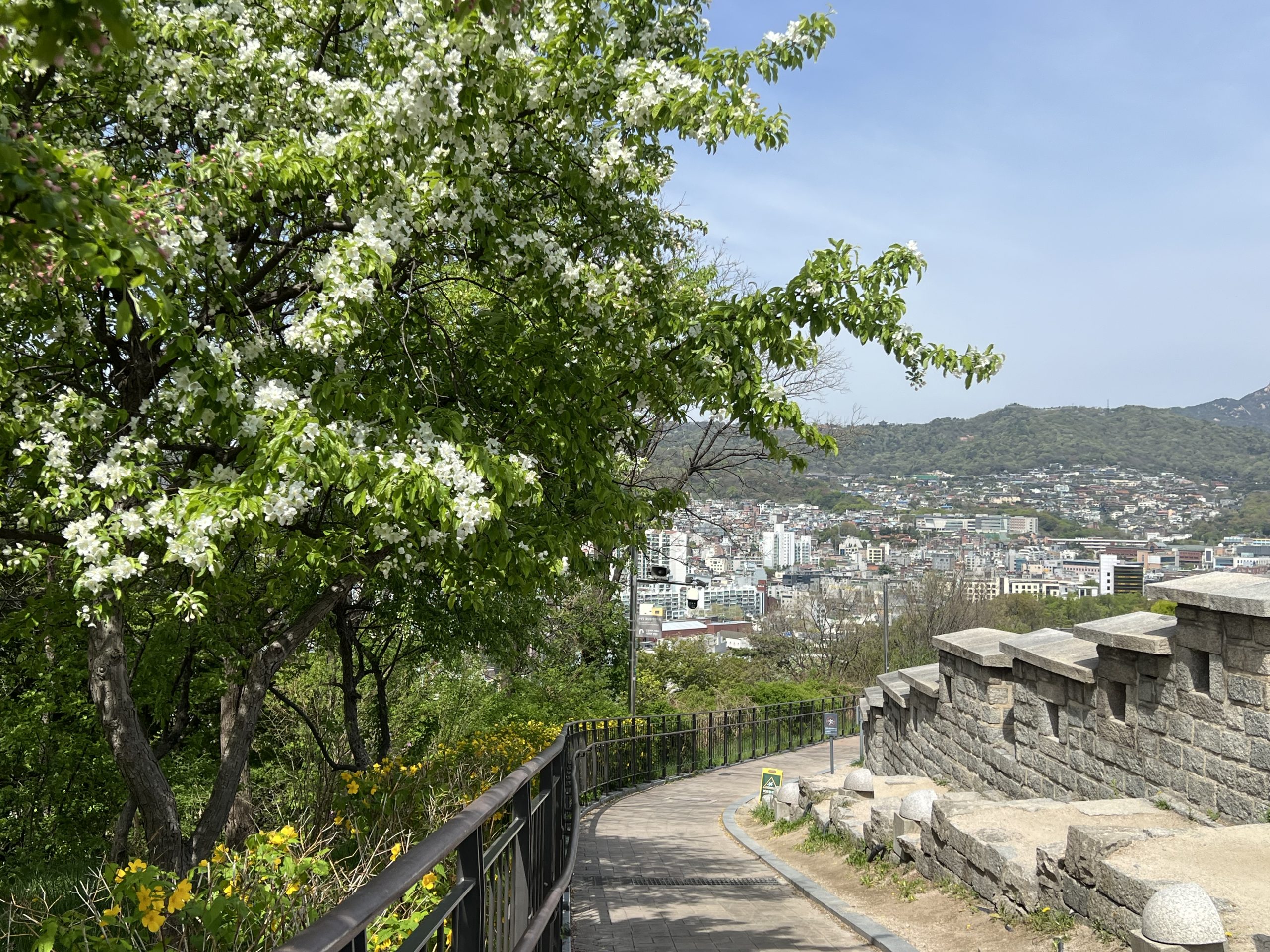
Photo: The Seoul City Wall and its ridge path on Naksan by day. Source: Wikihyo / Wikimedia Commons (CC0).
Why the after-dark view is the whole point
The recommended window is 30 to 40 minutes before sunset. Walk the ridge slowly as the sky shifts from gold to the deep blue-hour glow, then stay put. The city lights wake up below, and the floodlit wall turns a warm amber that photographs beautifully.
Visitors often describe the effect as romantic without feeling staged. Couples come for date night, and film crews turn up now and then—this ridge has appeared in plenty of K-dramas. Set against the ticketed, packed observation deck at the tower, it feels almost private.
Timing shifts with the season, so it helps to plan around the light. In summer the sun sets late, around 7:40 PM, which calls for a later climb. In winter it drops by about 5:30 PM—convenient, since the full show finishes before the evening gets long. A useful rule of thumb: on a clear day the amber wall floodlights read best roughly 20 minutes after the official sunset time, once the sky has gone deep blue rather than pale grey. Check the day’s sunset before heading up and the timing falls into place.
Anyone who loves a skyline will want to compare Seoul’s other icons & views as well. For a free, crowd-light sunset, though, Naksan holds its own against most of them.
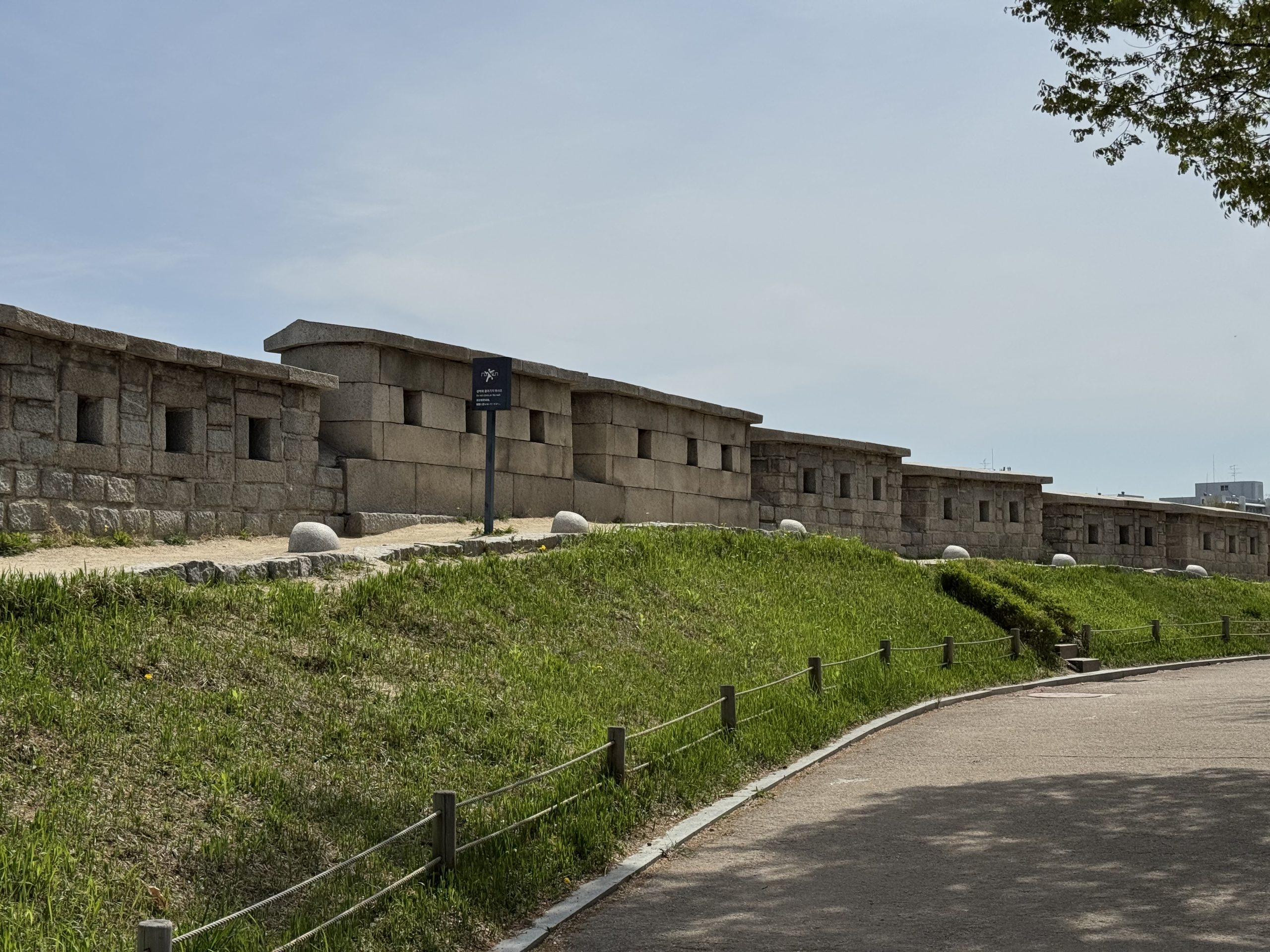
Photo: The restored Hanyangdoseong fortress wall and its battlements along the Naksan ridge. Source: 슐라 / Wikimedia Commons (CC BY-SA 4.0).
Ihwa Mural Village: what actually remains
On Naksan’s western slope sits Ihwa Mural Village. A clear expectation helps here: the famous Instagram murals—the flower staircase, the angel wings—are mostly gone.
The reason is worth knowing. Residents painted over many of the murals around 2016, worn out by noisy crowds treating their homes like a theme park. This is a lived-in neighborhood, and only a fraction of the originals survive today. Fresh murals went up in 2024 and 2025, so the lanes aren’t bare, but the old photo-checklist is no longer the draw.
What’s left still rewards a wander—steep alleys, hidden staircases, and a few view-cafés perched on the hillside. The quieter option is to treat it as atmosphere rather than a mural hunt. Opinions divide on whether the detour still earns its place; with the right mindset, most who make it come away glad they did.
One point isn’t negotiable: people live here. Keep voices down, and don’t photograph into windows or doorways. A quiet weekday morning, when the shutters aren’t going off by the hundred, is the considerate time to visit.
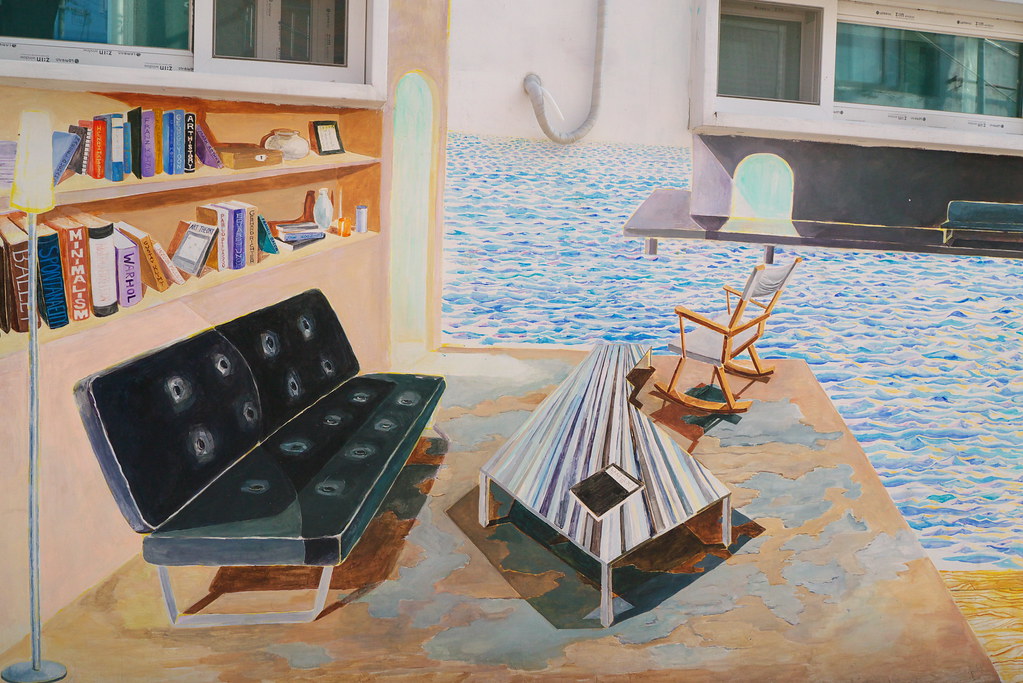
Photo: A trompe-l’oeil mural in Ihwa Mural Village on Naksan’s western slope. Source: travel oriented / Flickr (CC BY-SA 2.0).
The downsides of Naksan Park to weigh first
Naksan Park has a few rough edges that deserve an honest mention.
The climb to Naksan Park is the headline. The approach from Hyehwa means stairs, a few steep stretches, and a genuine sweat in summer. Budget about an hour from Hyehwa Station to the top if you walk it at a normal pace. People do arrive at the ridge wondering why they bothered. The consolation is that the ridge itself runs fairly flat — the effort is nearly all in getting up. If stamina is a question, this is the honest deciding factor.
Finding Naksan Park is harder than it should be. The route up threads through narrow, steep residential alleys that look nothing like a park entrance. Without a map open on your phone you will second-guess yourself repeatedly. Follow the wall once you spot it and the doubt disappears.
Do not drive to Naksan Park. The lane outside the small car park is narrow and sits in a school zone, so two-way traffic doesn’t work. Staff turn cars away rather than let a queue build. The subway plus the uphill walk is genuinely the easier option.
Getting up to Naksan Park, and getting around
Access is limited. The Hyehwa approach is a poor fit for strollers, and for anyone with mobility difficulties it is effectively off the table. There is no gentle way onto this ridge.
The Ihwa murals, as noted, are largely faded or painted over. They shouldn’t be the reason for the trip.
One quirk of the view itself. N Seoul Tower sits to your left while the sun goes down to your right, so the tower and the sunset don’t land in the same frame. Photographers expecting one tidy composition end up shooting two.
After dark, some stretches of the path stay dim even with the wall floodlights, which is worth factoring in for anyone walking solo. Facilities are sparse, too — toilets are limited, so plan ahead. The hilltop turns cold and wind-whipped in winter. And the viewpoints themselves are smaller than the crowds they draw, so on weekend evenings the best spots fill with people doing exactly what you came to do.
Who Naksan suits, and who it won’t
A strong fit if: you want Seoul’s best free night view. Couples and sunset chasers are well served here, and anyone drawn to the Joseon-era city-wall story will find plenty to read in the stones. Photographers get golden hour and blue hour in a single walk. If strolling a ridge beats queuing for a tower elevator, Naksan is the pick.
Better skipped if: the uphill approach is a real barrier, or the famous murals are the main draw—that expectation ends in disappointment. Travelers who need full facilities and amenities won’t find them in this bare-bones park, and a shadeless midday climb in summer is hard going.
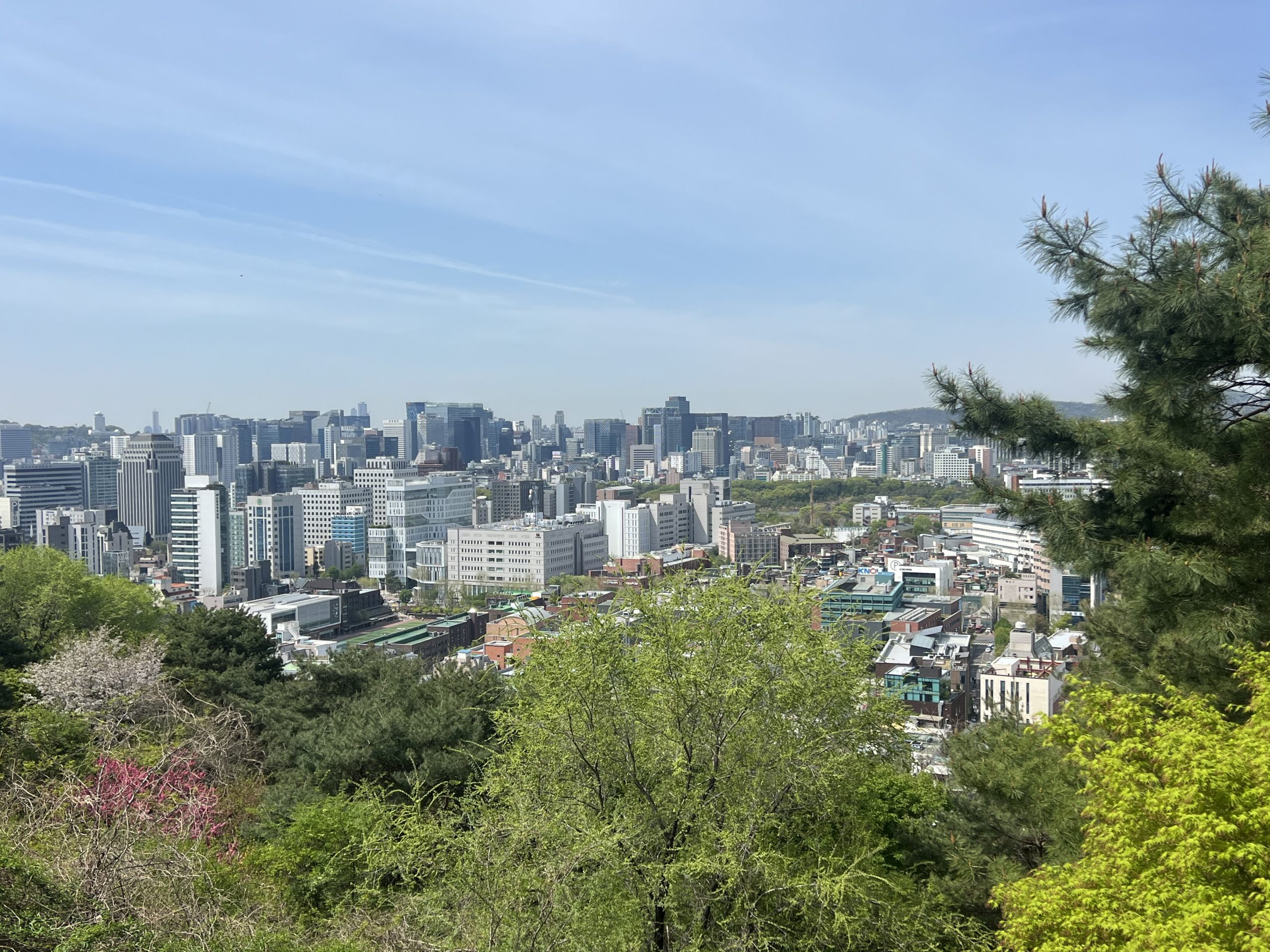
Photo: The downtown Seoul skyline seen from the Naksan ridge. Source: Wikihyo / Wikimedia Commons (CC0).
Building it into a half-day route
A dependable loop starts at Hyehwa Station, beginning with Marronnier Park and Daehangno—Seoul’s theater street, dense with cafés and small playhouses, and a pleasant warm-up.
From there, the route climbs through Ihwa Mural Village to the Naksan summit, with the wall walk timed for sunset. Descending the wall south toward Dongdaemun and the DDP lands you squarely in dinner-and-night-shopping territory once the light is gone.
A gentler variation pairs Naksan with nearby Changgyeonggung Palace earlier in the day, saving the wall for the evening. Either way, the half-day closes on one of Seoul’s best free views.