
Few capital cities put a genuine mountain range within subway reach of downtown. Seoul does. Bukhansan National Park is a real granite massif — not a landscaped city garden — sitting on the northern rim of the metropolis. Visitors with a free half-day and steady knees consistently rate it as the single most rewarding way to trade skyscrapers for open rock without renting a car or joining a tour.
The park packs three rocky summits, a 300-year-old fortress wall, and centuries-old temples into roughly 80 square kilometers. Its headline peak is Baegundae (836.5 m), the highest point in the Seoul area. The reward at the top is a genuine 360-degree panorama that no ticketed observation deck can match — earned on foot.
- 📍 Address: Bukhansanseong Park Information Center, 375 Daeseomun-gil, Deogyang-gu, Goyang-si (the main traveler trailhead)
- 🕒 Hours: Daytime only, open year-round. Apr–Oct 04:00–17:00; Nov–Mar 04:00–16:00. Night hiking is banned.
- 💵 Price: Free to enter. Parking costs money if you drive.
- 🚇 Getting there: Subway Line 3 to Gupabal Station, Exit 1, then bus 34, 704, or 8772 to the “Bukhansanseong” stop (~15 min). Alternative: the Ui-Sinseol light rail to Bukhansan Ui (Doseonsa) Station, Exit 2.
- ⏱ Time needed: 4–6 hours round trip to Baegundae. Plan a full half-day.
- 🔗 Nearby: Post-hike makgeolli and pajeon by the gate; Starbucks “The Bukhansan” for rooftop mountain views.
- ✅ Verified as of June 2026.
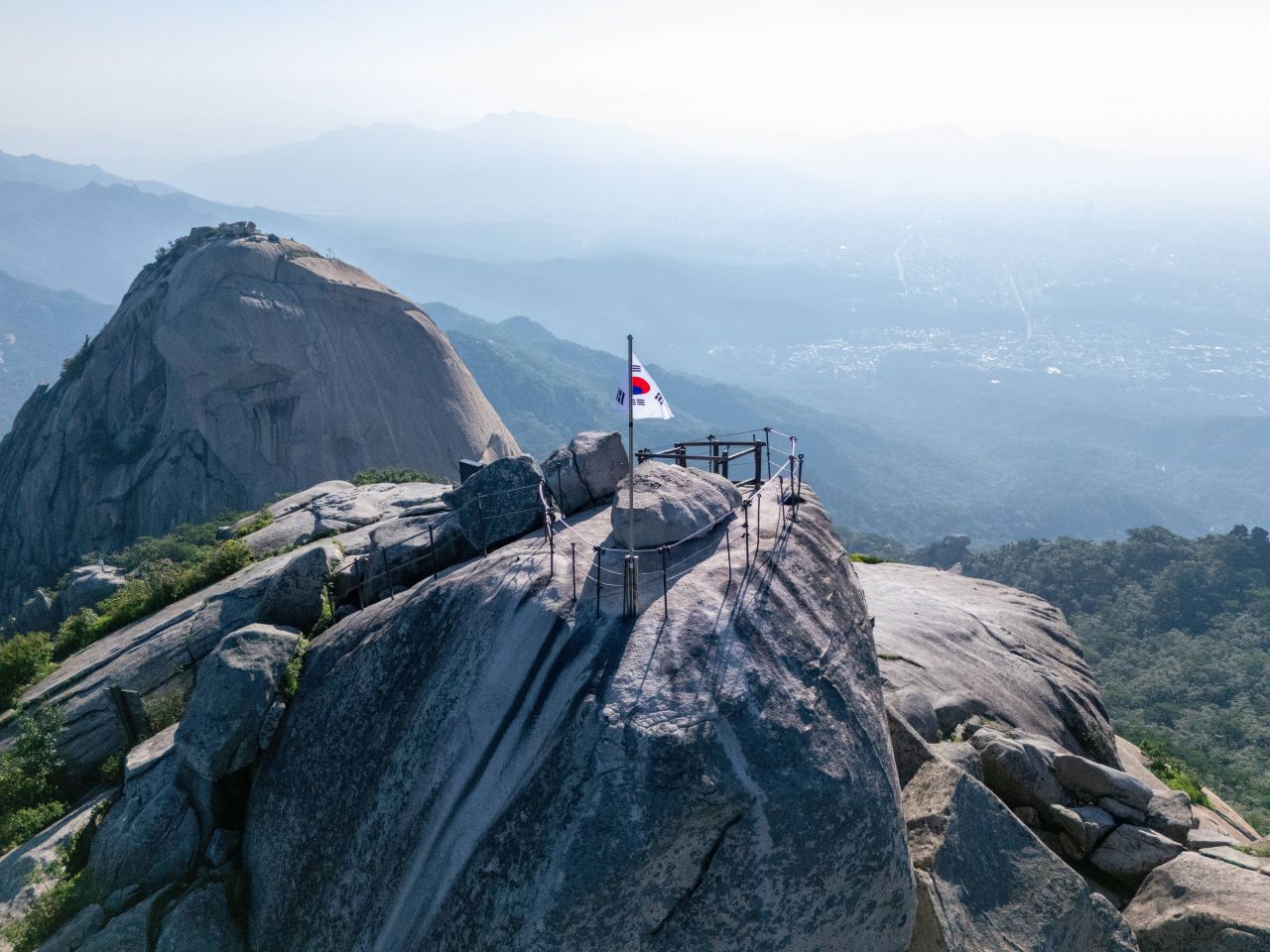
Baegundae’s summit platform — the Korean flag, the safety railings, and Seoul hazy in the distance. Photo: 북한산국립공원 / Source: Korea Tourism Organization 관광사진갤러리 (KOGL Type 1)
Bukhansan National Park: a mountain range at the end of a subway line
Most cities offer a park. Seoul offers a mountain range reachable on public transit, and the promise holds up. Ride out from the center and within an hour you are on a granite trail hemmed by pine and bare rock. That accessibility is the park’s defining feature for foreign travelers.
Bukhansan is often cited as one of the most-visited national parks per unit area anywhere on earth. Seoulites treat a serious summit like a weekend errand, arriving in full hiking kit at dawn. First-timers usually find that energy contagious: the trails stay lively the whole way up, so solo visitors are rarely truly alone.
Find it on the map
Two ways up to Baegundae
Two routes carry most foreign hikers to the summit, and both finish on the same rocky platform. The choice comes down to how you want to get there.
Route 1 — Bukhansanseong Fortress entrance. The classic approach runs about 3.4 km one way, threading past old fortress structures as it climbs. Budget roughly two and a half hours up. It is the more scenic, history-flecked line, and it starts from the Gupabal-side bus stop.
Route 2 — Doseonsa / Ui Station. This one wins on transit convenience. Ride the Ui light rail to its northern terminus, then walk a valley road lined with cafés and gear shops up to Doseonsa Temple before the real ascent begins.
Either way, the final stretch is the same test: a steep granite scramble where you haul yourself up bare rock on fixed steel cables and railings. It is not technical mountaineering, but it does demand fitness, sure footing, and some tolerance for exposure. Then the rock opens and the city unrolls in every direction.
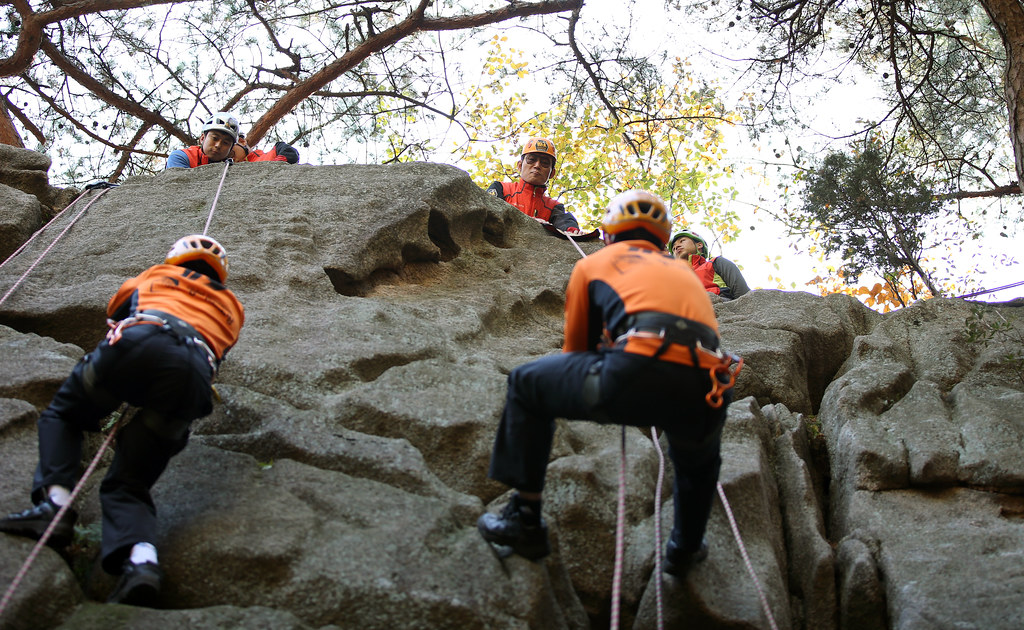
Climbers work up bare granite with ropes — the kind of scramble the final push to Baegundae demands. Photo: KOREA.NET, CC BY-SA 2.0 via Flickr.
Fortress walls and a Silla-era temple
Bukhansan is more than a peak to bag. Draped across its ridges is Bukhansanseong Fortress, a stone wall King Sukjong of Joseon raised in 1711 as a mountain refuge should the capital ever fall. The outer wall ran about 12.7 km, with gates, secret posts, and a temporary palace tucked inside. Long sections still stand, and walking them is a gentler way to experience the park for those who would rather not summit.
Lower on the Ui-side route sits Doseonsa Temple, founded in 862 during the Silla era. It remains an active temple with a large rock-carved Buddha — a quiet, incense-scented pause before or after the hard part of the day.
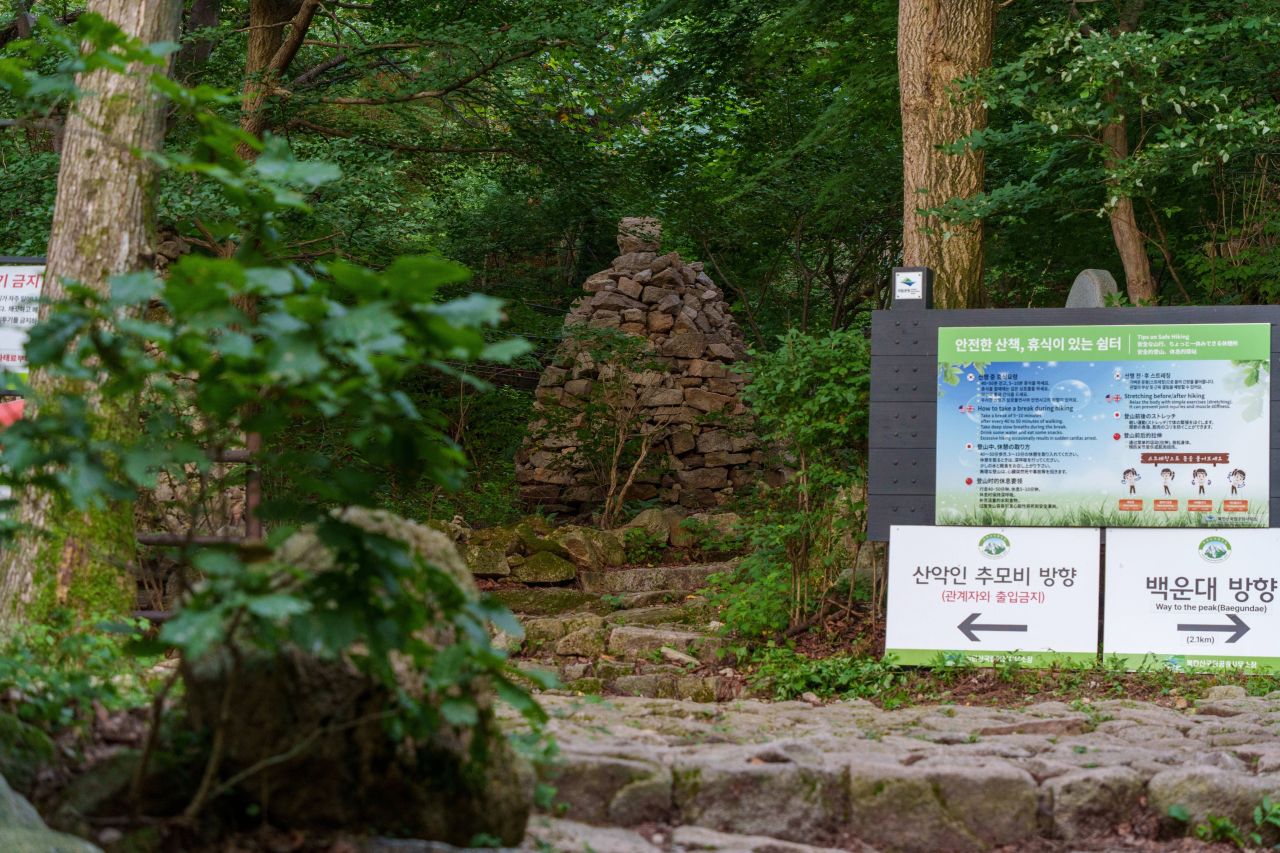
Forest trail markers point the way up to Baegundae Peak. Photo: 북한산 / Source: Korea Tourism Organization 관광사진갤러리 (KOGL Type 1)
Prefer a flatter day? A common approach is to follow the restored fortress walls toward Daenammun gate rather than pushing for Baegundae. You still get the history, the forest, and wide views without the rope scramble — a sensible fallback if the weather turns.
Timing your Bukhansan National Park visit through the seasons
Autumn is the showstopper. From late October into mid-November the slopes turn gold and red, and the dry, clear air delivers the sharpest city views of the year. The trade-off is company: everyone knows this, so it is also the most crowded window. Spring is the gentler pick — cherry blossoms and azaleas, cool temperatures, shorter queues.
Most visitors are advised to avoid mid-summer, when the monsoon slicks the rock and heat above 30°C turns the climb into a grind. Weekdays beat weekends by a wide margin; the narrow summit approach bottlenecks badly on a sunny Saturday.
Best time to arrive: aim to be through the trailhead gate by 07:00–08:00. Starting early clears the summit scramble before the mid-morning queue builds, gives you the clearest air, and leaves plenty of daylight for the knee-taxing descent well before the seasonal closing time.
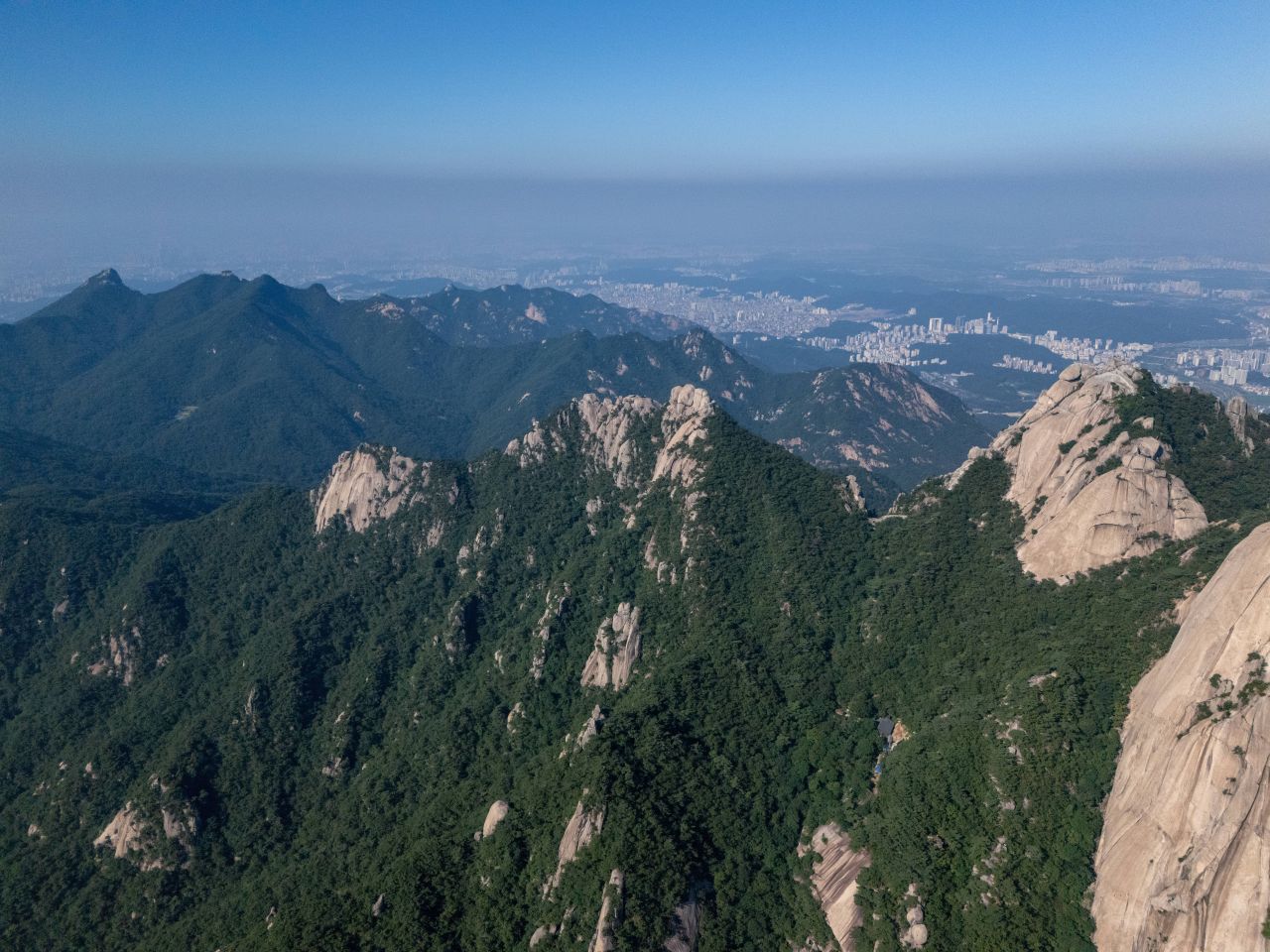
Bukhansan’s granite ridgeline rolls toward the Seoul skyline. Photo: 북한산 / Source: Korea Tourism Organization 관광사진갤러리 (KOGL Type 1)
Before you go: the honest downsides of Bukhansan National Park
Bukhansan National Park is a real mountain and it asks for real effort. The climb to Baegundae is long and steep, with endless stairs and uneven rocky steps. The roped scramble near the top does not suit everyone — travelers uneasy with heights tend to find that final section genuinely unnerving.
Do not underestimate Bukhansan National Park because it sits on a subway line. Korean hikers who describe themselves as beginners come back saying it was far harder than expected, and a fair number turn back within sight of Baegundae. The opening stretch is unhelpfully steep, hitting you before your legs have warmed up. The descent is its own event too — several hikers find going down worse than coming up, and two days of calf soreness afterwards is a normal outcome. In summer the heat multiplies all of it. If the trailhead approach already looks long, taking a taxi to it is money well spent.
Crowds are the other recurring Bukhansan National Park complaint. On a sunny weekend the summit approach becomes a slow-moving line — you queue to make the final climb, then queue again at the top. Expect roughly twenty minutes for your turn at the summit marker photo. English signage thins out fast once you are deep on the trails, and the park’s English web information is sparse. With multiple entrances and forks, a wrong turn is easy. The practical fix: pick up a map first — the Seoul Hiking Tourism Center near Bukhansan Ui Station hands out English maps and even rents boots and poles.
Is Bukhansan National Park the right hike for your trip?
Bukhansan suits reasonably fit travelers who like earning their views and want a half-day that feels nothing like urban Seoul. It rewards those who would rather sweat than shop, and it pairs beautifully with a makgeolli toast at the trailhead afterward.
Those with shaky knees, a real fear of heights, or only a couple of free hours are better off skipping the Baegundae summit itself — but not the mountain. Walking the fortress walls and visiting Doseonsa still makes for a full, satisfying day without the scramble.
Want more green space in the city? Browse our other parks & nature guides for Seoul.