
Gyeonghuigung is the palace most Seoul itineraries leave out — and for first-time visitors on a tight schedule, that instinct is often correct. It is the smallest of the city’s five grand palaces, the only one that charges no admission, and by a wide margin the quietest. It does not replace Gyeongbokgung or Changdeokgung. But for travelers who have already covered the headline sights and want twenty calm minutes away from the selfie sticks, few central spots deliver that better.
Our reading of the site is simple: this is not a first stop, but a breather. A free, peaceful add-on that slots neatly between bigger sights. What follows is how to use it well.
- 📍 Address: 45, Saemunan-ro, Jongno-gu, Seoul 03177 (서울특별시 종로구 새문안로 45)
- 🕘 Hours: Daily 09:00–18:00. Closed Mondays and January 1. Last entry ~30 min before close.
- 💵 Price: Free — the only free one of Seoul’s five grand palaces.
- 🚇 Getting there: Line 5, Seodaemun Station Exit 4 (~8–10 min walk, closest); or Line 5 Gwanghwamun Station Exit 1 (~10–12 min).
- ⏱ Time needed: 30 min–1 hour. It’s small, and you usually can’t enter the buildings.
- 🔗 Nearby pairing: Seoul Museum of History, directly adjacent and also free — the top combo.
- ✅ Verified as of June 2026
The approach from Seodaemun, and when to arrive
From Seodaemun Station Exit 4, the walk runs about eight to ten minutes along Saemunan-ro — flat, step-free, and easy to follow past office towers and the Seoul Museum of History. Visitors report that the palace stays hidden until the last moment, then Heunghwamun, the old main gate, appears on the left: low, weathered, and quietly grand against the modern street. Most first-timers rate that first glimpse the best moment of the approach. Gwanghwamun Station Exit 1 works too, though it adds a couple of minutes.
Timing matters more than season here. The grounds are open-air and the buildings are quick to take in, so the palace holds up in almost any weather. Spring blossoms and gold autumn trees dress the courtyards, but neither makes or breaks the visit. The quieter option is a weekday morning, ideally within the first hour after the 09:00 opening — that window is when the grounds sit emptiest and the silence does its best work. By early afternoon on weekends, expect a light trickle of school groups and photographers.
The forgotten fifth palace
Gyeonghuigung was built in the early 1600s under King Gwanghaegun, completed around 1617–1623. Gyeonghuigung Palace began life under a different name, Gyeongdeokgung. For the Joseon court, this was a secondary palace — a backup residence on the city’s west side.
That role earned it a nickname: Seogwol (서궐), the “Western Palace,” paired against Changdeok and Changgyeong as the “Eastern Palaces.” Roughly ten Joseon kings used it as an alternate home when they preferred not to be at the main palace. Some stayed for years at a stretch — holding court, raising families, and running the state from these courtyards. It mattered. It simply never carried the prestige of Gyeongbokgung.
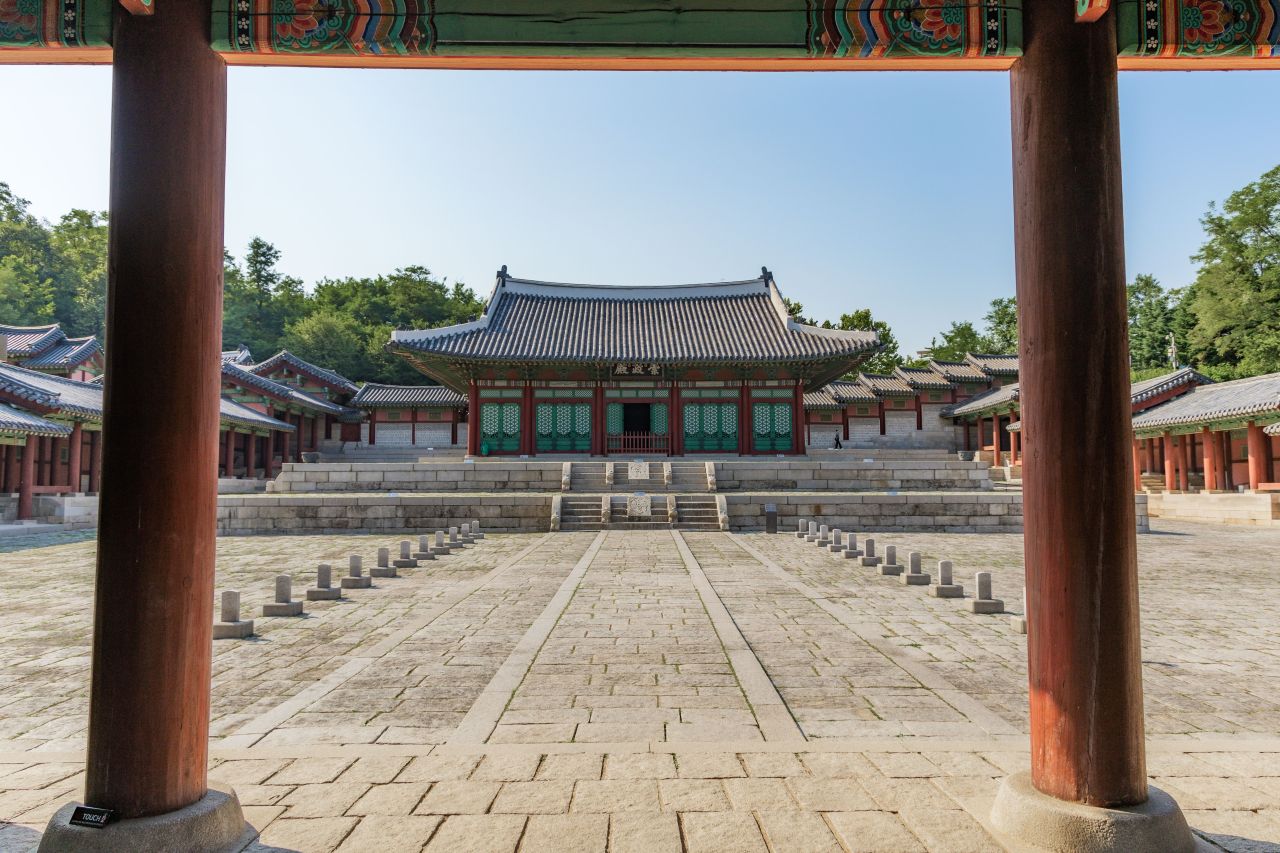
Photo: Sungjeongjeon, the reconstructed main throne hall of Gyeonghuigung Palace. Source: Korea Tourism Organization (KOGL Type 1).
Step through the gate today and the quiet registers first. The subway nearby runs packed, yet the courtyards here often sit nearly empty. That emptiness is the whole point — and the whole sad story.
What was lost here
Most of Gyeonghuigung is gone, and the usual short version — that the Japanese colonial administration tore it down — is only the second half of the story. The palace had already been gutted by its own dynasty. When Gojong’s court began rebuilding Gyeongbokgung in 1865, it demolished Gyeonghuigung Palace for timber and stone, keeping only five halls standing and carting the rest across town as building material. The Gyeongbokgung Yeonggeon Ilgi, the official construction diary, records the work between April and August of that year. By the time the colonial period arrived, there was not much palace left to remove.
What the colonial administration did was finish the job and take the land. The remaining buildings were dismantled, and the grounds were turned into a school — Gyeongseong (Keijo) Middle School, later Seoul High School. For most of the 20th century, students walked to class on the very plots where kings once held audiences. That school occupied the site until 1980, which is a large part of why so little survives: a palace was treated as spare land. The main throne hall was hauled off to Dongguk University in 1926, where portions of it still stand.
At its peak, Gyeonghuigung held more than 100 buildings. Today only a handful remain. It is a brutal ratio, and it registers plainly as you cross the wide, half-empty plots.
Knowing this reshapes the visit. You are not touring a grand, living palace. You are standing on a wound that was only partly healed — and the emptiness becomes oddly moving once the reason for it is clear.
What’s actually still standing
The lineup is short, so here is what to look for.
Heunghwamun (흥화문) — the main gate of Gyeonghuigung Palace, and the only major original structure left. It was returned to the grounds in 1985; its first home stood closer to Jongno. This is the genuine article, and it rewards a proper look on the way in.
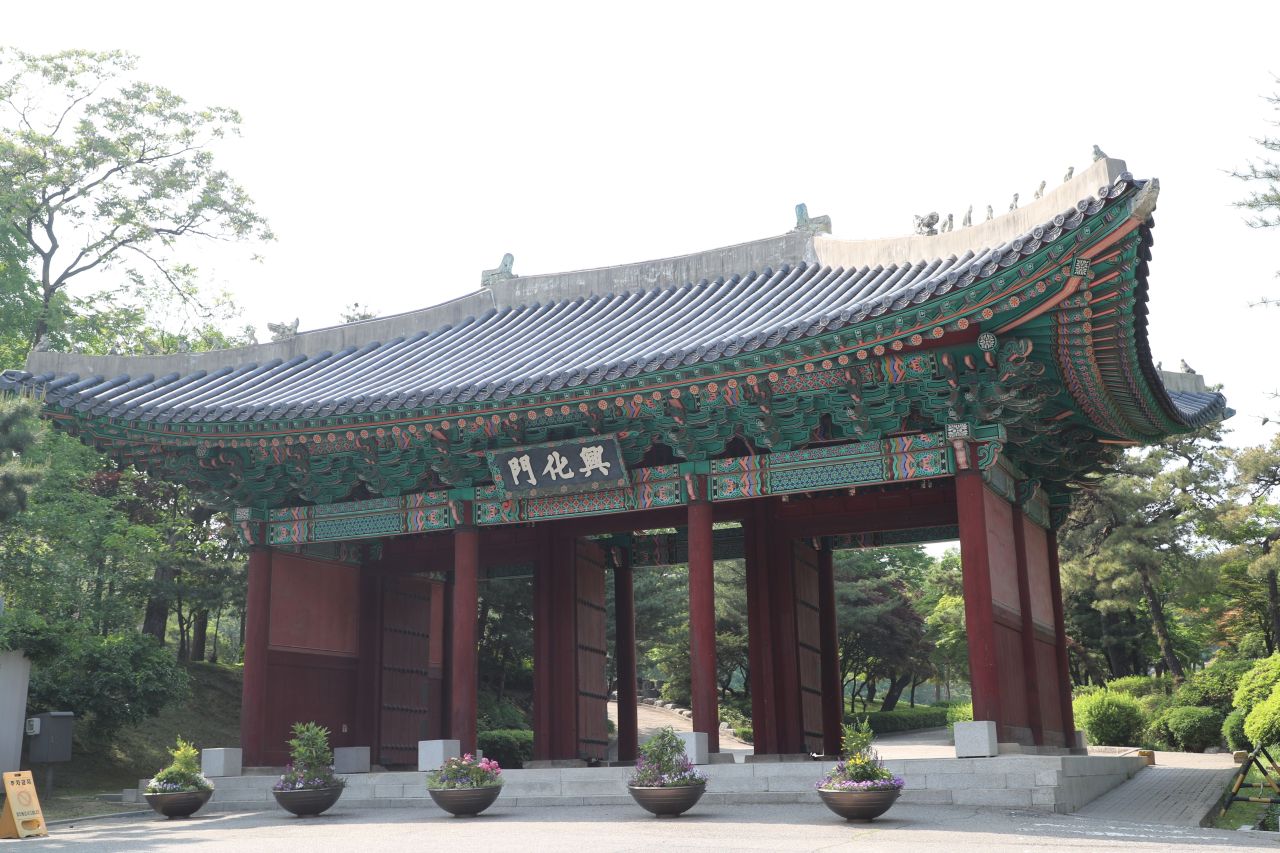
Photo: Heunghwamun, the original main gate of Gyeonghuigung Palace. Source: Korea Tourism Organization (KOGL Type 1).
Sungjeongjeon (숭정전) — the reconstructed main throne hall, where kings once held audiences and state events. The original went to Dongguk University in 1926, so this is a careful rebuild. It remains the visual centerpiece, and the colorful painted eaves photograph beautifully.
Jajeongjeon (자정전) — a smaller reconstructed audience and administrative hall behind the throne hall. A quick stop, but it rounds out the layout.
Seoam (서암) — a natural rock formation with a spring, tucked into the grounds. This one is original — a genuine old landscape feature rather than a rebuild. It is the kind of quiet corner that is easy to miss without a nudge to find it.
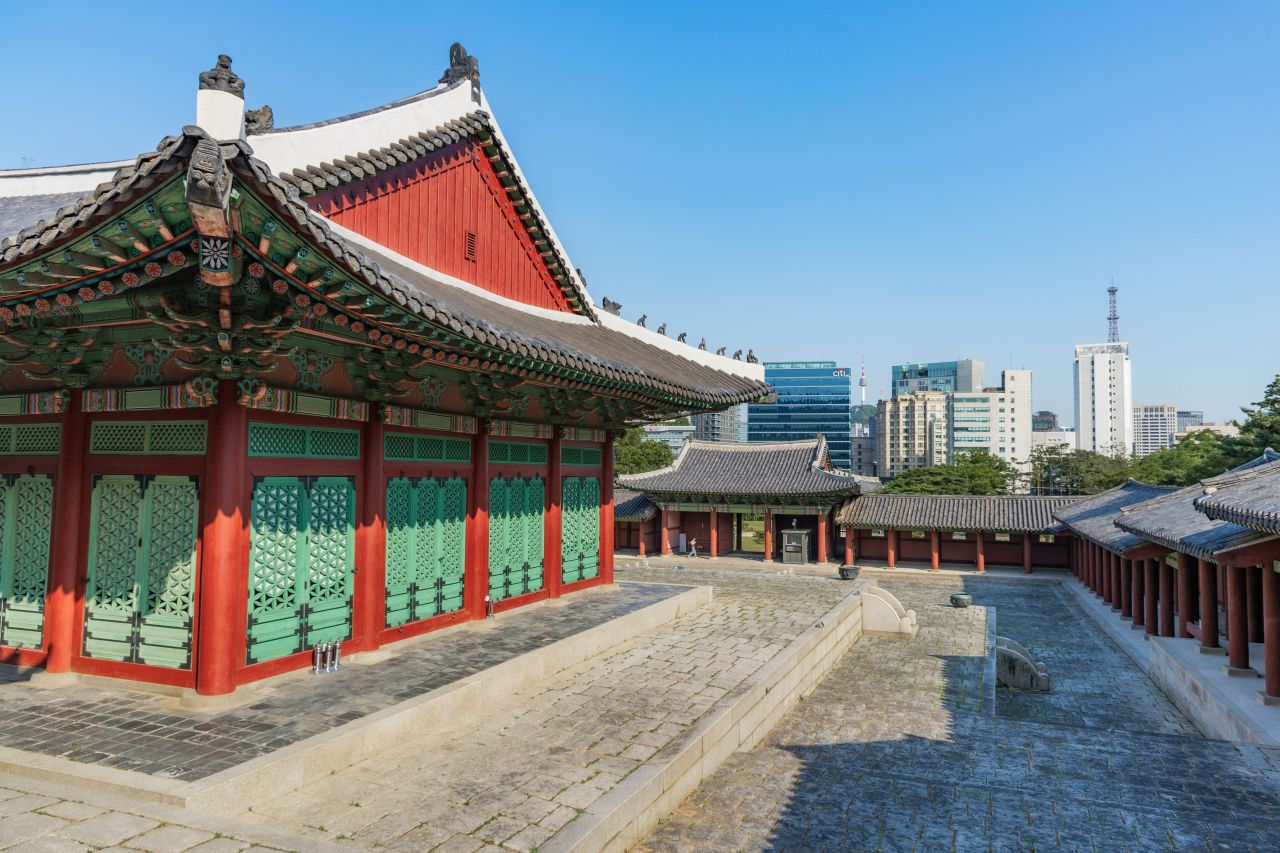
Photo: The colorful dancheong eaves and quiet, empty grounds of Gyeonghuigung Palace. Source: Korea Tourism Organization (KOGL Type 1).
One real upside of all that emptiness is photography. At the big palaces, a clean shot means fighting crowds. Here, visitors can frame the painted eaves, the broad courtyard, and Sungjeongjeon with almost nobody in the picture. For people-free palace photos in central Seoul, it is hard to beat.
Gyeonghuigung Palace’s drawbacks, and how to plan around them
A few things are worth being straight about before you go.
Gyeonghuigung Palace is the smallest of the five, and there genuinely is not much left to see. The grounds can feel sparse — charming in the right mood, underwhelming for anyone who came for grandeur. In most cases you view the buildings only from the outside, as interiors are generally closed.
There are no guided tours and little signage compared with the big palaces. For travelers on tight schedules, the standard advice is to do Gyeongbokgung and Changdeokgung first, since those deliver the full palace experience. Gyeonghuigung does not.
Two small practical notes on Gyeonghuigung Palace before that. Parking is the usual central-Seoul story, meaning public lots nearby at central-Seoul rates, so the ten-minute walk from Seodaemun or Gwanghwamun is the sane approach. And if you are renting hanbok, this is quietly one of the best backdrops in the city: a real palace courtyard with painted eaves and, unlike the headline palaces, nobody else in your frame.
The practical takeaway: skip it entirely on a single palace day. It earns its slot only once the headliners are done.
How Gyeonghuigung compares to Seoul’s other palaces
| Palace | Price | Crowds | Time needed | Best for |
|---|---|---|---|---|
| Gyeongbokgung | ~₩3,000 | Very high | 2–3 hrs | The flagship; guard ceremony |
| Changdeokgung | ~₩3,000 (+Secret Garden) | High | 2–3 hrs | Beauty & the Secret Garden |
| Deoksugung | ~₩1,000 | Medium | 1–1.5 hrs | East-meets-West, central |
| Changgyeonggung | ~₩1,000 | Low–medium | 1–1.5 hrs | Gardens, quieter mood |
| Gyeonghuigung | Free | Very low | 30–60 min | Quiet, free breather |
One planning note the table underlines: a full Seoul palace circuit runs close to ₩8,000 in admissions, and Gyeonghuigung is the one stop that adds nothing to that total. One caveat on that arithmetic: the paid palaces sometimes open free on national holidays such as Memorial Day, Liberation Day and National Foundation Day, though which days apply changes from year to year, so check if your trip lands on one. Ticket booths at the paid palaces take both cash and card, but this one skips the transaction altogether — a useful anchor on a budget day. Want the full set? Here’s our guide to Seoul’s other palaces to plan a proper palace day around this one.
Who fits this palace — and who won’t
It suits travelers who have already seen the big palaces and want a calm, crowd-free pause. It suits anyone drawn to history with a story, especially the bittersweet kind. And it suits visitors for whom “free, peaceful, and ten minutes from Gwanghwamun” reads as a win — which is exactly what the site delivers. Photographers who like empty, painterly courtyards tend to come away happy too.
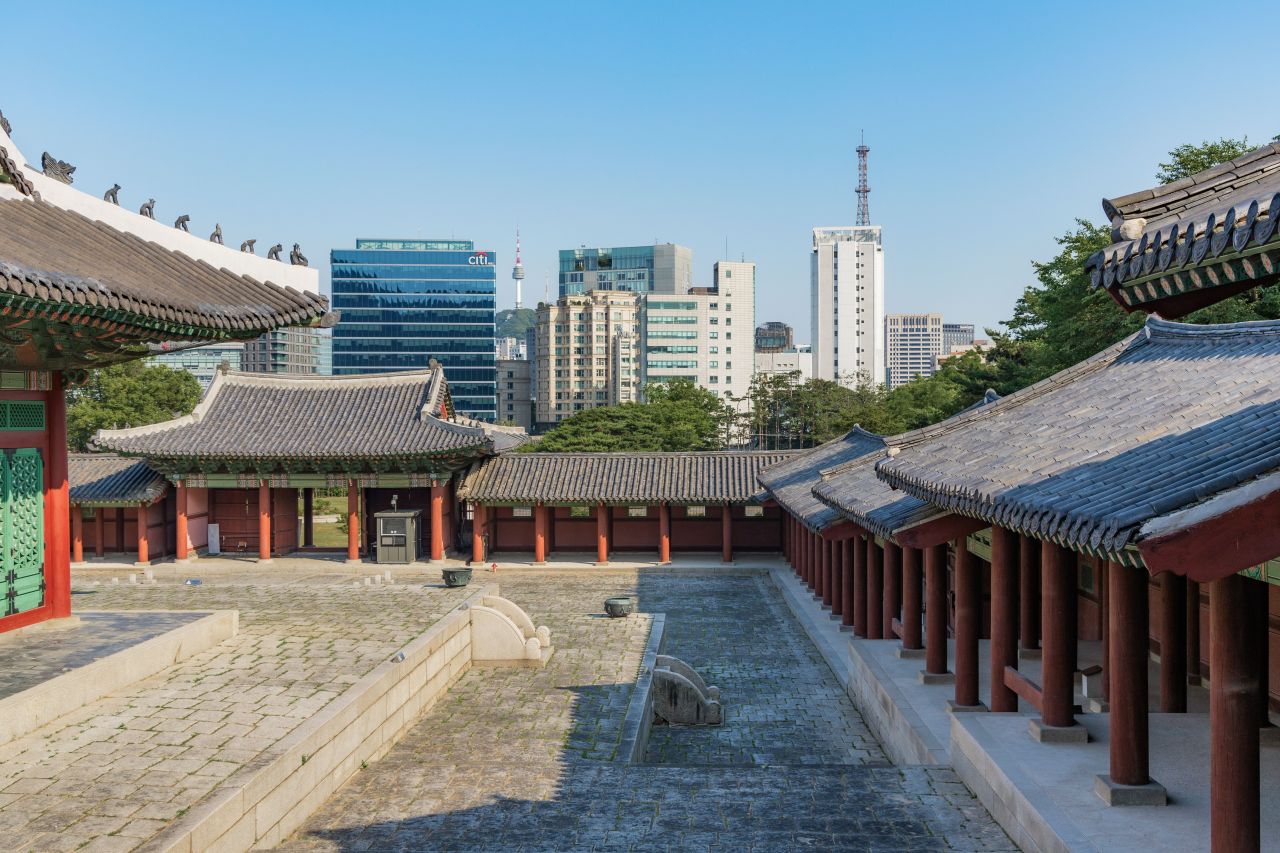
Photo: Gyeonghuigung Palace against the modern Seoul skyline. Source: Korea Tourism Organization (KOGL Type 1).
It is the wrong choice for a short Seoul trip that hasn’t yet covered Gyeongbokgung or Changdeokgung. It is also the wrong choice for anyone who needs building interiors, guided tours, or a grand “wow” moment. This palace does not trade in wow. It trades in quiet.
The editorial verdict: slot Gyeonghuigung as a 30-to-45-minute stop, ideally bundled with the Seoul Museum of History next door. Treat it as the palace you visit to escape the crowds, not the one you build a day around. Used that way, this forgotten fifth palace turns into one of the most peaceful free pockets in central Seoul.