
Changgyeonggung is the Seoul palace most travelers walk right past, and that oversight is exactly what makes it worth a second look. It is quiet, garden-first, and inexpensive — a calm green pocket that pairs naturally with its grander neighbor, Changdeokgung. For visitors who want a free afternoon without fighting a crowd, this is one of the city’s easiest wins.
The common approach is simple: slip in from Changdeokgung through the internal gate, pause at the oldest throne hall in Korea, then spend most of the visit outside — by the glass greenhouse and the lotus pond. Changgyeonggung rewards a slow walk rather than a checklist. This guide lays out whether it deserves a slot on your itinerary and how to make the most of it.
Fast facts before you go
- 📍 Address: 185 Changgyeonggung-ro, Jongno-gu, Seoul (창경궁로 185)
- 🕘 Hours: 09:00–21:00 daily, last admission 20:00. Closed Mondays.
- 💵 Price: ₩1,000 adults (19–64); free for everyone 18 and under, seniors 65+, and anyone in hanbok. Integrated Palace Pass (4 palaces + Jongmyo, excl. Secret Garden) ₩6,000, valid 6 months.
- 🚇 Getting there: Hyehwa Station (Line 4) Exit 4, ~15 min walk; or Anguk Station (Line 3) Exit 3, ~19 min. Also reachable on foot directly from Changdeokgung via the internal Hamyangmun gate.
- ⏱ Time needed: 1–1.5 hrs focused; ~2 hrs with the greenhouse, Chundangji pond and a slow garden walk.
- 🔗 Nearby: Changdeokgung + Secret Garden (adjoins via Hamyangmun); Jongmyo Shrine (pedestrian bridge, closes ~16:30); Daehangno/Hyehwa cafés & Naksan Park.
- ✅ Verified as of June 2026
A home for the royal family, not a seat of power
To read Changgyeonggung correctly, it helps to know what it was built for. King Sejong raised it in 1418–1419 as Suganggung, a comfortable residence for his retired father. Later kings expanded and renamed the complex in 1483–84. From the outset it was a residential palace — quarters for queens, dowagers and concubines, rather than the king’s main seat of governance.
That distinction shapes the whole experience. This was a “living” palace, closer to family life than grand ceremony. Fire gutted it in 1592, and crews rebuilt the core in 1616. The domestic, lived-in scale becomes obvious the moment the main halls give way to trees.
The mood differs sharply from a power palace. Where Gyeongbokgung projects authority, Changgyeonggung recedes. The grounds open up, the buildings step back, and the gardens take over. That gentler rhythm is why most first-timers find an unhurried hour or two suits it far better than a rushed lap.
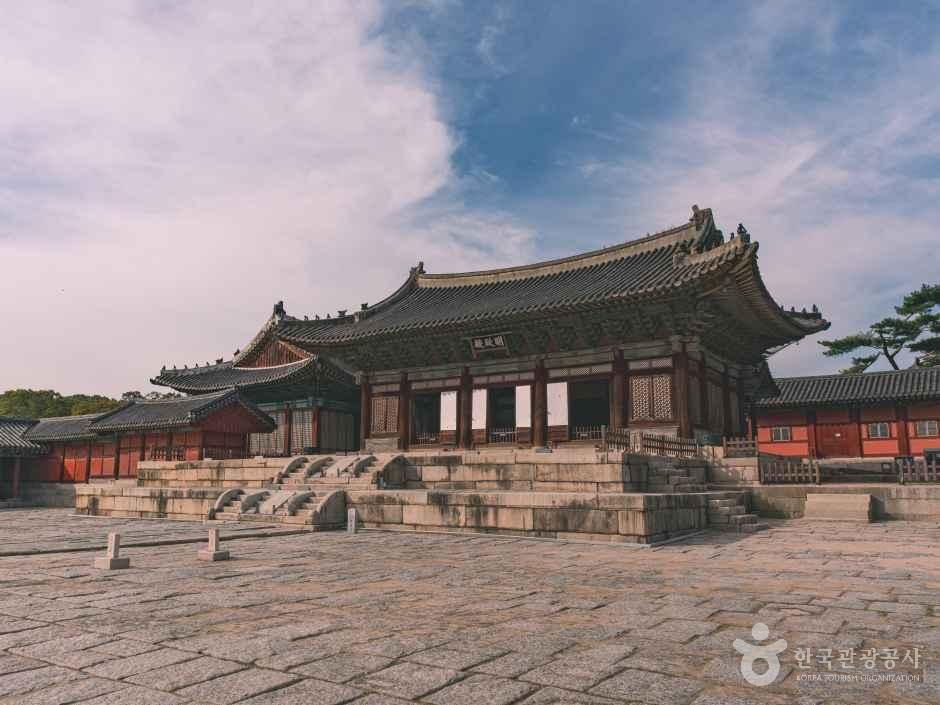
Photo: Myeongjeongjeon throne hall at Changgyeonggung / Source: Korea Tourism Organization (KOGL Type 1)
Myeongjeongjeon: Korea’s oldest throne hall
The throne hall deserves a stop. Myeongjeongjeon is the oldest surviving palace main hall in Korea (National Treasure No. 226), rebuilt in 1616. It carries a detail worth noticing: it faces east, not south like most royal halls. The nearby Okcheongyo stone bridge is a designated Treasure as well. Both reward a few minutes of attention.
The greenhouse, the pond, and a colonial scar
The strongest draw at Changgyeonggung lies past the halls, out in the garden. Two landmarks anchor that zone.
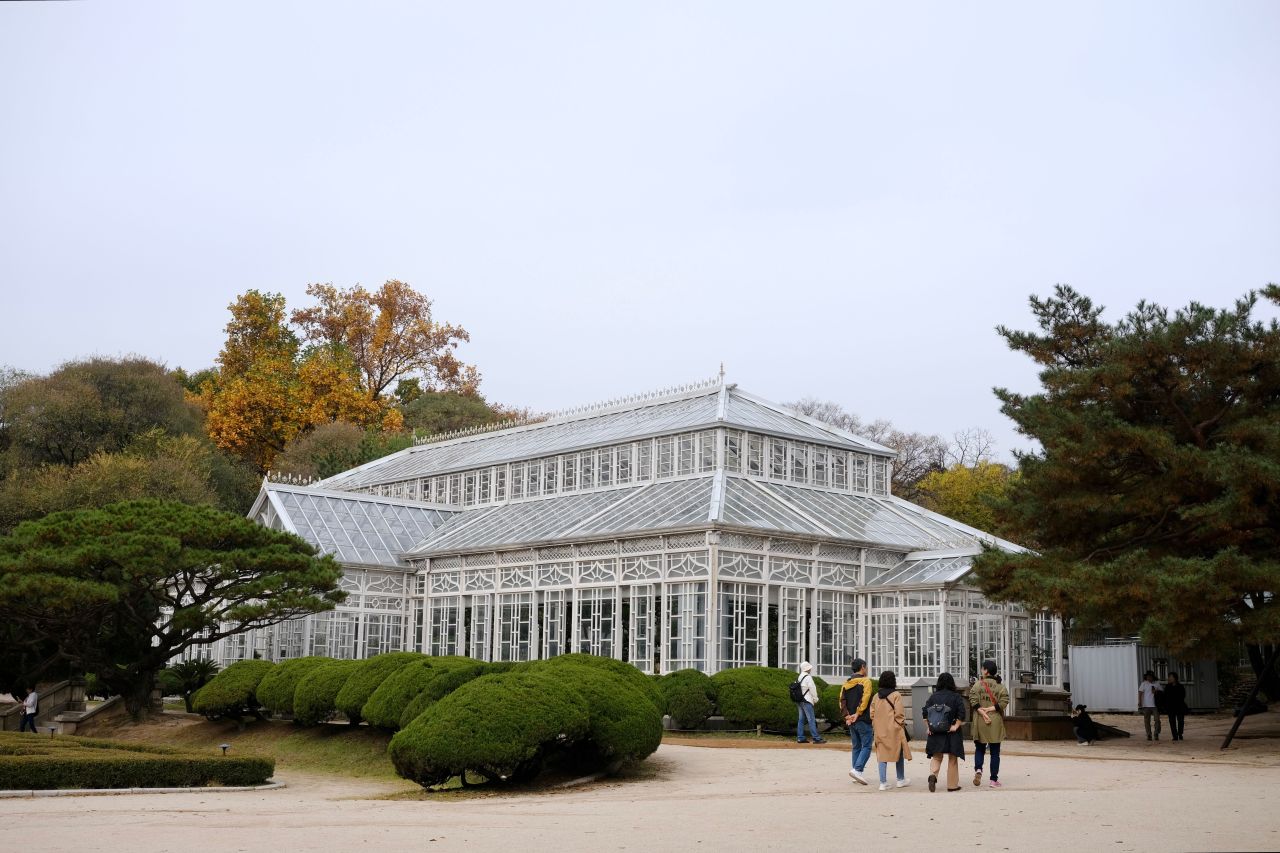
Photo: The Daeonsil Grand Greenhouse, Korea’s first Western-style greenhouse / Source: Korea Tourism Organization (KOGL Type 1)
First, the Daeonsil Grand Greenhouse. Built in 1909, it was Korea’s first Western-style iron-and-glass greenhouse, restored in 2004. It is a striking, slightly out-of-place structure — all white frames and glass — and the most photogenic spot on the grounds. Reviews split on whether the planting inside justifies the walk, but the building itself is the shot most visitors come away with.
Beside it lies Chundangji. These were once royal rice paddies, where kings ceremonially plowed to bless the harvest. The field was converted into a pond and restored in 1986. Today it is a scenic water feature with lotus in season, ringed by a gentle path. This loop is the core of the visit.
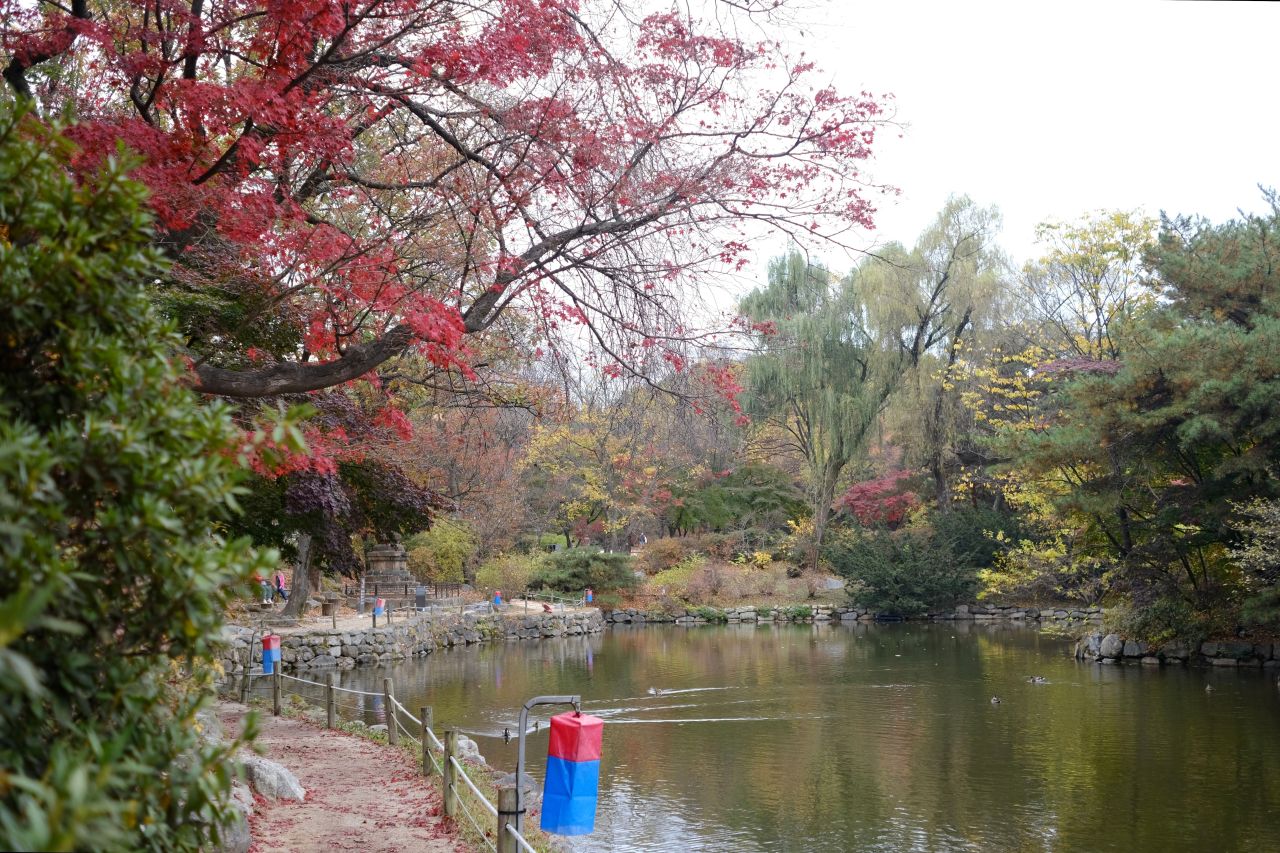
Photo: Chundangji pond and surrounding gardens / Source: Korea Tourism Organization (KOGL Type 1)
The history the signboards gloss over
The heavier chapter matters. Under Japanese colonial rule, the palace was deliberately degraded. Authorities demoted it into a public park called “Changgyeongwon,” installing a zoo, a botanical garden and thousands of cherry trees. It was a calculated insult to a royal site. Korea removed the zoo and restored the palace to royal form between 1983 and 1986.
An uncomfortable legacy remains. Because of those colonial plantings, Changgyeonggung became the Seoul palace most associated with cherry blossoms. The very thing that draws spring crowds also carries a painful history — both truths sit side by side here.
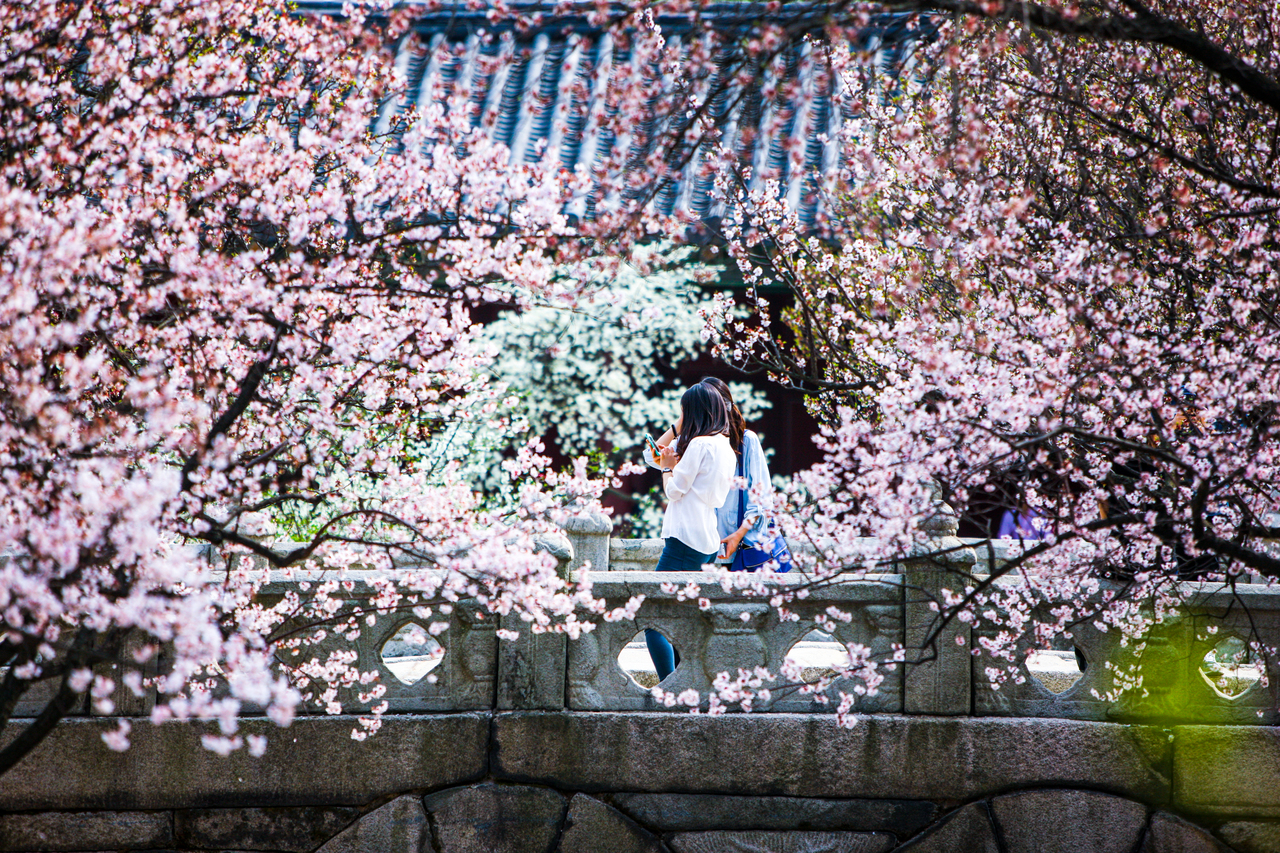
Photo: Spring cherry blossoms at Changgyeonggung / Source: Korea Tourism Organization (KOGL Type 1)
Season matters more here than at most palaces: it ranks among the city’s top spring blossom spots and turns into a strong autumn-foliage palace too. Aim for late March to early April, or mid-to-late October. In peak blossom week the paths fill quickly, so the best window to arrive is right at the 09:00 opening — the pond reflections and pink canopies stay calm for the first hour, then draw real crowds by late morning and lunchtime.
A route that flows straight from Changdeokgung
The most efficient sequence starts next door. Visit Changdeokgung first, then walk straight into Changgyeonggung through the internal Hamyangmun gate — no need to exit to the street and buy in again. It is a seamless royal-grounds-to-royal-grounds stroll, and on the Integrated Pass it costs nothing extra.
On the ticket math, the pass earns its keep once Gyeongbokgung and Changdeokgung are both on the list: ₩3,000 plus ₩3,000, and Changgyeonggung another ₩1,000 — already ₩7,000 against the ₩6,000 pass that also covers Deoksugung and Jongmyo. The Secret Garden (₩5,000) is always extra. One extra palace tips it decisively in the pass’s favor.
Once inside, keep the plan light. Begin at Myeongjeongjeon and the Okcheongyo bridge, then drift toward the greenhouse. Loop Chundangji at an easy pace, pause for photos, and let the garden carry the visit. That route covers everything that matters in roughly 90 minutes to two hours. Beyond that, the pleasure of Changgyeonggung is wandering, not tallying sights — a bench by the pond and shifting light through the trees is the version worth recommending.
Before you go: the honest downsides of Changgyeonggung
Changgyeonggung is not for everyone, and it is worth being clear about that. The buildings are fewer and far less grand than at Gyeongbokgung or Changdeokgung. The garden is the star, not the architecture. Anyone arriving expecting a dense, palace-packed compound may find it sparse, even empty.
It is also largely outdoors, which makes it a weak pick in bad weather. The grounds are large and partly hilly, so expect a fair amount of walking — leave the smart shoes at the hotel. English signage for the deeper history is limited, and the heavy colonial story is only partly explained on-site. The greenhouse underwhelms some visitors too. None of this is a dealbreaker, but the visit lands best when expectations are set correctly.
One upside worth stating plainly, though. Changgyeonggung genuinely absorbs its crowds in a way Gyeongbokgung does not. Even on a busy weekend, visitors report that people spread across the grounds rather than piling onto one photogenic spot, so waiting a moment usually clears your frame. If the palace-crowd crush is what puts you off Seoul’s big-name sites, this is the one that fixes it.
Practical snags that catch people out
Bags mean a second queue. Carry anything, even a small bag, and you join a separate line for the X-ray check before entry. Travelling light genuinely speeds up the arrival.
Check before you travel, and turn up early for timed entry. Wasted trips are common enough to mention — people arrive to find a section closed or entry not possible that day. The wider Changdeokgung-and-Changgyeonggung area also runs on different rules zone by zone, with separate booking systems and entry conditions, so what applies to one part may not apply next door. If you hold a reserved slot, be at the gate about twenty minutes early.
The night openings are a different kind of scramble. There is no brutal ticket-release race like Gyeongbokgung’s, which sounds like good news. The catch is that the queueing simply moves on-site: for the popular timed showings, lines start forming roughly an hour before. Bring a layer, too. The palace grounds run colder than the city after dark, and it is chilliest by the pond — exactly where you will be standing.
Who it suits, and who might pass
Changgyeonggung fits travelers who want calm, gardens, blossoms, and a cheap, easy add-on to Changdeokgung. Couples, slow travelers, photographers and anyone craving a breather from Seoul’s crowds tend to rate it among the city’s most relaxing hours.
It ranks lower for anyone with time for only one grand palace — Gyeongbokgung delivers the full royal spectacle. It also disappoints visitors who want extensive indoor interiors or detailed, museum-style storytelling. For the full lineup, see our other Seoul palace guides.
Which Seoul palace fits your day?
| Palace | Best for | Vibe |
|---|---|---|
| Changgyeonggung | Gardens, blossoms, a cheap pairing | Quiet, green, low-key |
| Gyeongbokgung | Your one grand palace, big ceremony | Vast, dramatic, busy |
| Changdeokgung | The Secret Garden, UNESCO craft | Refined, wooded, curated |
The editorial recommendation: pair Changdeokgung and Changgyeonggung as a single half-day, entering Changgyeonggung through Hamyangmun. Visitors get the polished beauty of one and the peaceful gardens of the other, all on one pass and one easy walk — the most efficient way to see this corner of Seoul.