
Okay — real talk. Most Seoul itineraries never leave the city, and that’s usually fine. Seoraksan National Park is the one exception I’d argue hard for. Three hours each way, granite spires stacked to the horizon, and a cable car that hauls you to 700 metres without a drop of sweat. If you only escape Seoul once, escape here.
But I’m not going to sell you a postcard. The cable car has no online booking, queues run past an hour on a good weekend, and the wind cancels it more often than anyone admits. This guide is the version I’d want before buying that bus ticket.
- 📍 Address: 1085 Seoraksan-ro, Sokcho-si, Gangwon-do (설악산로 1085, 속초시) — the Sogongwon entrance
- 🕘 Hours: Park open year-round, 24/7. Cable car roughly 09:00–17:30, seasonal. Staff post the day’s real schedule the evening before or that morning
- 💵 Price: Park entry free (the old ₩3,500 temple fee ended in 2023). Cable car round trip ₩16,000 adult / ₩12,000 child; free under 36 months. Parking ₩6,000 car, ₩9,000 large vehicle
- 🚌 Getting there: Express bus from Seoul Express Bus Terminal (Gangnam) to Sokcho, about 2 hr 20 min. Then local bus 7 or 7-1 from across the street, 25–40 min to the last stop, Seorak-dong / Sogongwon. T-money works
- ⏱ Time needed: 2.5–3 hours for the Sogongwon core. Add 1.5–2 hours for Biryong Falls, or a full day for Ulsanbawi
- 🔗 Nearby: Sokcho Jungang Market and Abai Village for dinner, 30 min back toward town
- 📞 Cable car: 033-636-4300 · sorakcablecar.co.kr (live wait times posted)
- ✅ Verified as of August 2026
Why Seoraksan National Park is worth three hours on a bus 🏔️
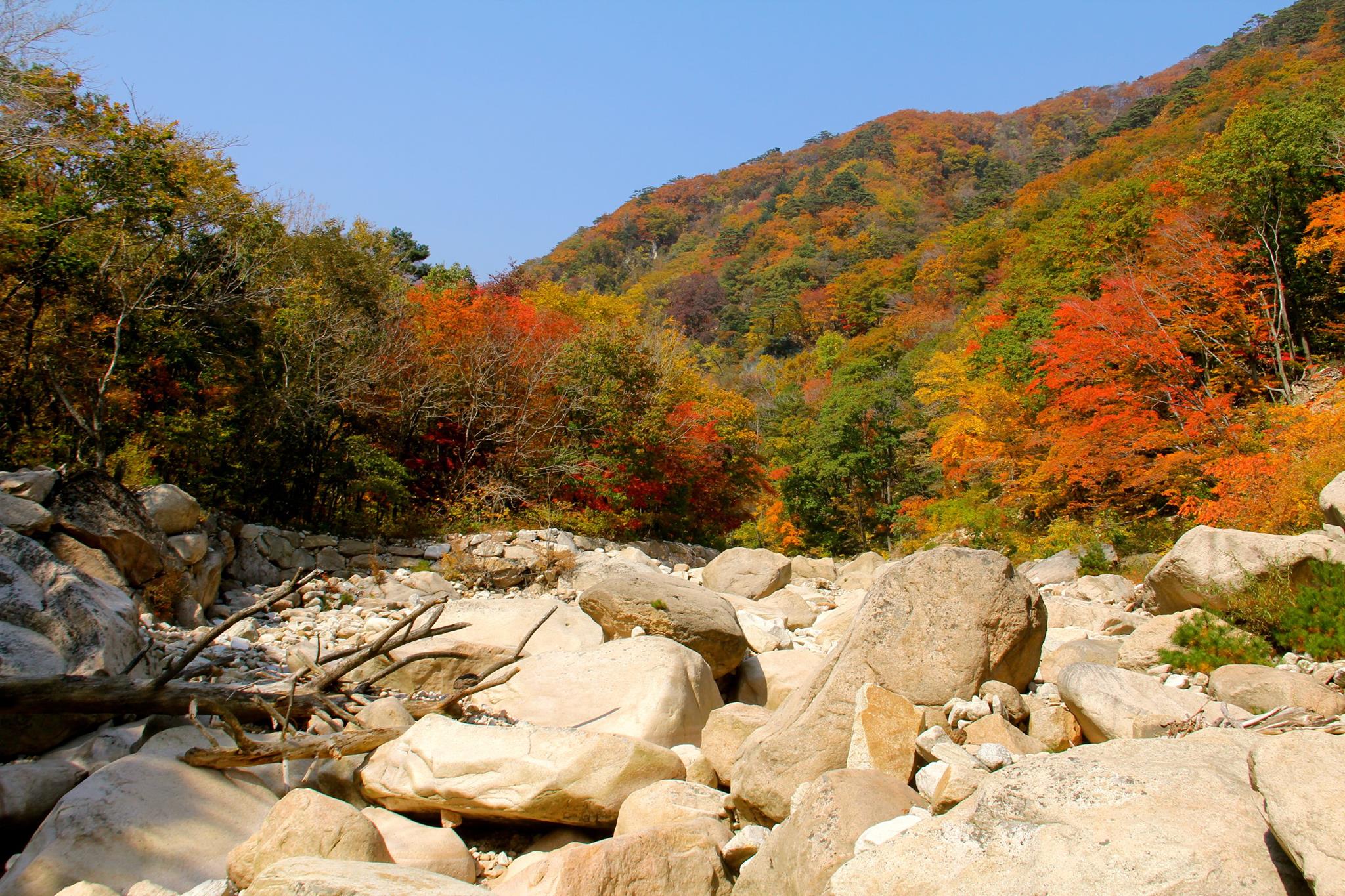
Autumn in the valleys below Ulsanbawi — mid-October is when Seoraksan gets genuinely busy, and genuinely worth it. Photo: Seoraksan in the Fall 1- 설악산 단풍 — Joycekim77, CC BY-SA 3.0 via Wikimedia Commons
Korea is 70% mountains, so “go see a mountain” sounds like weak advice. Seoraksan National Park is different in kind, not degree. The rock here is bare granite, weathered into fins and towers that look sculpted rather than eroded. Nothing near Seoul comes close.
Seoraksan National Park is huge, and it splits into two halves. Inner Seorak (내설악) is for serious hikers with early alarms. Outer Seorak (외설악), reached through the Sogongwon entrance near Sokcho, is where day-trippers go — and where everything in this guide sits.
Even so, Sogongwon is not a trailhead in the usual sense. It’s a broad paved plaza with a temple, a giant bronze Buddha, restaurants, and the cable car base station, all within a ten-minute walk. You can spend three good hours here in ordinary shoes. That accessibility is the whole point.
Entry to the park costs nothing now. Korea scrapped the temple-collected admission fee in 2023, so you walk straight in. You only pay for parking and the cable car.
The cable car: what ₩16,000 actually buys you
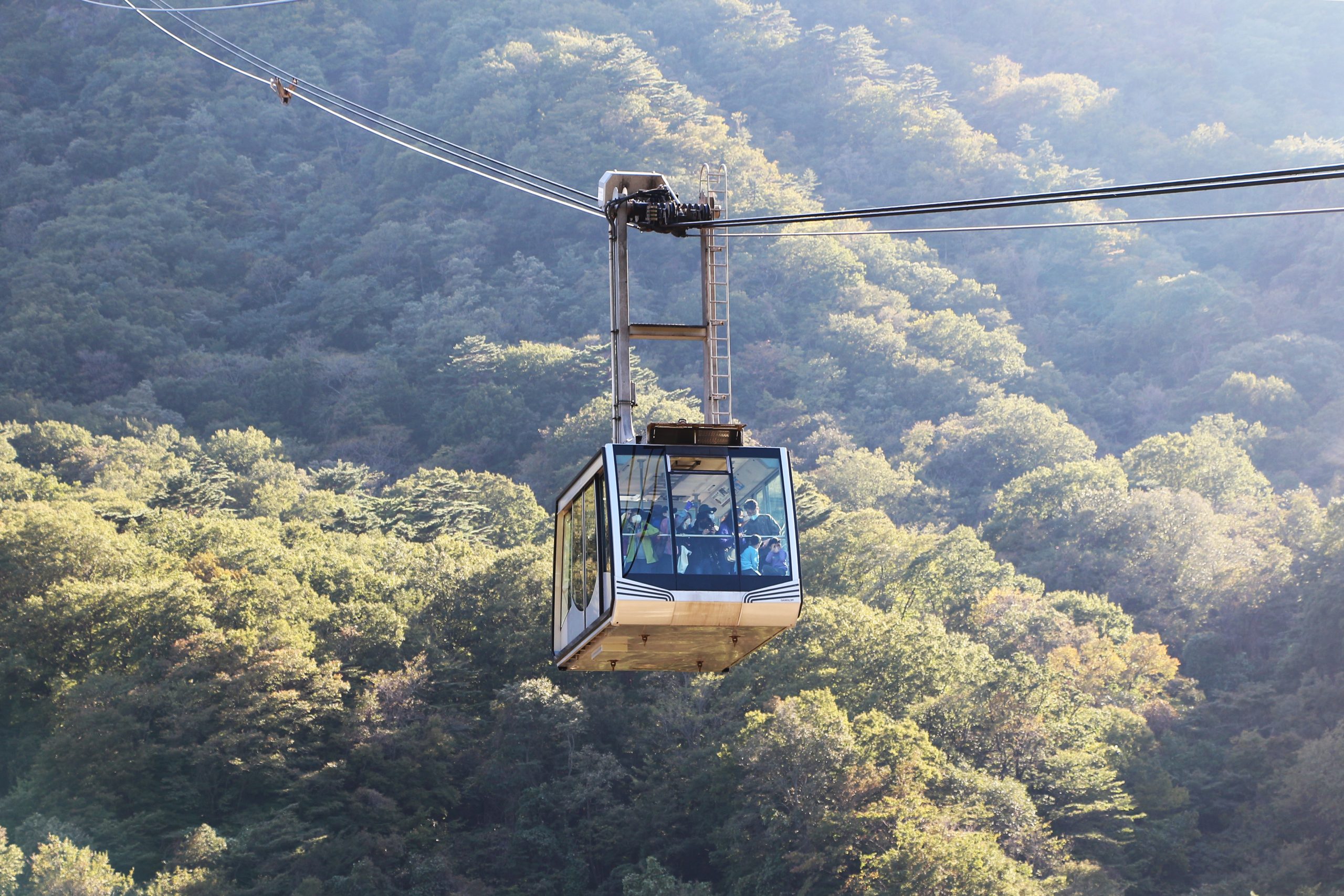
The cable car crosses the forest to Gwongeumseong in under ten minutes. Photo: Seoraksan Cable Car 04 — Bernard Gagnon, CC0 1.0 via Wikimedia Commons
The cable car is the busiest attraction in Seoraksan National Park. It runs from Sogongwon up to Gwongeumseong, a ridge at roughly 700–800 metres. The ride lasts under ten minutes. Cars hold up to 50 people, so you’ll stand shoulder to shoulder and everyone will be filming.
Two rules catch visitors out. First, there is no online booking — you buy same-day at the window, full stop. Second, there’s no walking trail down from Gwongeumseong, so every ticket is round trip by design.
Is it worth it? Yes, with one condition: go on a clear day. Korean visitors who grumbled about the price on the way up almost always change their mind at the top. One wrote that the view made ₩16,000 feel reasonable — and that’s a hard crowd to please.
If you’re nervous about heights, relax. The cabin is enclosed and the cable line stays close to the slope. Several visitors expected terror and reported mild disappointment instead.
Gwongeumseong up top — a rock scramble, not a viewing deck
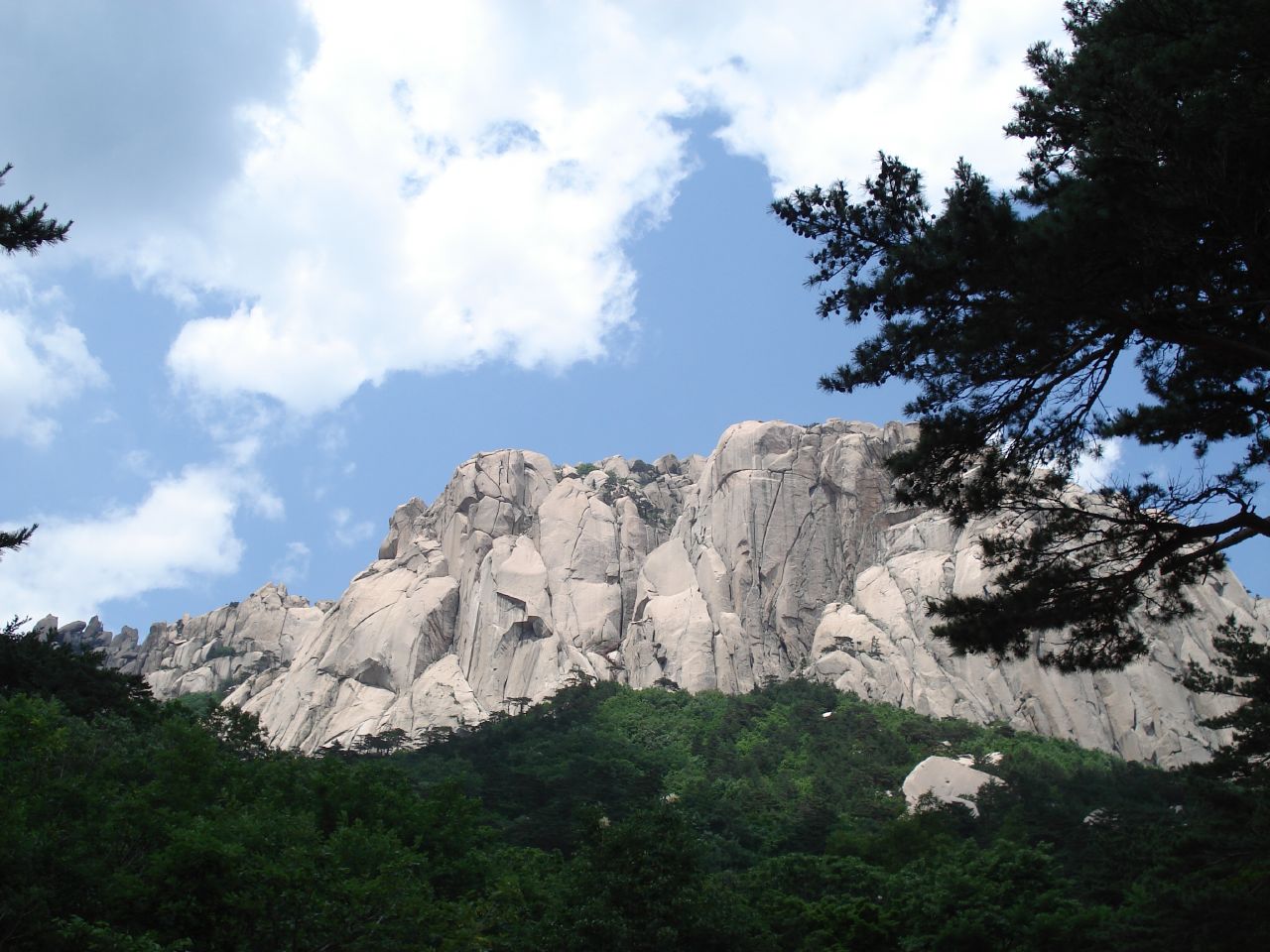
Ulsanbawi’s granite wall — the shape that fills the horizon once you scramble up from the cable car station. Photo: Korean.Seoraksan-Ulsanbawi-01 — flowerguy, CC BY 2.0 via Wikimedia Commons
Gwongeumseong is the most photographed viewpoint in Seoraksan National Park. Here’s the thing nobody puts in the brochure.
The cable car drops you at a station with a shop and a platform. The famous view is not there. You get it after a ten-to-fifteen-minute climb up bare, sloping granite.
It isn’t dangerous, and children manage it. Still, it’s steep, uneven rock with steps and handrails in places and neither in others. Sandals and slick-soled sneakers are a genuinely bad idea. One hiker’s verdict was blunt: without proper shoes, don’t bother.
There’s also almost no shade up there. In July and August the granite radiates heat like a stovetop, and visitors have called a sun umbrella the difference between pleasure and misery.
Get to the top, though, and the payoff lands immediately. Ulsanbawi’s six granite domes fill one side, the Manmulsang rock formations the other, and the East Sea sits flat and blue behind Sokcho. It’s the best twenty minutes of the day.
Sinheungsa and the giant bronze Buddha — the free part people rush past 🙏
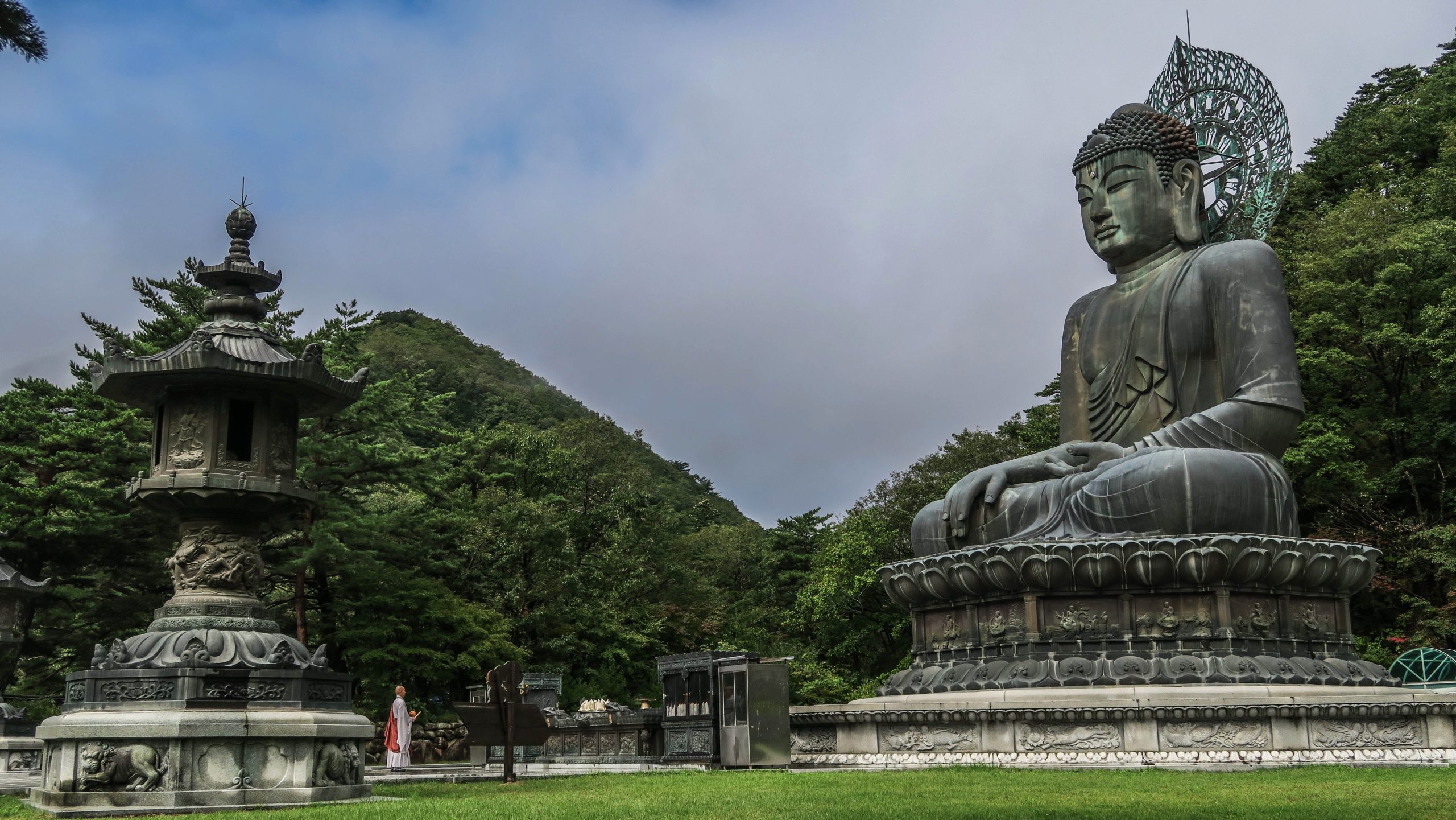
The Tongil Daebul at Sinheungsa stands 14.6 metres tall, and photos never quite convey it. Photo: Sinheungsa Temple (신흥사) in Seoraksan National Park — Elananna, CC BY-SA 4.0 via Wikimedia Commons
Ten minutes’ walk from the cable car sits Sinheungsa, the Jogye Order head temple inside Seoraksan National Park, with roots in the 7th century. Most people photograph it on the way to the queue and move on. Give it twenty minutes instead.
You’ll meet the Tongil Daebul first — a 14.6-metre gilt-bronze seated Buddha weighing 108 tonnes, finished in 1997 after a decade of work funded by 300,000 donors. It was built as a wish for Korean reunification. Photos undersell the scale badly; you have to stand under it.
The temple grounds behind it are quieter than the plaza, with the ridge rising straight out of the courtyard. Admission is free. More than one visitor whose cable car got cancelled said the temple rescued the day.
Prefer to walk? Biryong Falls vs Ulsanbawi
Both trails start at Sogongwon, the main gateway into Seoraksan National Park, and travellers mix them up constantly. They’re wildly different commitments.
| Trail | Distance | Time | Difficulty | Best for |
|---|---|---|---|---|
| Biryong Falls | 4.8 km round trip | ~1.5 hours | Easy, mostly flat | Families, sneakers, a bonus after the cable car |
| Ulsanbawi Rock | 3.8 km each way | 4–5 hours | Hard — 808 steel steps | Fit hikers with a full free day |
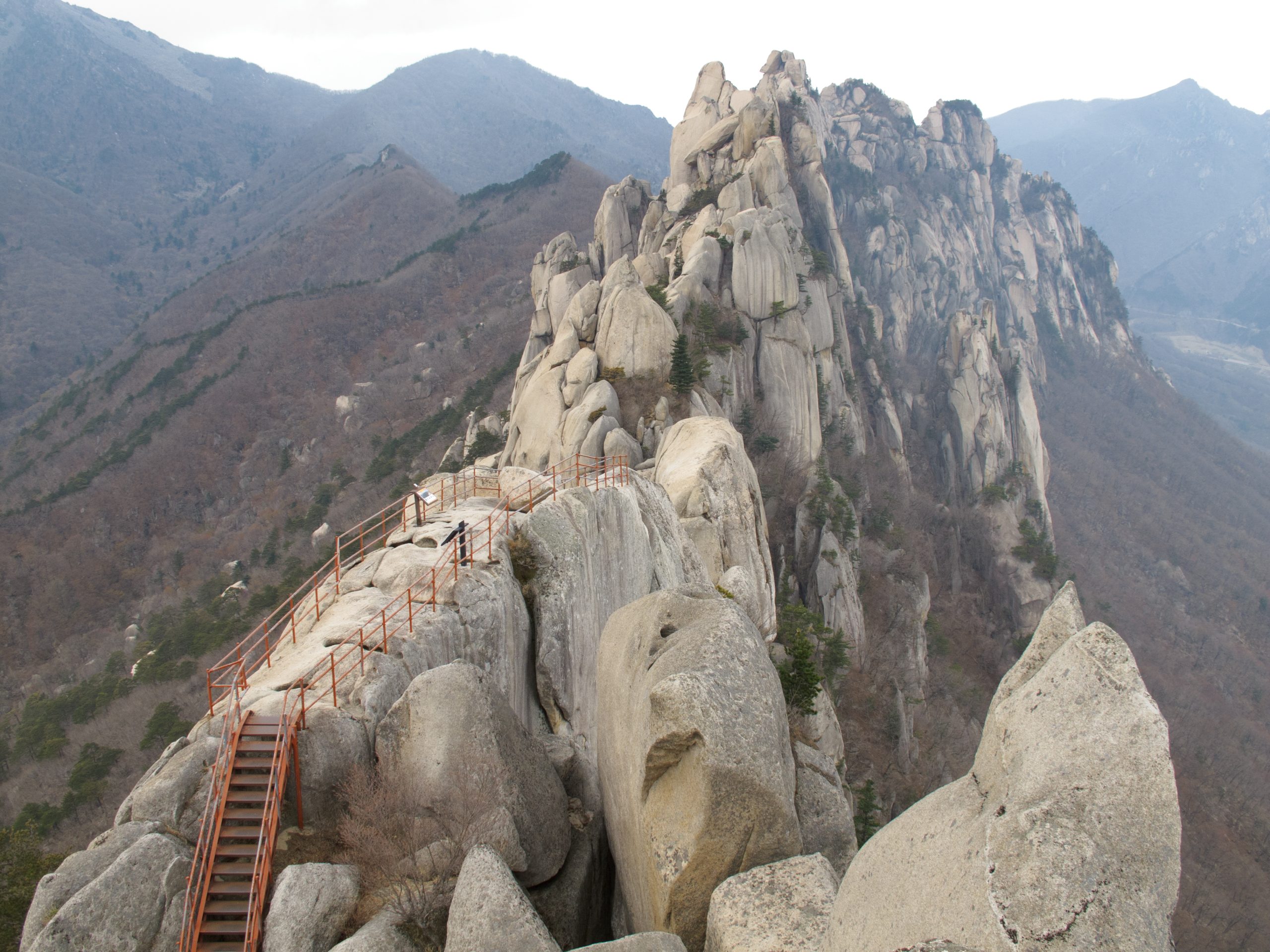
The steel stairway near Ulsanbawi’s summit. Beautiful, and a very different day out from the cable car. Photo: Ulsanbawi(rock) 울산바위 — Tom Page, CC BY-SA 2.0 via Wikimedia Commons
Biryong follows a clear stream through forest to a 16-metre waterfall. It’s genuinely pleasant and pairs well with a morning cable car ride.
Ulsanbawi, by contrast, is a different animal. The last 800 metres are a relentless staircase bolted to the rock face, and hikers describe the summit as arriving three times before it actually arrives. Don’t attempt it as an afternoon add-on.
The honest downsides
The queue is the trip’s real cost. This is the complaint that dominates every Korean review I read. Reported waits run from 30 minutes on a lucky weekday to 50 minutes, 80 minutes, and worse in autumn foliage season. On busy days the posted estimate starts at an hour. You may well wait longer than you spend on the mountain — a round trip plus time at Gwongeumseong takes only 1–1.5 hours.
Weather cancels it, and you’ll find out on arrival. Strong wind stops the cars. Visitors describe travelling from Seoul, waiting around, and going home without riding. The operator also closes for a week of maintenance most years. None of it is announced far enough ahead to protect your plans.
The parking lot fills absurdly early. One weekend visitor found it full at 7am. If you’re driving, treat 8am as late.
Gwongeumseong is short. In short, once you’re up, there’s the climb, the view, some photos, and that’s the experience. Nobody spends two hours up there. Set expectations accordingly.
Photo spots get gridlocked. At the best viewpoints you queue again, informally, and some visitors give up on getting a clean shot at all.
Getting to Seoraksan National Park from Seoul without burning the day
Take the express bus. Seoul Express Bus Terminal in Gangnam runs the most departures to Sokcho, and the ride takes about 2 hours 20 minutes. Dong Seoul Terminal works too. Book a morning seat the day before, especially in October.
Once you reach Sokcho Express Bus Terminal, cross the road and walk about 300 metres west to the local bus stop. Bus 7 or 7-1 runs every 15–20 minutes in the morning and ends at Sogongwon. Tap your T-money card. Total door to door: roughly three hours.
If I had one shot at this, I’d catch a 7am bus, reach Sogongwon before 11, queue for the cable car straight away, then do Sinheungsa and Biryong Falls afterwards. Save the market for late afternoon before the bus back.
Better still, stay a night in Sokcho itself. A day trip means six hours of bus for three hours of mountain, and the maths only works if the weather cooperates.
Who should go, and who should skip it
Go if you want one genuinely spectacular landscape on a Korea trip, you can spare a full day, and you’ll check the weather forecast the night before. Go especially in mid-to-late October, when the foliage justifies every minute of the queue.
Go if you’re travelling with parents or small kids. The cable car makes a serious mountain reachable for people who could never hike it, and that’s rare.
Skip it if you have three days in Korea. Bukhansan gives you a real mountain inside Seoul’s subway network for the price of a metro ride.
Stay home if the forecast is cloudy or windy. Without the view there’s no reason to be here, and the temple alone doesn’t justify a six-hour round trip.
One more steer: skip the cable car if you came to hike. Spend the ₩16,000 on lunch and climb Ulsanbawi instead — you’ll earn a better view and skip the crowd entirely.
Seoraksan National Park is the big one, but it isn’t the only one. Chasing more of Korea’s outdoors? Browse the rest of our Parks & Nature guides for green escapes that need far less planning than this one.
Pingback: Bukhansan National Park: Seoul's Best Day Hike
Pingback: Haeundae Beach: Honest Guide to Busan's Top Beach (2026)
Pingback: Haneul Park: Seoul's Silver Grass Sky Escape (2026)
Pingback: Seoul Botanic Park: Magok's Glass Greenhouse Oasis
Pingback: Nami Island: Is Korea's Famous Day Trip Worth It?