
Some places earn their fame. Seongsan Ilchulbong — Sunrise Peak — is the giant green crown of tuff rising straight out of the sea on Jeju’s far eastern edge. It’s the single image most people carry home from the island. Real talk: it’s touristy, and the climb is a proper stair workout. On a foggy morning you’ll see the inside of a cloud instead of a sunrise. And I’d still tell almost everyone visiting Jeju to give Seongsan Ilchulbong one slot of their day. Here’s the honest version — what you’re actually climbing, what it costs, and when it’s worth setting an alarm for.
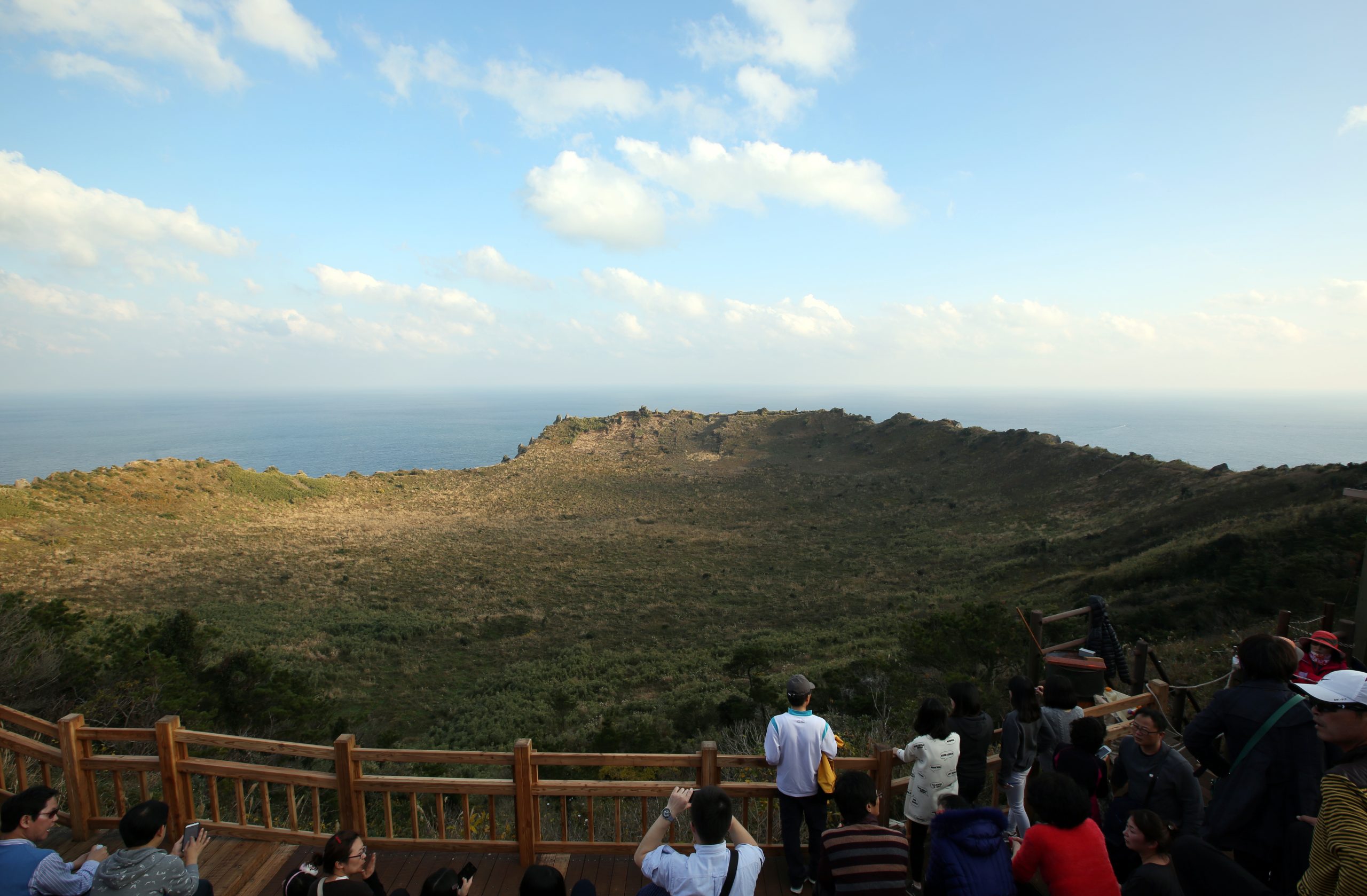
Photo: Jeju Island 20141127 35 (15892743461) — Republic of Korea from Seoul, Republic of Korea, CC BY-SA 2.0 via wikimedia (Source: https://commons.wikimedia.org/w/index.php?curid=109097167)
What exactly is Seongsan Ilchulbong? 🌋
It’s a volcano — but not the kind you’re picturing. Around 5,000 years ago, a shallow-seabed eruption piled up wet ash into a near-perfect bowl-shaped cone. (Some newer geological estimates push that closer to 6,700 years.) Geologists call it a hydrovolcanic tuff cone, and Seongsan Ilchulbong is one of the textbook examples on Earth. That’s not tourist-board fluff. It’s part of the “Jeju Volcanic Island and Lava Tubes” UNESCO World Natural Heritage listing, inscribed in 2007 — Korea’s very first natural World Heritage site.
The peak rises about 180 m out of the water, tethered to the rest of Jeju by a slim strip of land. At the top sits a grassy crater roughly 600 m across and 90 m deep, ringed by 99 jagged rock spires that look like the battlements of a fortress — which is exactly why the name “Seongsan” means “fortress mountain.” Stand at the rim and you get the whole thing at once. The emerald crater bowl behind you, the blue of the strait and Udo island in front.
The practical box
- 📍 Address: 284-12 Ilchul-ro, Seongsan-eup, Seogwipo-si, Jeju-do (제주특별자치도 서귀포시 성산읍 일출로 284-12)
- 🕗 Hours (seasonal): May–Aug 04:30–20:00 · Mar–Apr & Sep–Oct 05:00–19:00 · Nov–Feb 06:00–18:00. Last admission 1 hour before closing. Closed the first Monday of each month (the free base trail stays open).
- 💵 Admission: Adults 5,000 won · teens & children 2,500 won. The summit climb needs a ticket; the coastal base trail is free.
- 🚌 Getting there: No subway on Jeju. From Jeju Airport, buses 111/112 east toward Seongsan (~1.5–2 hrs, often a transfer to a local bus); by rental car ~1 hr / 60 km with free parking. From Seogwipo, ~1–1.5 hrs by intercity bus.
- ⏱ Time needed: 1–1.5 hrs for the round-trip climb; 2–3 hrs if you add the base trail and haenyeo beach.
- 🔗 Nearby: Udo island ferry (Seongsan Port, ~15-min crossing), Seopjikoji cape (4 km), Gwangchigi Beach (1.6 km, best photo of the peak), Aqua Planet Jeju aquarium (3 km).
- ✅ Verified as of July 2026.
Where it is on the map
The climb: short, steep, and worth it
Don’t let the word “hike” scare you — but don’t shrug it off either. From the ticket gate, a well-built stone-and-wood staircase climbs the flank of the cone. It’s about 20–30 minutes up if you’re reasonably fit, and 15–20 minutes back down. The steps are steady and railed the whole way, so it’s less a wilderness trek than a determined stair-climb. Your calves will notice.
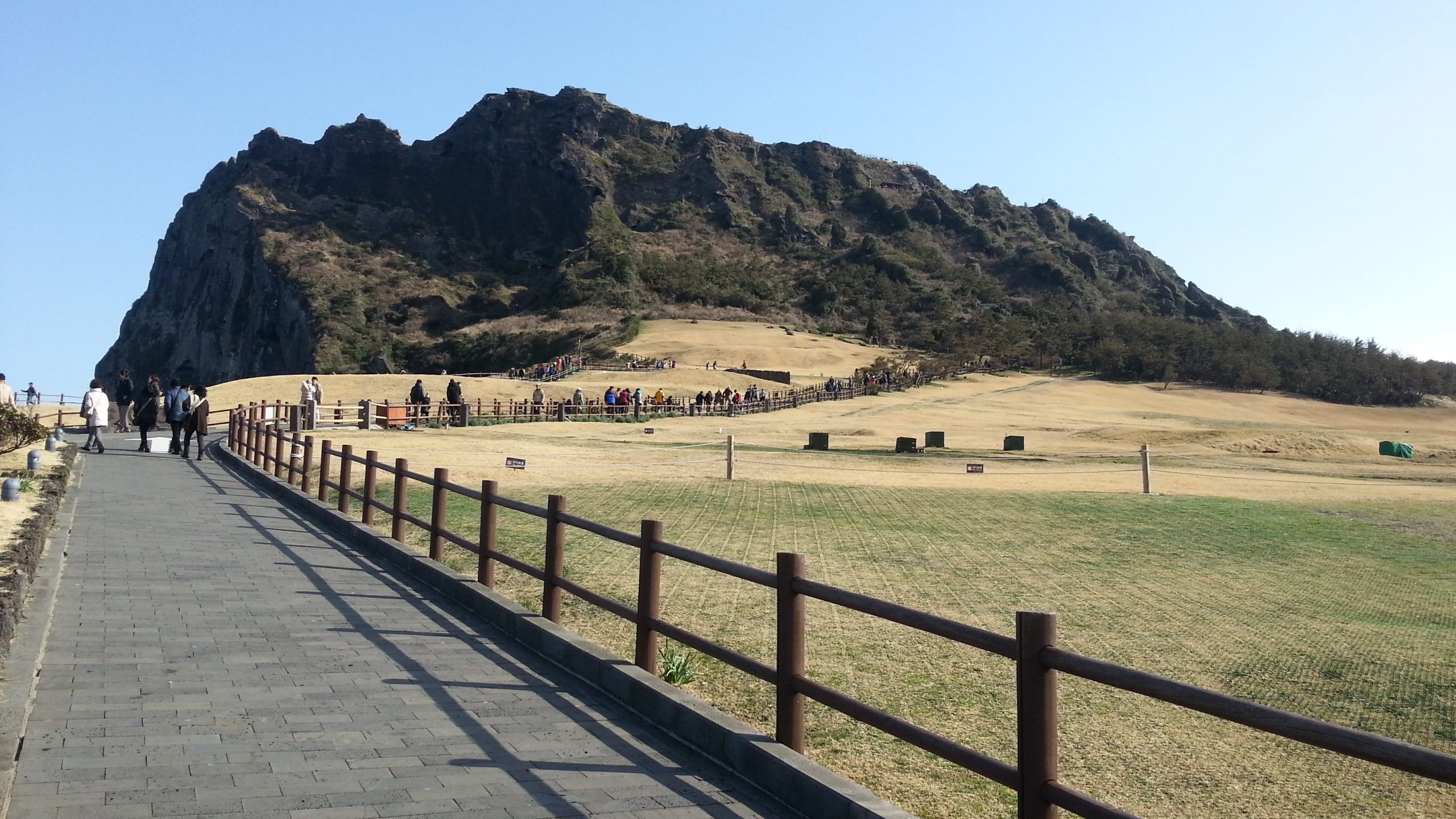
Photo: 20130211 JEJU-성산일출봉 등산길 — YOSEPH SETIAWAN (陳요셉), CC BY-SA 3.0 via wikimedia (Source: https://commons.wikimedia.org/w/index.php?curid=59213692)
What makes it manageable is the payoff-to-effort ratio. You’re at the summit rim before you’ve really had time to complain, and the reward is immediate. On a clear day the view stretches over Udo island, the coastal village, and the deep-blue strait. Take your time at the top — the rim observation deck is where the whole shape of Seongsan Ilchulbong’s crater finally clicks.
Should you actually go for sunrise?
The name is a promise — “Ilchulbong” literally means “sunrise peak,” and dawn here has been counted among the traditional Ten Views of Jeju for centuries. That’s why the gate opens as early as 4:30am in summer: so you can be standing at the rim as the sun lifts out of the sea. When it works, it’s the memory of the trip.
Here’s the honest catch: Jeju’s east coast is moody at dawn, and fog or low cloud rolls in often. A clear sunrise is a genuine gamble. So check the forecast the night before, and don’t build your whole Jeju trip around it. Good news: the climb and the views are absolutely worth doing in normal daylight too. Mid-morning you trade the sunrise drama for warmer light and, honestly, a shorter line at the gate than you’d fear.
The haenyeo divers — Jeju’s free bonus 🐚
Down at the base, on the free coastal course to the left of the peak, you may catch the haenyeo. These are Jeju’s famous women free-divers, many well into their 60s and 70s, who harvest shellfish without any breathing gear. It’s a UNESCO-recognized cultural tradition and one of the most quietly moving things on the island. They typically perform in the early afternoon (often around 1:30 and 3:00pm), weather permitting, and it’s free to watch.
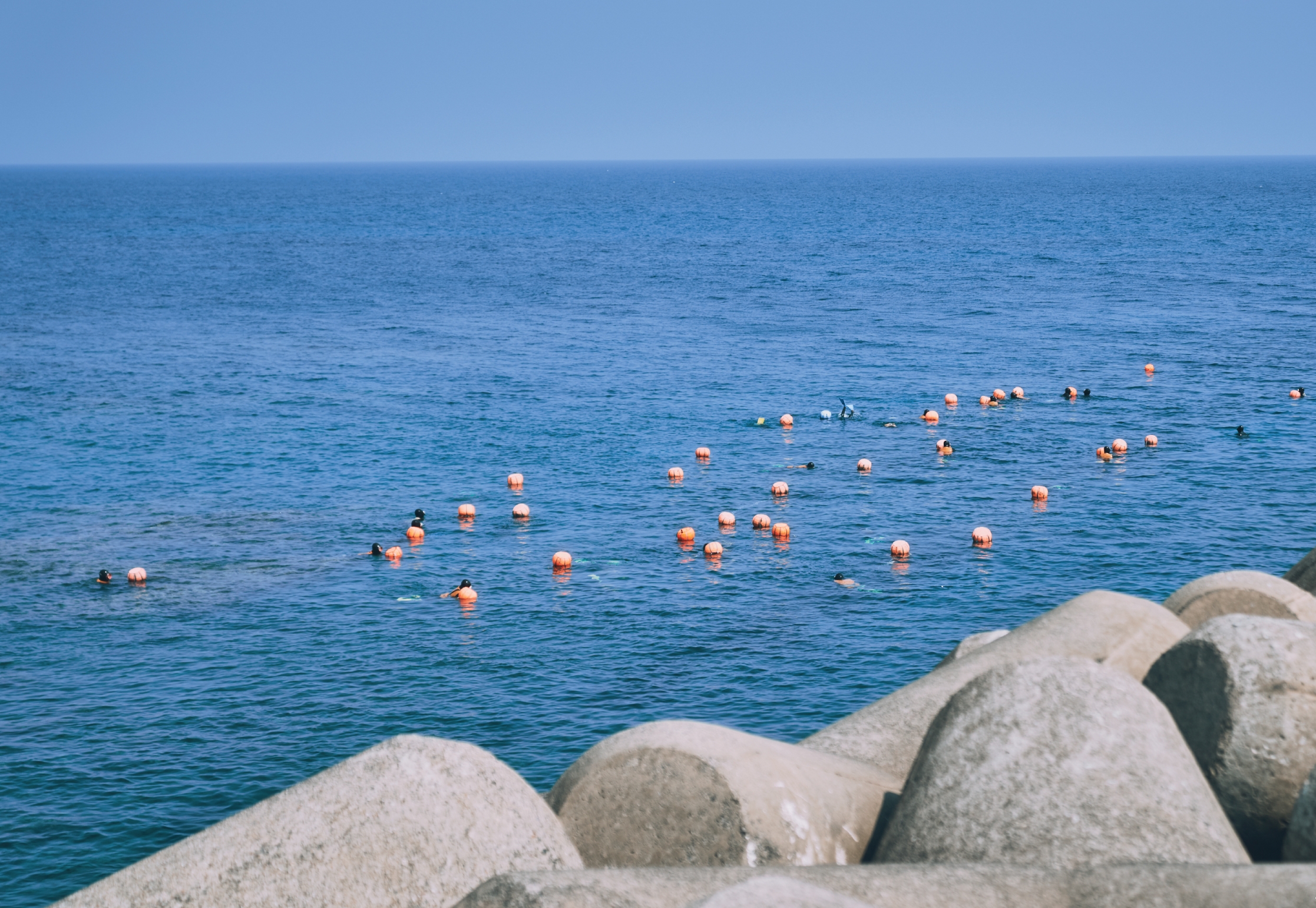
Photo: Jejuolle-route-03B 2 — Jeju Olle Foundation, CC BY-SA 4.0 via wikimedia (Source: https://commons.wikimedia.org/w/index.php?curid=150497444)
Two caveats: the show is not guaranteed — it’s cancelled in rough seas, and the divers may simply leave once they’ve caught their day’s haul. Treat it as a lucky bonus, not a scheduled event.
The honest downsides
Let me be straight with you, because a lot of guides won’t be. Seongsan Ilchulbong is a fantastic spot, but it has real drawbacks. One thing worth saying up front, though: on the climb itself, the verdict is close to unanimous. Korean hikers grumble the whole way up and then say it was worth it at the top. Treat the effort as the price of admission rather than a reason to skip.
- It’s a stair workout. The climb is steep and relentless in short bursts. Older travelers, anyone with knee trouble, and families with small kids should go in knowing it’s a genuine effort, not a stroll.
- Crowds and tour buses. This is the headline stop on every east-Jeju bus tour. Mid-morning the narrow staircase can queue up, and sunrise draws its own crowd.
- Weather is a coin flip. Fog and cloud frequently swallow the view, and there’s nothing you can do about it but hope.
- It can feel short. For the ticket plus the travel time out east, some visitors feel the experience is over quickly and a touch underwhelming. That goes double if the famous aerial view had them expecting more from the ground.
- Little shade. On a hot, clear day the exposed staircase is punishing.
- The wind at the top of Seongsan Ilchulbong is no joke. This is the one nobody warns you about. The summit sits exposed on a headland and the gusts can be genuinely fierce — enough that hats go flying and photos get hard to hold steady. Bring a layer even in warm weather.
- Parking fills, even off-season. The lot reaches capacity on ordinary weekends outside peak months, and it is the single most awkward part of the visit for drivers. Arrive early or accept a walk in from further out.
- Getting a clean photo takes timing. The viewpoints are narrow and busy, so a shot without other people in it means waiting for a gap rather than pointing and shooting.
Who should go — and who can skip it
Go to Seongsan Ilchulbong if it’s your first time on Jeju, if you want the island’s signature view, or if you’re already doing the east-coast loop — pairing it with Udo island or Seopjikoji makes a perfect half-day. Consider skipping Seongsan Ilchulbong if stairs are a real problem for your body. Same if you’re short on time and would rather slow down somewhere quieter. And skip it if the forecast is solid fog and you’ve no morning to spare for a second try.
If I had one east-Jeju morning, here’s exactly what I’d do. Arrive around opening or mid-morning and climb the peak, which takes about an hour. Stroll the free base trail to catch the haenyeo if they’re out. Then walk five minutes to Seongsan Port and hop the ferry to Udo for the afternoon. That’s a slot that earns its place on any Jeju itinerary.
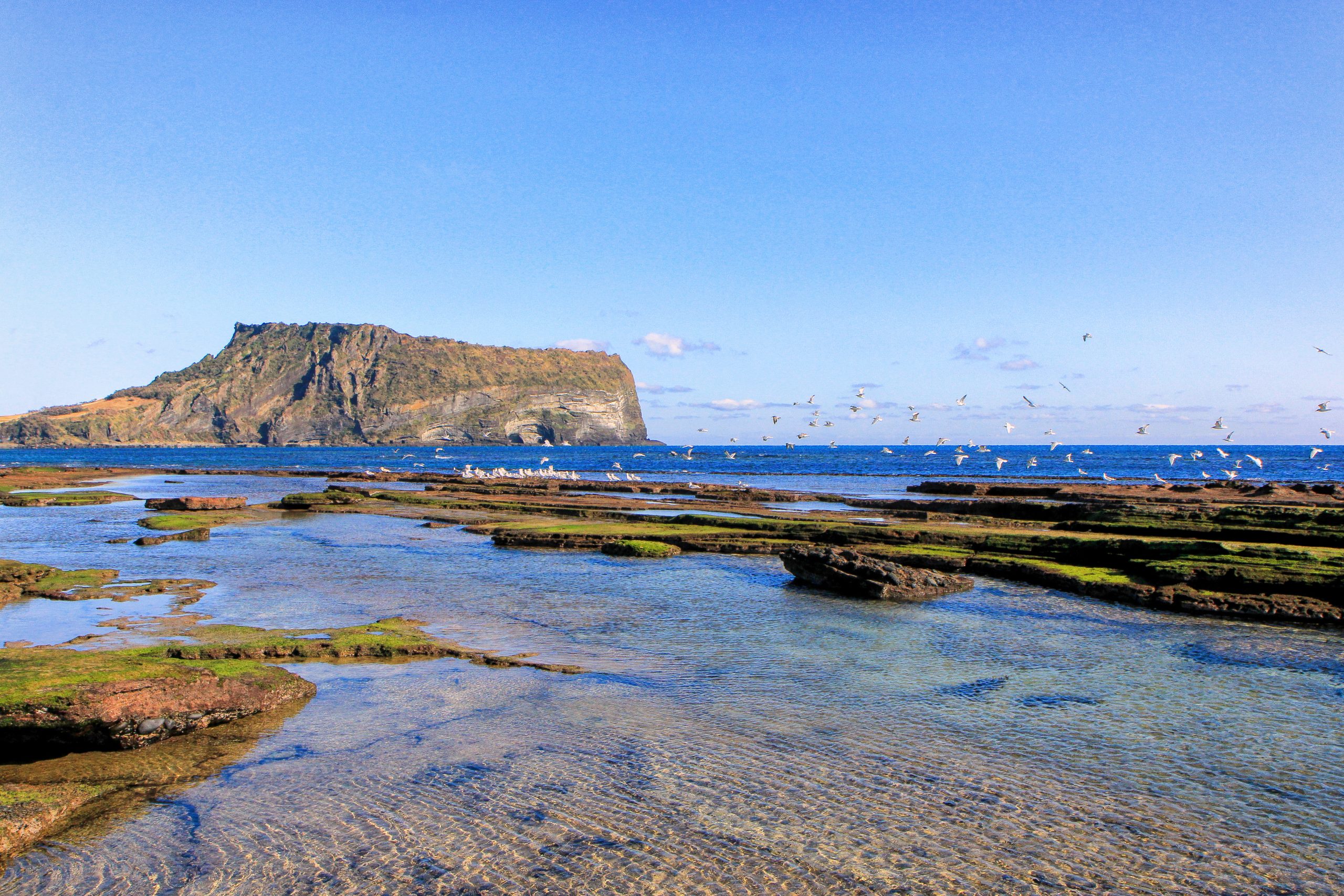
Photo: 제주 성산일출봉 4 — SEUNGMIN WOO, CC BY-SA 3.0 via wikimedia (Source: https://commons.wikimedia.org/w/index.php?curid=59387930)
Want more of Jeju and Korea’s great outdoors? Browse our Parks & Nature guides for more hikes, coastlines, and green escapes worth your time.