
Walk into an old neighborhood market in Seochon and swap a 5,000-won note for a pouch of brass coins. Then go shopping for your own lunch, one fritter at a time. That is the Tongin Market dosirak (lunchbox) café, one of the few structured “tourist experiences” in Seoul that most first-timers finish without an asterisk. You build the tray yourself, taste a dozen things for the price of a cheap sandwich, and do it a ten-minute stroll from Gyeongbokgung. For visitors weighing where to spend one casual lunch in this corner of the city, this is a reliable answer.
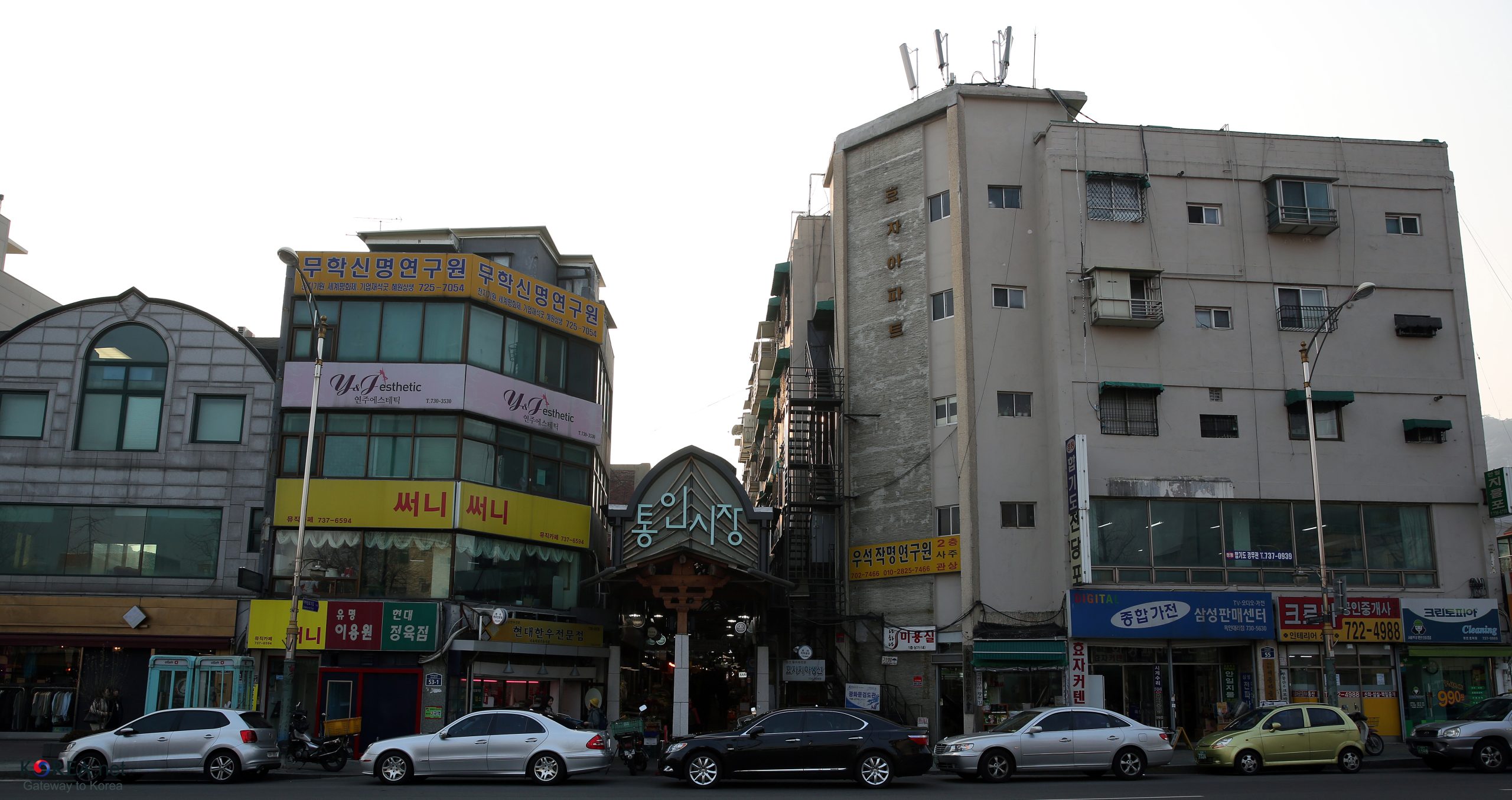
Photo: Korea Tongin Market 13 (12920576235) — Republic of Korea from Seoul, Republic of Korea, CC BY-SA 2.0 via wikimedia (Source: https://commons.wikimedia.org/w/index.php?curid=109151536)
The practical stuff before you go
- Address: 18 Jahamun-ro 15-gil, Jongno-gu, Seoul 03036 (서울 종로구 자하문로15길 18) — Seochon / Hyoja-dong, just west of Gyeongbokgung.
- Market hours: roughly daily 07:00–21:00 (stalls vary, and plenty shut earlier in the evening). The whole market closes on the 3rd Sunday of each month.
- Lunchbox café hours (separate!): run from the Customer Center on the 2nd floor. Mon–Fri about 11:00–15:00/16:00; Sat–Sun & holidays about 11:00–16:00/17:00. Last coin exchange stops roughly an hour before close. Closed every Tuesday and the 3rd Sunday (per official VisitSeoul) — some sources say Monday, so double-check the closing day before you go.
- Price (coin system): 1 yeopjeon brass coin = 500 KRW. A common starter set is 10 coins for 5,000 KRW; staff suggest about 20 coins (10,000 KRW) per person for a full tray. Side dishes run 1–4 coins each; rice & soup about 2 coins each on the 2nd floor. Water and chopsticks are free. Bring cash too — non-participating stalls won’t take coins.
- Getting there: Gyeongbokgung Station (Line 3), Exit 2, then a 500–580 m walk (about 10 minutes, up to 15 if Seochon’s alleys distract you). Local buses also run along Jahamun-ro.
- ⏱ Time needed: about 1–1.5 hours for the lunchbox run; 2+ hours if you wander Seochon afterward.
- 🔗 Nearby pairing: Gyeongbokgung Palace (~10 min walk), Seochon Village and the Sejong Village Food Street, Bukchon Hanok Village a short hop east.
- Verified as of June 2026.
Find it on the map
How the brass-coin lunchbox actually works
The Tongin Market coin system looks gimmicky from outside. It is actually a well-designed way to sample widely without haggling in Korean. Here is the flow, step by step.
First, head to the Customer Center on the 2nd floor (고객만족센터). Hand over cash or a card and you receive yeopjeon — old-style brass coins worth 500 KRW each. Ten coins is 5,000 KRW; a full tray for a hungry visitor is closer to 20. One under-advertised detail. The exchange desk takes cards, but the participating food stalls only take the coins. The Customer Center is the single point where plastic works. Budget for that before you start walking the aisles.
Next, take a partitioned tray and an empty lunchbox from the counter. Rice is optional at the stalls — add it for about 2 coins on the 2nd floor instead.
Now the part visitors enjoy most. Walk the aisles and buy side dishes only at stalls flying the lunchbox-café signboard. Not every vendor takes coins, so look for the sign. Pay 1–4 coins per item and watch the lunchbox fill up.
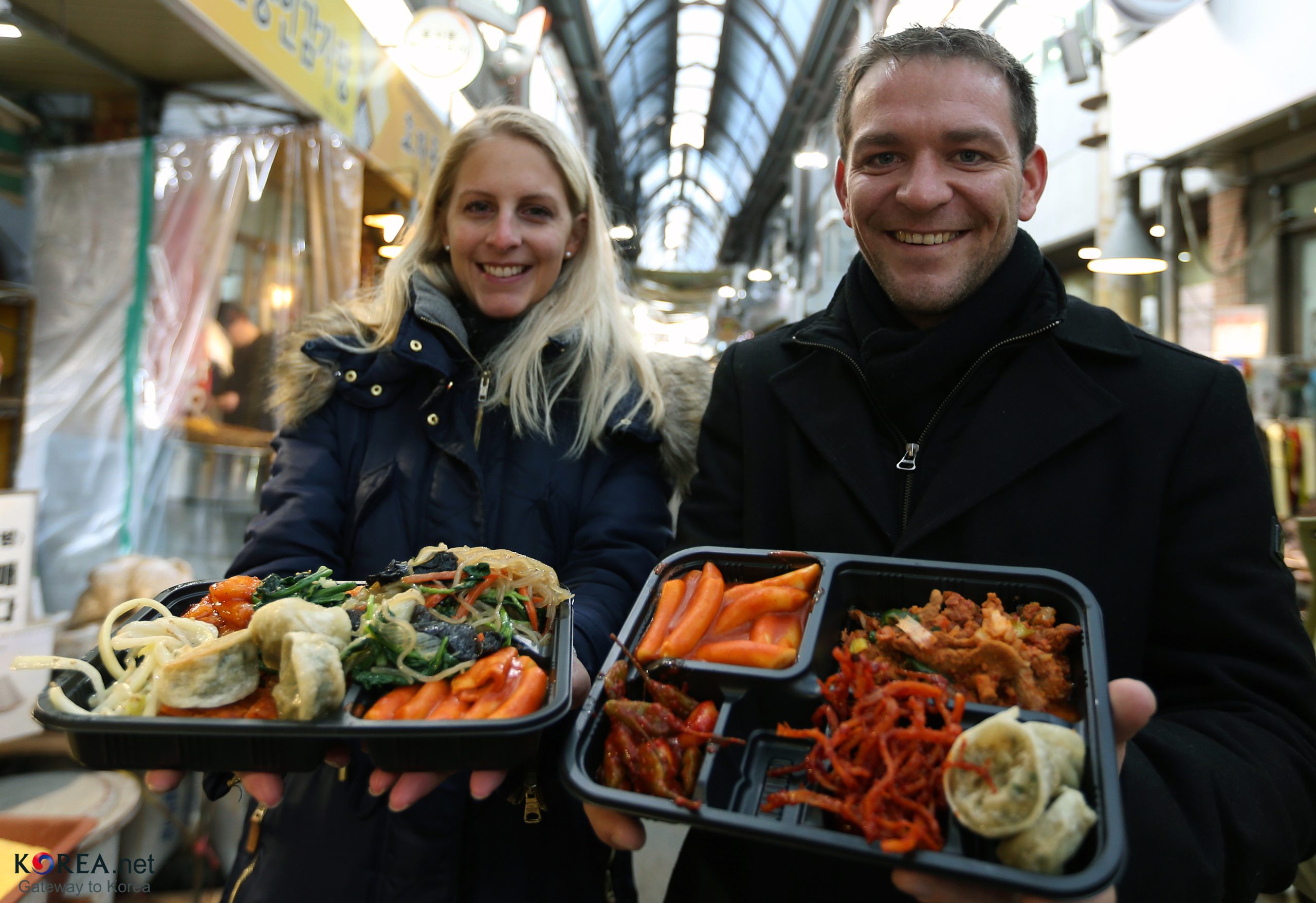
Photo: Korea Tongin Market 01 (12920987714) — Republic of Korea from Seoul, Republic of Korea, CC BY-SA 2.0 via wikimedia (Source: https://commons.wikimedia.org/w/index.php?curid=109151484)
Once the tray is loaded, return to the 2nd floor for rice and soup (about 2 coins each). Water and chopsticks are free. Then claim a seat in the café area on the 2nd floor — or the roomier 3rd floor — and eat.
One step people forget: refund any unused coins at the Customer Center before leaving. The desk returns your money, so there is no reason to pocket leftovers unless you want them as souvenirs.
Filling the tray: what Tongin does best
Tongin sits in the historic home of gireum tteokbokki (기름떡볶이) — oil-fried rice cakes, pan-stirred rather than swimming in sauce. It is the market’s signature dish and the item most regulars build the whole tray around. It runs less sweet, less soupy, and more savory-chewy than the gochujang version sold everywhere else. It is the one thing worth prioritizing. Be ready for it to divide opinion, though, because it does, sharply. Plenty of Korean visitors queue the longest line in the market for it and come away feeling it did not earn the wait, and the same verdict turns up about the market’s food in general rather than this one dish alone. Try it because this is where it comes from, not because a long queue implies quality.
From there, fill the gaps with jeon (savory pancakes and fritters), mandu (dumplings), and japchae (glass noodles). Add whatever seasonal namul and banchan look freshest that day. Mini kimbap rolls travel well on the tray. Traditional sweet snacks and a sweet rice drink await anyone with coins to spare. The point is variety — small portions of many things rather than one large plate.
There is a structural reason so much of the Tongin Market food underwhelms, and it is fixable. You assemble the tray while walking the aisles, then climb to the seating floor for rice and soup and to find a seat, so anything fried has been sitting in a partitioned box for ten or fifteen minutes before you eat it. Fritters and fried chicken suffer most, arriving soft where they should be crisp. Buy the hot fried items last, right before you head upstairs, and the tray tastes noticeably better.
A note on strategy that experienced visitors pass along: scout the full loop before spending. Walk the participating stalls once, note what looks good, then double back and buy. That habit keeps you from spending every coin at the first stall and missing the jeon two aisles over. It also helps not to over-order rice — half a portion plus a soup leaves more room for the dishes you actually came for.
The stalls outside the coin system are worth attention too. Tongin Market has been a working neighborhood market since the 1940s. Many vendors sell groceries, dried goods, and fresh banchan to locals who have shopped the same aisles for decades. That mix — a playful tourist hook layered over an honest old market — is a large part of the appeal.
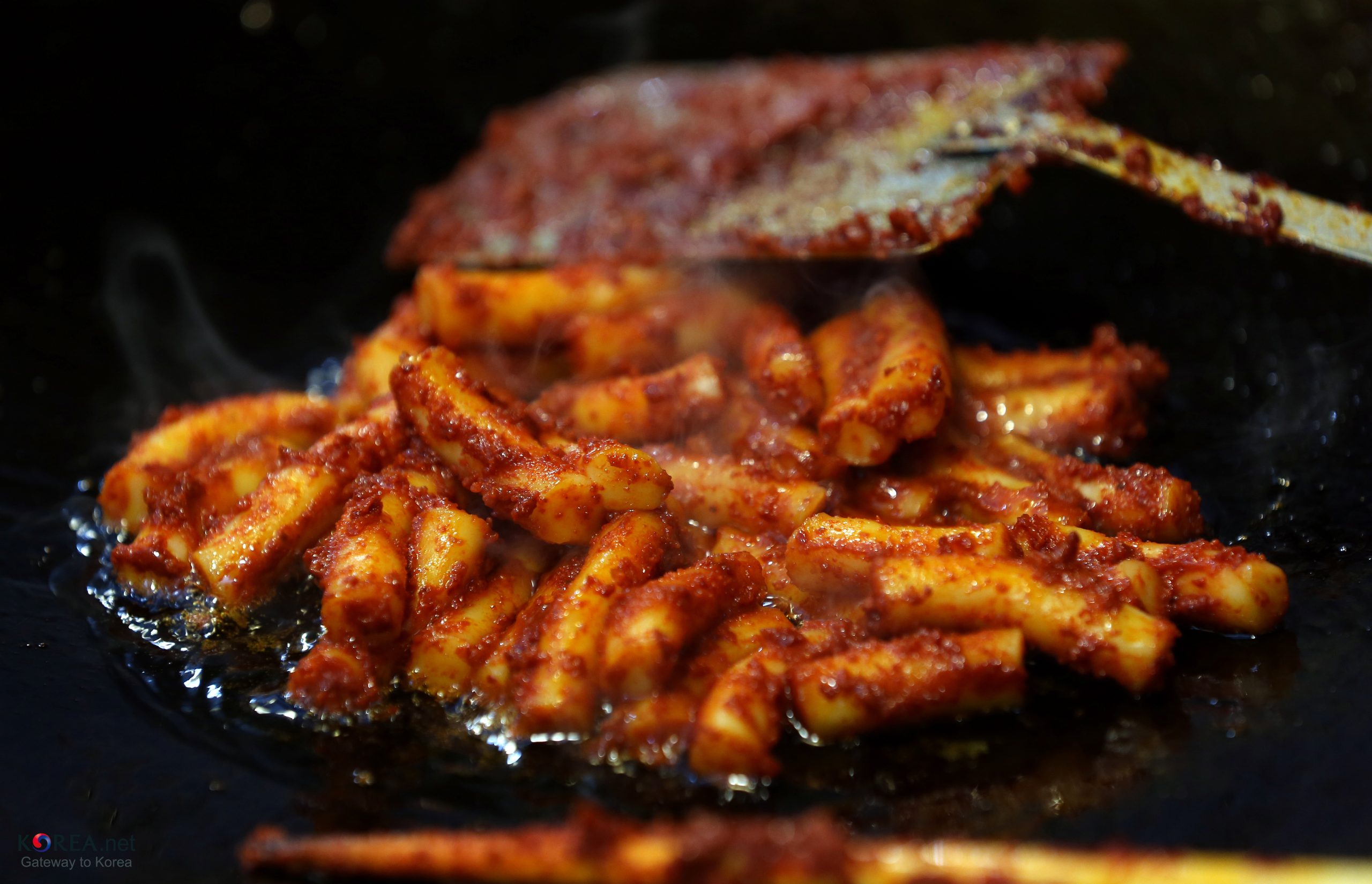
Photo: Korea Tongin Market 08 (12920988314) — Republic of Korea from Seoul, Republic of Korea, CC BY-SA 2.0 via wikimedia (Source: https://commons.wikimedia.org/w/index.php?curid=109151479)
For more market-hopping after this, our Markets & Shopping guides map out the bigger players like Gwangjang and Namdaemun.
Before you go: the honest downsides of Tongin Market Lunchbox Guide
The lunchbox café is the whole reason most travelers come, and it runs on a narrow daily window. It opens only midday and shuts in the late afternoon, with last coin sales an hour before close. Arrive at the wrong time and you find a regular market with the experience switched off.
It also closes on certain days — every Tuesday and the 3rd Sunday by the official listing, though a few sources say Monday. Confirm before committing your day to it. And because the café cooks a daily batch, popular stalls sell out and close early. The best arrival window at Tongin Market runs about 11:15–11:45. That puts you ahead of the office lunch rush starting around noon, and before the most sought-after fritters run out.
Crowds at Tongin Market are the other catch, and they compound because this is a chain of separate queues rather than one. You wait to exchange coins, wait again at each stall you buy from, then wait for a seat. Weekdays are no exemption, since the office lunch rush fills the aisles just as effectively as a weekend does. Seating is the bottleneck most people hit last and hardest, so the fix bears repeating: when the 2nd floor is full, go up to the 3rd, which plenty of visitors never realise is there. Skip the window seats beside the stairwell too. They are the busiest, noisiest spot in the room, and that staircase is narrow enough to be awkward with a loaded tray. Tongin is also smaller and more touristy than Gwangjang or Namdaemun — roughly 70–75 stalls — and not all of them join the coin system. Anyone picturing a sprawling, gritty food bazaar should recalibrate. The choice inside the coin system is also narrower than the stall count suggests, and it has been shrinking as participating vendors close, so some visitors end up filling the tray with what is left rather than what they wanted. Value draws complaints as well. At one to four coins an item those small portions add up fast, and a full tray lands closer to an ordinary lunch price than the bargain the concept implies.
Who gets the most out of Tongin
This place rewards a certain kind of traveler. First-timers, picky eaters, and families tend to do best. The build-your-own format turns a market into a low-stakes tasting game, and 5,000–10,000 KRW buys a genuinely fun meal. Anyone already visiting Gyeongbokgung will find the timing and the walk line up almost perfectly, so it folds neatly into the same morning. There is also real appeal in eating something with a story, inside an old market that nobody has polished smooth for the cameras.
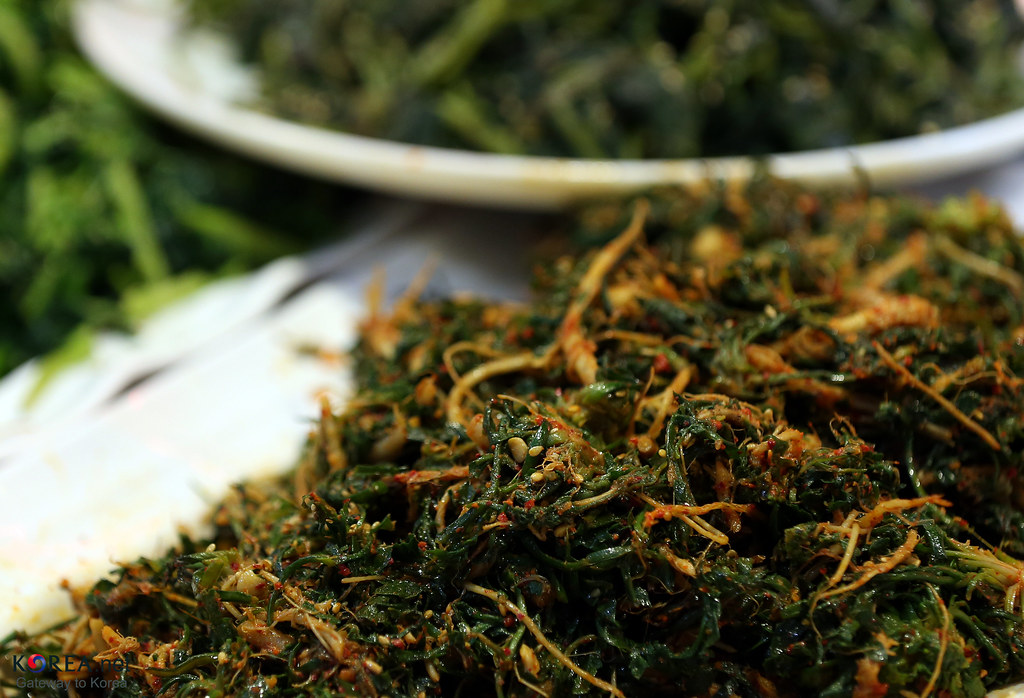
Photo: Korea_Tongin_Market_10 — KOREA.NET – Official page of the Republic of Korea, CC BY-SA 2.0 via flickr (Source: https://www.flickr.com/photos/42438955@N05/12920581195)
The poor fit is just as clear. Travelers who want a big, raw, sprawling market scene will find Gwangjang does that better and bigger. Anyone who cannot hit the midday window — or who lands on a closed day — should plan around it. Without the coin café running, Tongin drops back to a pleasant but ordinary neighborhood market. And for visitors who find dense crowds draining, a weekend lunchtime here will test their patience.
Seochon, the neighborhood wrapped around the market, is half the reason to come. The lanes here are quieter and more lived-in than Bukchon’s polished hanok streets, dotted with tiny galleries, old bookshops, and coffee roasters. After refunding your coins, a spare half-hour to drift pairs naturally with the meal; the market and the neighborhood share the same unhurried, old-fashioned mood.
Timed right, it is one of the easiest wins in central Seoul. Pair Tongin Market with the palace and Seochon’s alleys. The result is a half-day that reads like a genuine slice of how a Korean neighborhood eats.