
Real talk: if you’ve already done Gwangjang and you’re bracing for another wall of tourists holding up their phones, Mangwon Market is the antidote. It’s a working neighborhood market in Mapo — covered, cheap, and gloriously more interested in feeding locals their dinner than in posing for your camera. You come here to eat well for the price of a coffee back home, and to feel what a Seoul market is like when it isn’t a bucket-list checkbox. If I had one free afternoon on the west side of the city, this is where I’d point you.
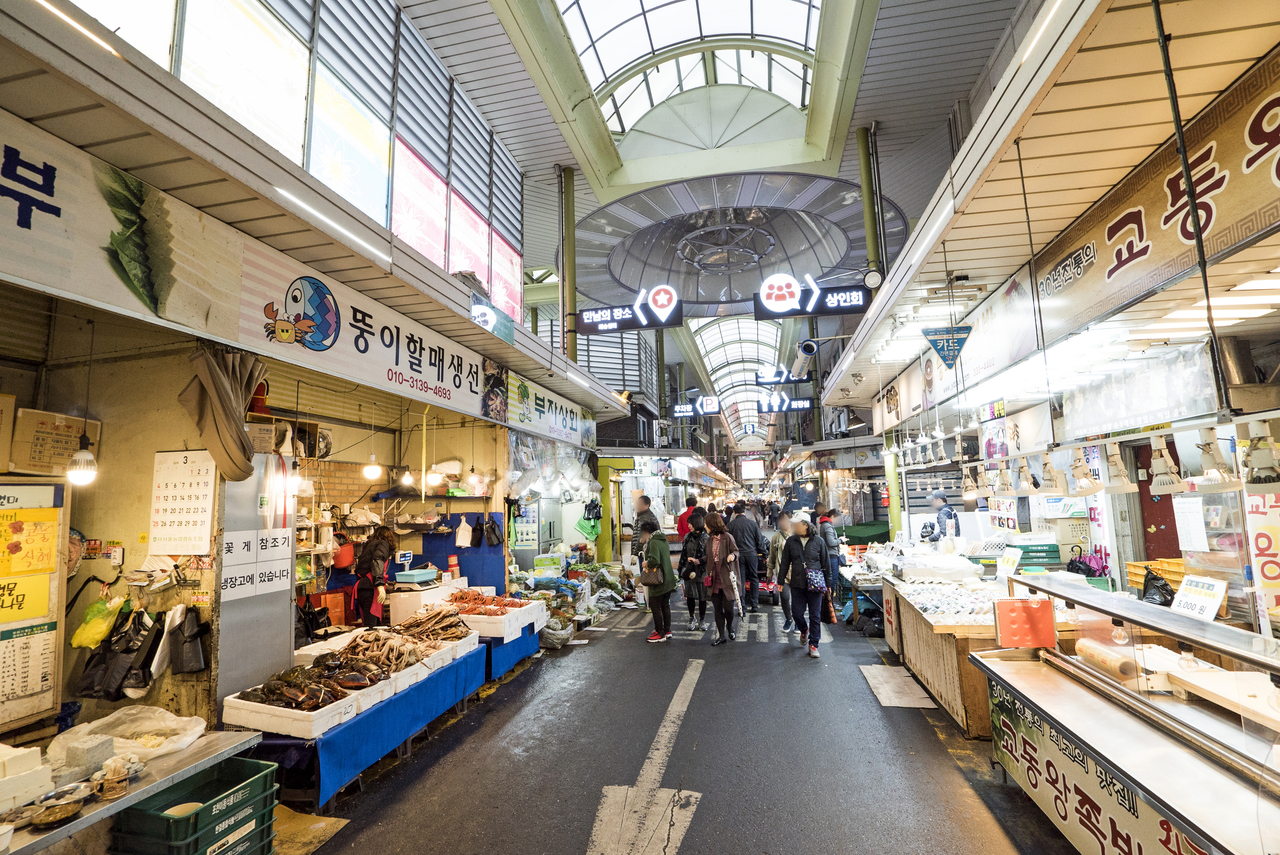
Photo: 망원시장 / Source: Korea Tourism Organization 관광사진갤러리 (KOGL Type 1)
So what actually is Mangwon Market? 🍢
It’s a traditional sijang — a covered arcade of a few hundred stalls running down a lane in Mangwon-dong. Produce, fishmongers, banchan (side-dish) shops, a butcher or two, household bits. And, the reason you’re here, a dense run of street-food vendors frying, grilling, and steaming from late morning until night. The whole thing is roofed, which matters more than it sounds: rain or shine, summer swelter or winter bite, the market just carries on.
What makes Mangwon Market worth a slot isn’t any single famous dish. It’s the ratio. You can graze your way down the alley: a bag of twisted doughnuts here, a grilled short-rib patty there, a paper cup of tteokbokki. Walk out genuinely full for around 10,000–15,000 won. That’s the whole pitch, and it’s a good one.
Locals have shopped this arcade for decades, and it still runs on that rhythm: ajummas picking out banchan for dinner, delivery bikes weaving through, vendors calling out prices. Mangwon Market never rebuilt itself for visitors, which is exactly why it feels honest — you’re a guest in someone’s daily routine, not the target audience.
Where it is, and getting there without the wandering
Mangwon sits in Mapo-gu, a short walk from the Han River and right next to the café-lined Mangnidan-gil strip. Getting here is easy; finding the entrance is the only fiddly part.
- 📍 Address: 14 Poeun-ro 8-gil, Mapo-gu, Seoul (서울 마포구 포은로8길 14)
- 🕘 Hours: Arcade roughly 09:00–21:00 daily; individual stalls vary. Many food stalls are quiet or closed on Mondays, and some wind down by early evening.
- 💸 Cost: Free to enter. Budget ~10,000–15,000 KRW to eat well; most snacks run 1,000–7,000 KRW. Bring cash — many stalls prefer it.
- 🚇 Getting there: Mangwon Station (Line 6), Exit 2 — about a 5–7 minute (350 m) walk. Mapo-gu Office Station (Line 6), Exit 5 also works.
- ⏱ Time needed: 30–60 minutes for a quick snack run; 1.5–3 hours to properly graze and browse.
- 🔗 Pair it with: Mangnidan-gil cafés (next door) and Mangwon Hangang Park (~15 min walk) for a market-snacks-then-river afternoon.
- ✅ Verified as of July 2026.
Find it on the map
What to actually eat here
Skip the plan-your-order approach. Mangwon rewards wandering with a loose watch-list, so here’s mine:
- Kkwabaegi (꽈배기) — chewy twisted doughnuts rolled in sugar, often two for about 1,000 won. The unofficial mascot of the market.
- Tteokgalbi (떡갈비) — grilled minced short-rib patties, sweet-savory and hot off the griddle. Around 7,000 won for a couple.
- Twigim (튀김) — the fried stuff: stuffed peppers, squid, veg fritters. Point at what looks good, pay a few thousand won.
- Hotteok (호떡) — the griddled sweet pancake, molten brown-sugar center. Cheap, warm, dangerous.
- Kalguksu (칼국수) — knife-cut noodle soup, about 5,000 won a bowl, if you want to sit down for a minute.
- Banchan shops — not street food, but fun to browse: tubs of kimchi, pickles, and side dishes the neighborhood actually buys.
I’m deliberately not naming specific vendors. Stalls here turn over, “the famous one” changes, and half the fun is following the queue of locals rather than a stranger’s five-year-old blog post. If a stall has a line of Korean grandmothers, get in it.
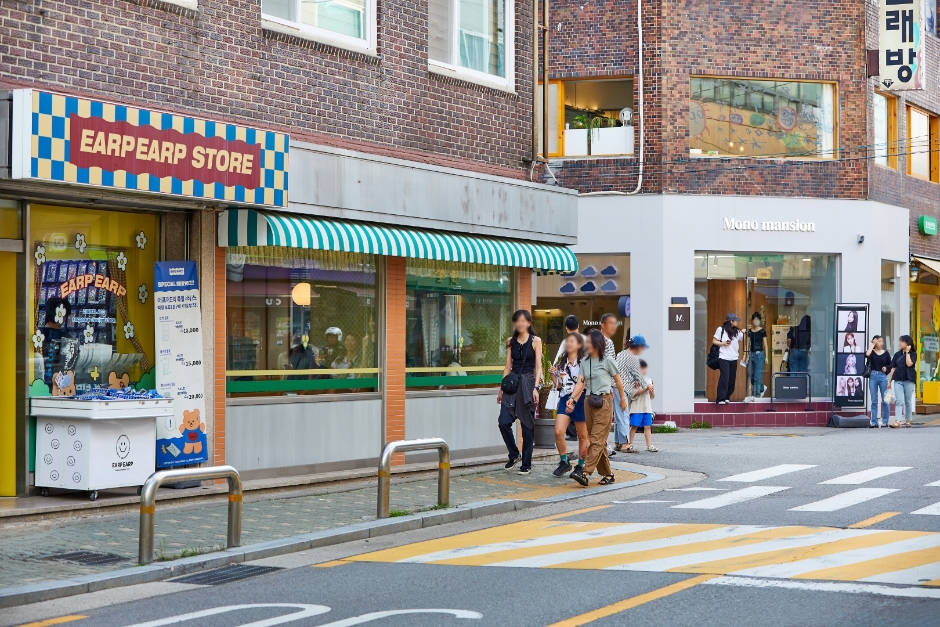
Photo: Mangnidan Street (망리단길) / Source: Korea Tourism Organization (KOGL Type 1)
When to go — and when not to
Timing is the difference between a mellow graze and a shoulder-to-shoulder shuffle. Mangwon Market is at its best on a weekday, late morning to early afternoon — stalls are open, food is fresh, and you can actually move. Weekend evenings are when it gets, in one visitor’s words, “insanely crowded,” with real queues at the popular stalls. And Mondays are the gamble: plenty of food vendors take the day off, so a Monday visit can find half the alley shuttered.
The honest downsides you should know
Mangwon Market is a genuine local market, and that’s both the charm and the catch. One thing worth saying before the complaints, because it is Mangwon Market’s real advantage: even when it is busy, it does not feel oppressive. Korean visitors who know both consistently rate it as far more comfortable to browse than Gwangjang — wider aisles, less crush, more room to stop and look. If the Gwangjang scrum is what put you off traditional markets, this is the one that fixes it.
That said, be ready for a few things:
- It’s cash-first. Some stalls take cards, plenty don’t. Pull out won before you arrive so you’re not stuck staring at a doughnut you can’t pay for.
- Limited English. This isn’t a tourist market, so don’t expect English menus or much English spoken. Pointing, smiling, and a translation app cover you fine — but it’s more effort than Myeongdong.
- Crowds and queues on weekends and evenings can sap the charm. On a Saturday the queueing starts at the Mangwon Market entrance itself, and the best-known stalls run lines long enough that people give up and eat elsewhere. There is a precise fix, though: a weekday around 16:00, after the lunch rush and before the dinner one, regularly means no wait at all.
- Popular items sell out. Arrive late in the day and the thing you came for may simply be gone. Some stalls also set a minimum order — three pieces rather than one — and will not let you mix flavours across it.
- Don’t eat first. The single most common regret here is arriving full. The portions are small and cheap precisely so you can graze across a dozen stalls, and that only works on an empty stomach.
- Stall hours are unpredictable. The arcade may say 9-to-9, but individual vendors open late, close early, or skip Mondays. A mistimed visit sees a quieter, half-open market.
- It’s not a “sight.” There’s no monument, no view, no photo-op landmark. If you want a market that doubles as a postcard, this isn’t it — the payoff here is the food and the feel, not the Instagram grid.
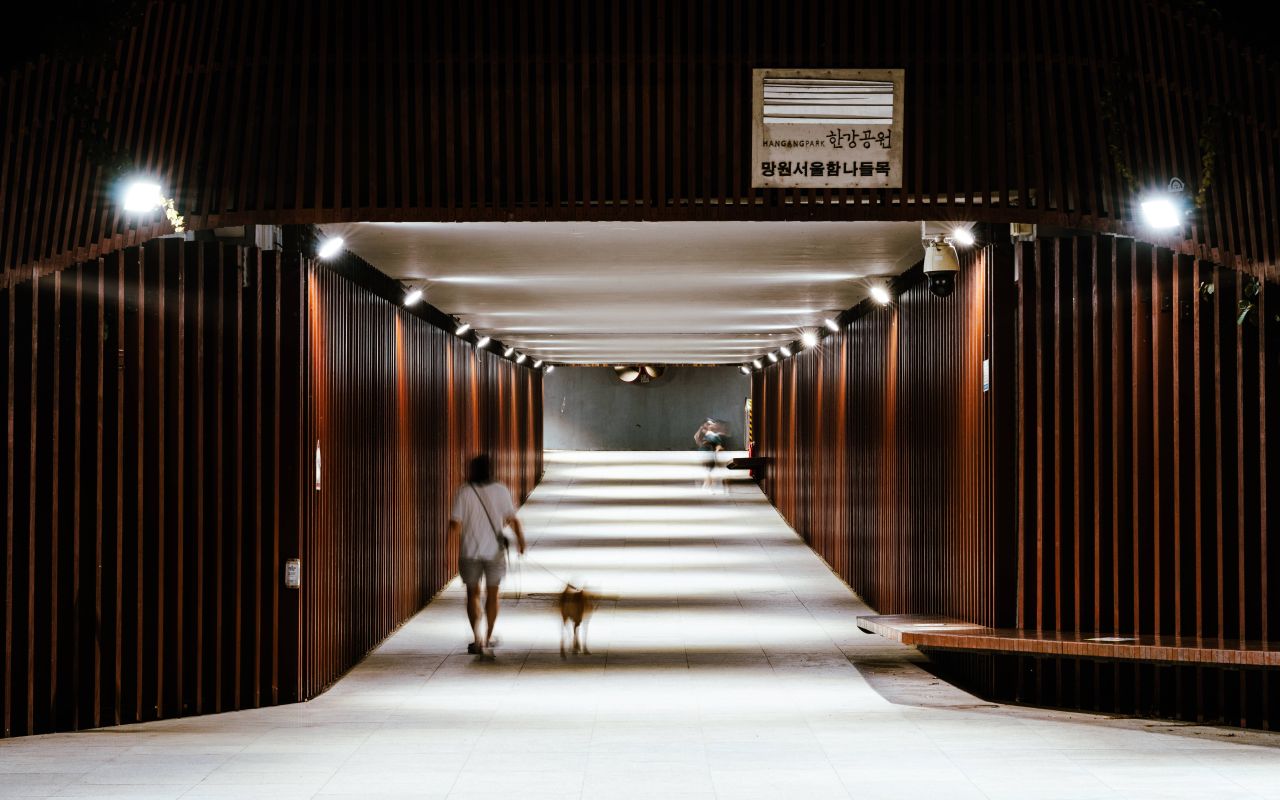
Photo: 망원한강공원 / Source: Korea Tourism Organization 관광사진갤러리 (KOGL Type 1)
Who should go, and who can skip it
Go if you’re a curious eater who’d rather stand in an alley with locals than queue behind a tour group. It works especially well if you’re already headed to Hongdae, Yeonnam-dong, or the Han River and want a cheap, delicious detour. Mangwon Market is a great low-key first market for travelers who find the big-name ones overwhelming. The stakes are low, the food is cheap, and nobody’s going to hard-sell you.
Maybe skip if you’re short on time and want the iconic, camera-ready Seoul market experience with English signage and set-piece dishes. Gwangjang or one of Seoul’s other big markets does that better. And if you can only visit on a Monday, keep expectations low.
If I had one Mapo afternoon
Here’s the play I’d actually run: arrive around 11am on a weekday, graze the food alley for an hour — doughnuts, a fried thing, tteokgalbi, done. Wander two minutes over to Mangnidan-gil for a proper coffee and a browse of its little shops. Then walk 15 minutes down to Mangwon Hangang Park, sit by the river with whatever you smuggled out of the market, and let the afternoon go slow. Cheap, unhurried, and about as “real Seoul” as a half-day gets.
Pingback: Garosu-gil: Is Seoul's Tree-Lined Street Worth It?