
A note on expectations before you set out. Hongdae is no longer the gritty underground art enclave the older guidebooks romanticize. Many of the indie musicians who built it moved south as rents climbed, and global brand flagships now line the main drag. And yet, on a Friday night, it remains one of the most alive corners of Seoul. A dance crew nails a K-pop routine to a roaring crowd. Egg bread steams from a cart. The area rewards visitors who arrive with the right expectations. So this guide sets them, then maps out how to work the street.
The heart of it is the walking street itself: Eoulmadang-ro, the pedestrian corridor locals call 걷고싶은거리 — literally “the street you want to walk.” It runs from Hongik University’s gate through the busking square into a maze of shops, street food, and cafés. It earns an evening. Most visitors spend roughly 2–3 hours before peeling off to a bar, a club, or quieter Yeonnam-dong next door.
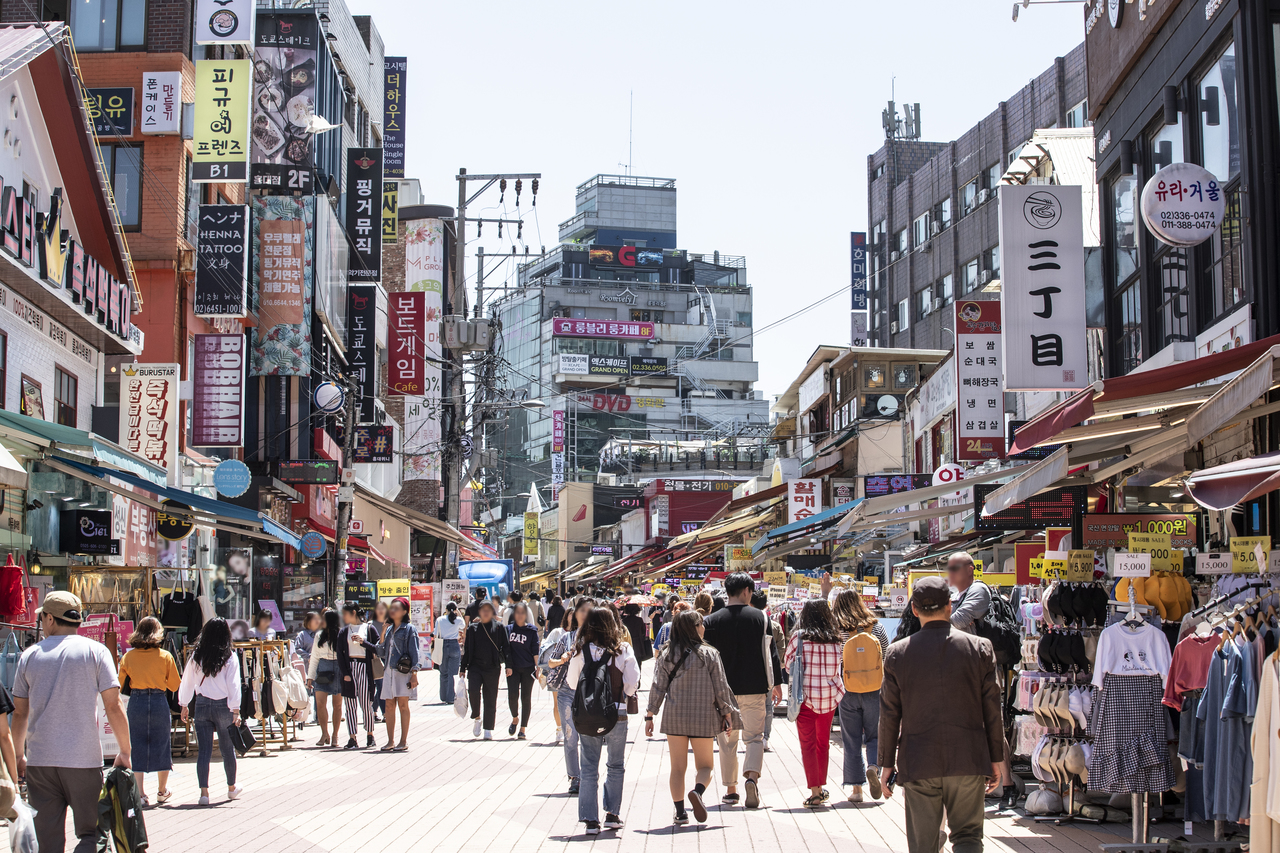
- Address: Eoulmadang-ro, Seogyo-dong, Mapo-gu, Seoul (Hongik University Street)
- Hours: Free public street, open 24/7. Busking peaks ~6–10 PM; the main drag goes car-free Fri–Sun, 12:00–23:00. Clubs run till dawn.
- Price: Free to walk and watch the buskers. Food, shopping, and clubs cost extra.
- Getting there: Hongik Univ. Station (Line 2 / AREX / Gyeongui–Jungang Line), Exit 9 — it drops you straight onto the street.
- ⏱ Time needed: 2–3 hours for a stroll, buskers, street food, and shopping
- 🔗 Nearby: Yeonnam-dong / Gyeongui Line Forest Park, Sangsu & Hapjeong, Mangwon Market
- Verified as of June 2026
From campus clubs to Seoul’s busking capital
The name comes from Hongik University, Korea’s top art school. In the mid-1990s, indie bands like Crying Nut began playing the cramped clubs around campus. The district grew into Seoul’s underground music and club mecca. That energy is why the street exists. The city later reshaped the main drag into the “걷고싶은거리” — a deliberate, walkable, car-light corridor. The busking culture poured straight into it.
So standing in the crowd watching a singer or a dance crew, you are seeing the living echo of that scene. It is more polished and more commercial than it was twenty years ago. But the buskers are real, free, and often genuinely good.
A route through the street, hour by hour
The street rewards a slow pass rather than a power-walk. Come out of Exit 9 around dusk, when the buskers are setting up and the light is good. The steps of Hongik University’s main gate sit barely 100 metres from the exit. That makes the exit-to-square walk essentially step-free, which helps if you have a stroller or wheeled luggage. Drift toward Hongdae Playground, the old children’s park across from the university gate. This is the busking heart, where crowds ring acoustic acts and dance crews. Linger for a song or two. It is the best free show in the neighbourhood.
Then graze. The street food is half the point: tornado potato, gyeran-bbang (egg bread), skewers, odeng. The “hot dog potato,” a sausage wrapped in fries, was reportedly invented here. Most single snacks run about ₩2,000–5,000, so a handful of stalls makes a light dinner for under ₩15,000. Nearly all vendors are cash-only. The nearest reliable ATM sits inside the station rather than on the pedestrian drag, so draw won before you leave the platform. From there, duck into the side alleys for vintage racks, cosmetics, and indie boutiques tucked between the big flagship stores.
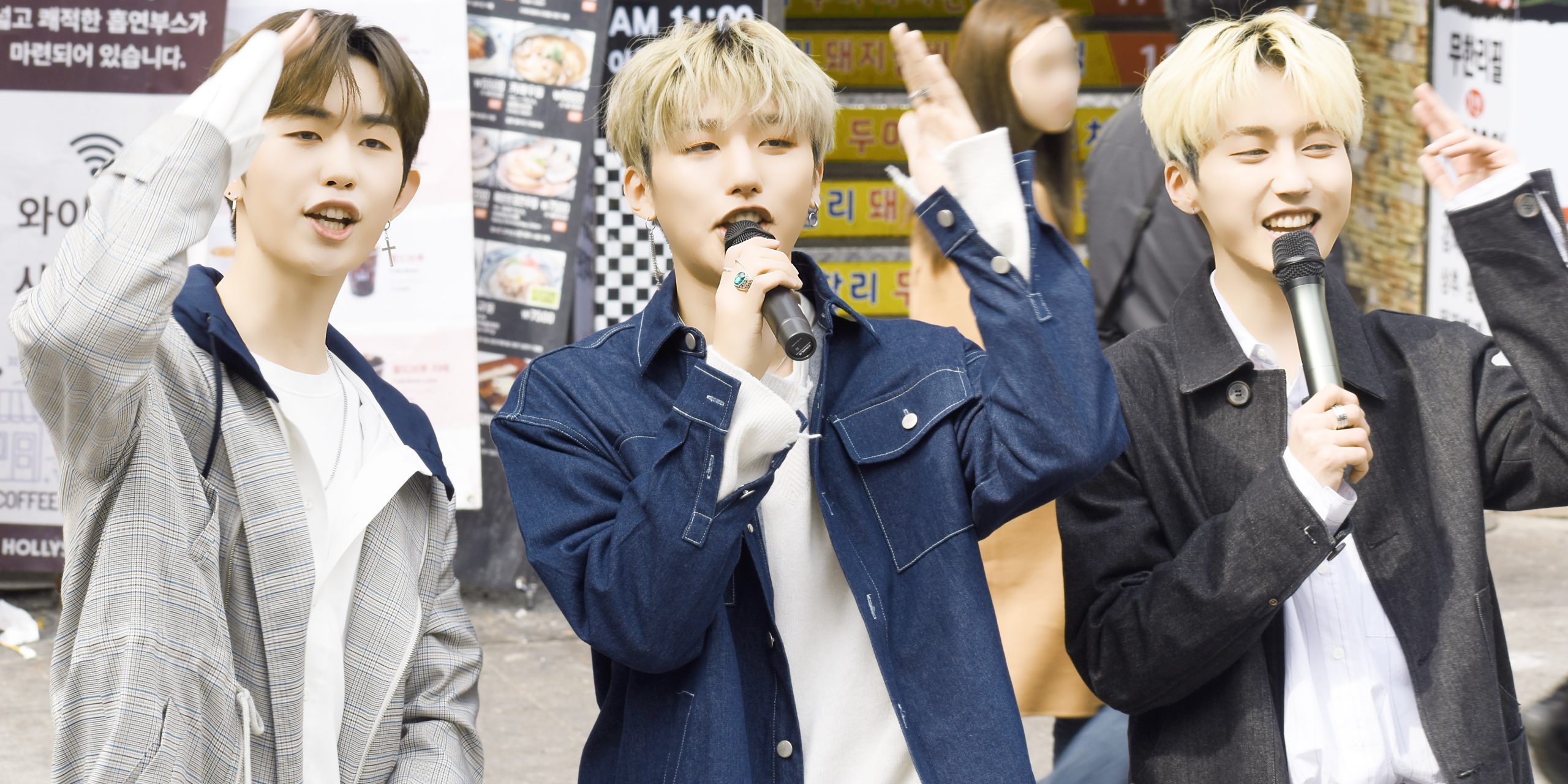
Photo: 홍대 버스킹 (Hongdae busking) — Explicit, CC BY-SA 4.0 via Wikimedia Commons
Two Hongdaes: choosing daytime or after dark
These read almost as two different places. Daytime is calmer — shopping, cafés, brunch, an easy wander. Night is the main event. Buskers in full swing, the street shoulder-to-shoulder, neon everywhere, and the clubs warming up. For the famous Hongdae energy, evening is the answer, ideally Friday or Saturday. If crowds drain you, take a weekday afternoon instead — the flavour survives without the crush. The single busiest window is roughly 9–11 PM on a weekend. Want the performances without the peak density? Arrive early, around 6–7 PM.
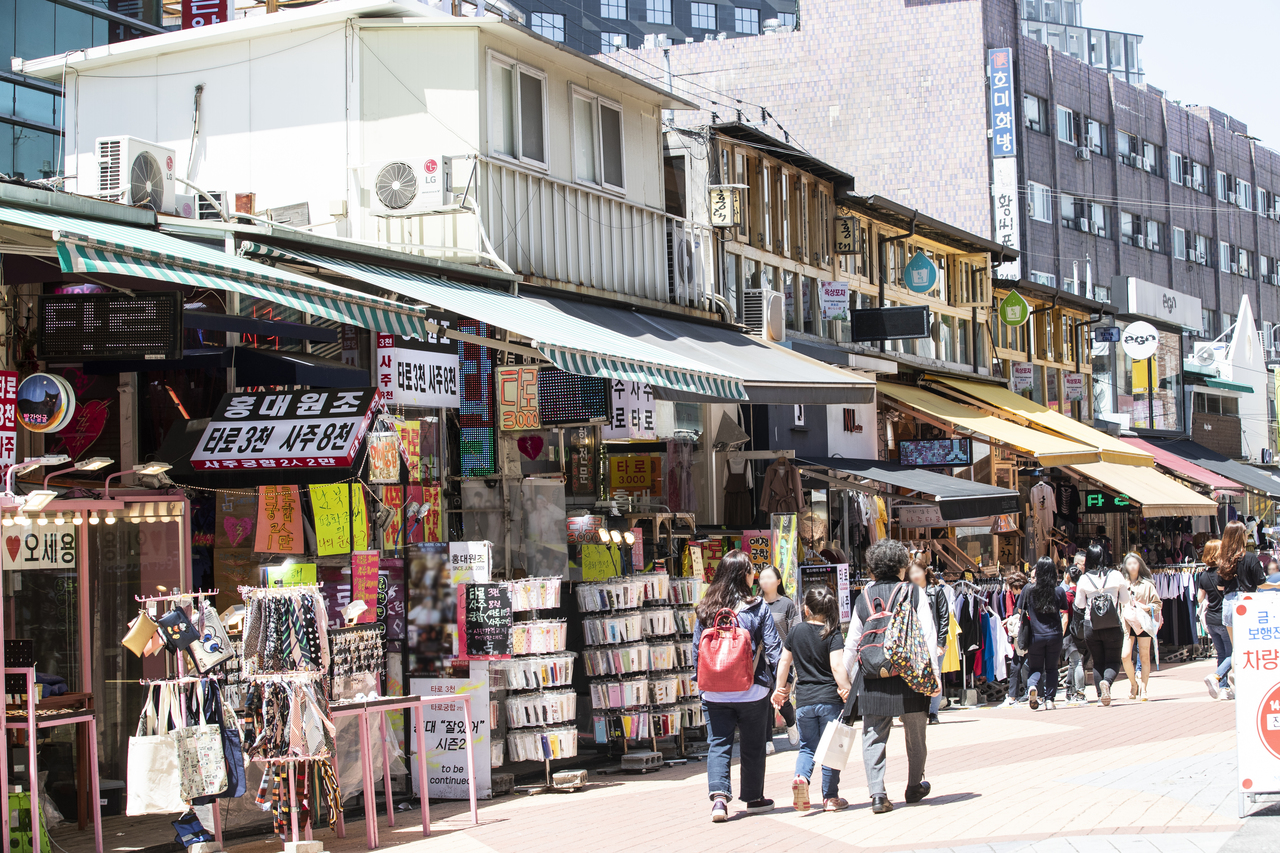
Photo: 홍대거리 (Hongdae Street) / Source: Korea Tourism Organization 관광사진갤러리 (KOGL Type 1)
The nightlife hustle first-timers underestimate
One thing catches newcomers off guard: the nightlife hustle. As it gets late, club promoters work the street hard. They block the path, wave flyers, and promise “free shots” to pull people in. It is mostly harmless. It is also relentless.
Hongdae: the drawbacks nobody mentions
The blunt version first. Hongdae sold out. Gentrification priced out the artists and the indie clubs. Chains and brand stores took their place. The underground soul faded, and the creatives largely decamped to Sangsu and Hapjeong just south. Arrive chasing a gritty bohemian legend and you will feel let down.
Weekend nights are genuinely overwhelming. Dense, loud, chaotic. Not for anyone who dislikes crowds. The scene gets messier in the small hours, too, and plenty of people now write the area off as overrated and touristy.
The sit-down problem
Here is the practical trap nobody warns you about. Eating in Hongdae means queueing. The popular restaurants and bars run waits most evenings, and all weekend long. Many use a tablet or app system — register the moment you arrive, then wander until your number comes up. Turning up hungry at 7 PM on a Saturday without registering is how you end up eating convenience-store kimbap.
Space is the other half of it. Interiors around here are small. Tables sit close enough that you overhear the next conversation and cannot get a decent photo. The stairwells between floors are narrow. Once a venue fills, finding a seat at all becomes the evening’s main activity.
And it is not cheap any more. Hongdae and neighbouring Yeonnam-dong now price like the destinations they became. Café bills, bar tabs, and the goods in the character and stationery shops all run higher than a student district suggests. The street food stalls stay the genuine bargain.
None of this argues for skipping it. It argues for coming for what Hongdae is — a high-energy, commercial entertainment street with excellent free busking — rather than for what it used to be.
Is Hongdae right for your itinerary?
The area suits visitors after a fun, free, high-octane Seoul evening. Street performers, cheap eats, people-watching, and as much or as little nightlife as you like afterward. It is one of the easiest “young Seoul” wins on any itinerary. It suits others less well. Anyone genuinely drained by crowds should think twice, as should anyone picturing a quiet, authentic artists’ quarter — that Hongdae mostly lives next door now, and is better approached by day. For more strolling-and-shopping ideas, see our other Markets & Shopping guides.
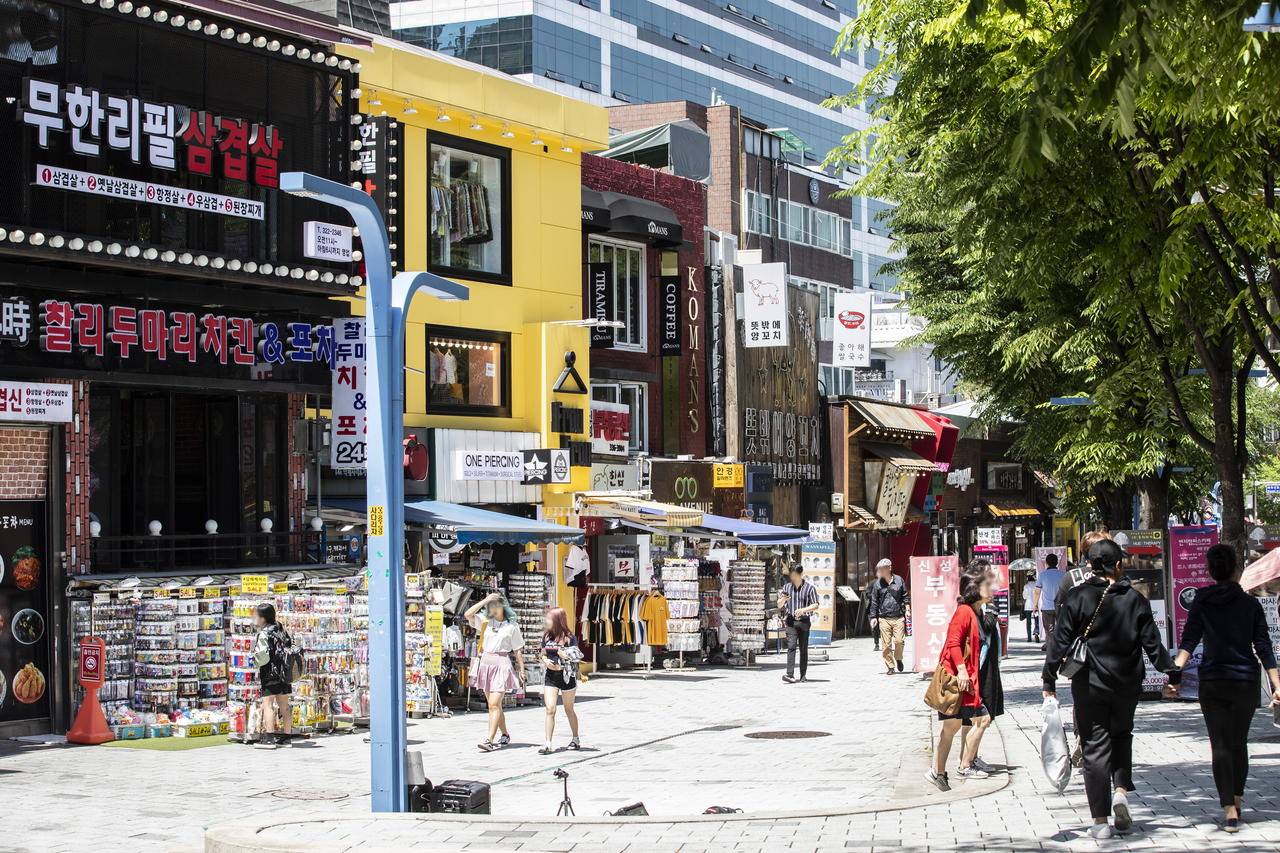
Photo: 홍대거리 (Hongdae Street) / Source: Korea Tourism Organization 관광사진갤러리 (KOGL Type 1)
Building a full Mapo evening around it
Hongdae works best as the loud chapter of a longer night. Start calm with a late-afternoon coffee and a sprawl on the lawn at Gyeongui Line Forest Park in Yeonnam-dong, five minutes north. Then walk into the Hongdae street as the buskers fire up. Graze the street food and catch a few performances. For something quieter and more creative, drift south to Sangsu or Hapjeong for indie bars. For food and a river view, Mangwon sits one stop away. Loud and calm, back to back — that is the Mapo move.
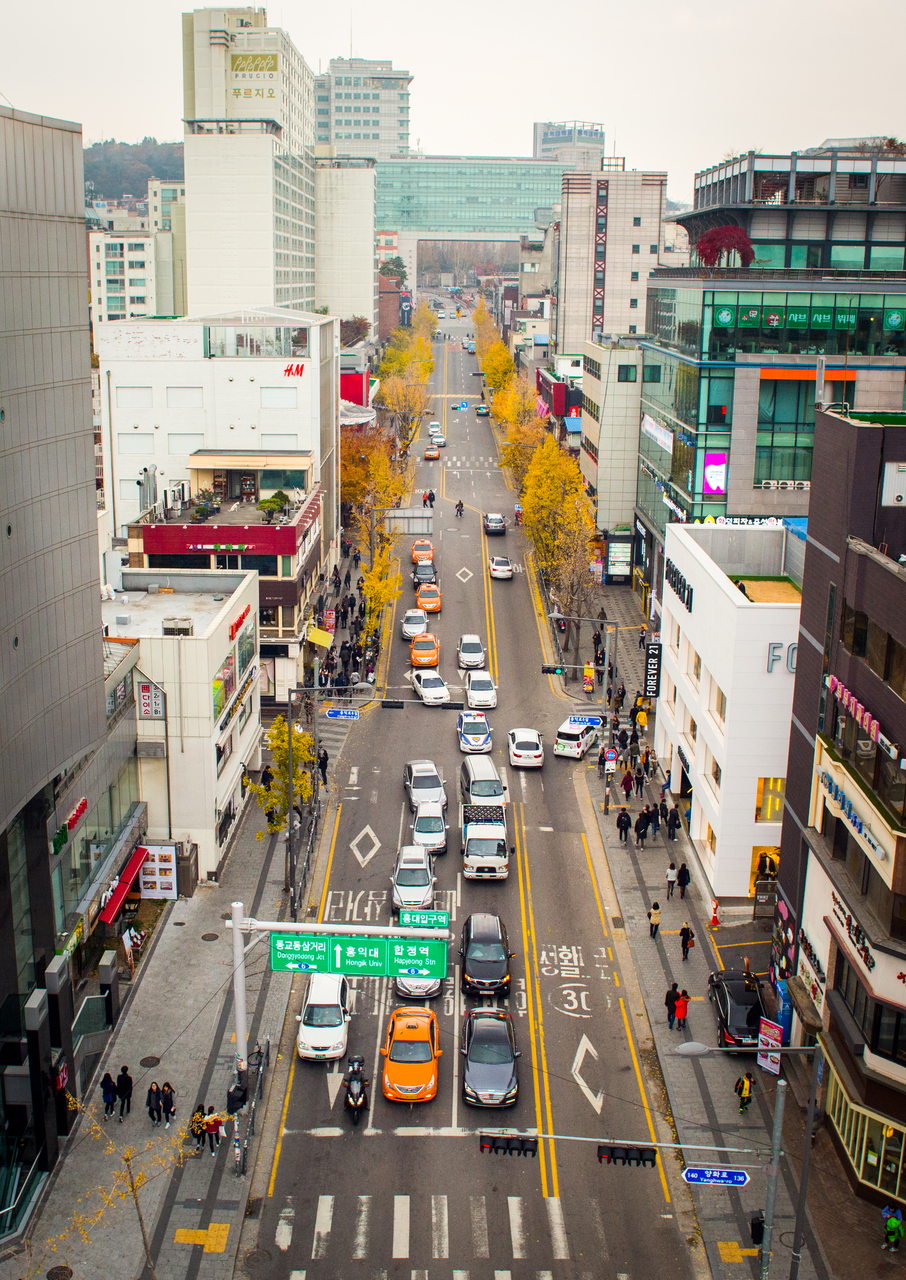
Photo: 홍대거리 (Hongdae Street) / Source: Korea Tourism Organization 관광사진갤러리 (KOGL Type 1)
Arrive expecting the 1995 underground and the verdict will be that it went commercial. Arrive expecting a free, electric, street-food-and-busking evening, and Hongdae still delivers one of the most fun nights out in Seoul. Set the bar there.
Pingback: Korea SIM Card vs eSIM 2026: What Tourists Should Get