
Picture a 500-year-old royal tomb forest, hushed and green, sitting directly beneath the glass towers of Gangnam. That is Seonjeongneung. While Teheran-ro hums with traffic and office workers chase their coffees, a Joseon king rests on a grassy rise just steps from the turnstiles.
Pay ₩1,000, walk through the gate, and the city volume drops by half. 🌿 This is a place for serenity and a strong slice of history, not for grand architecture. The buildings are modest. The calm is the point.
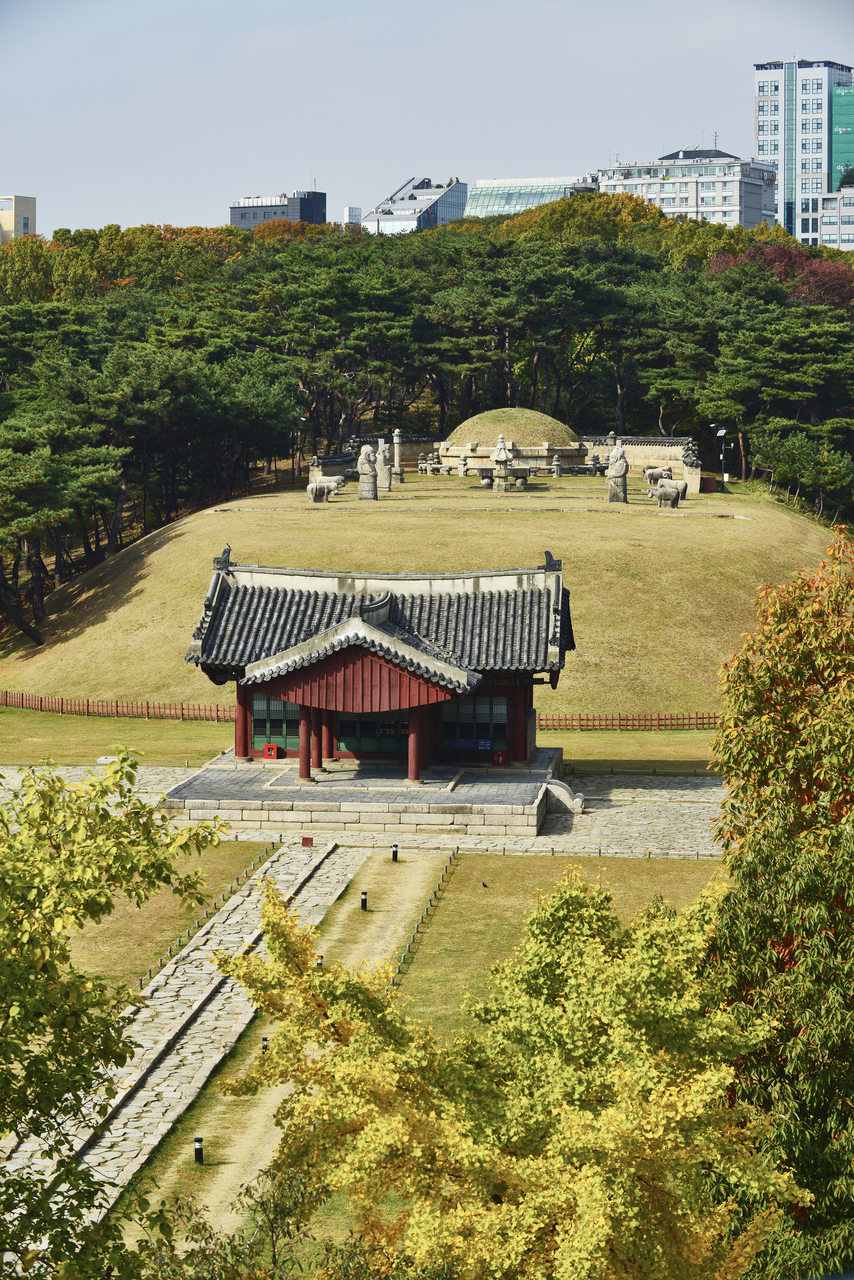
Photo: The T-shaped shrine and burial mound at Seonjeongneung in autumn — Korea Tourism Organization, KOGL Type 1.
- Address: 1 Seolleung-ro 100-gil, Gangnam-gu (Samseong-dong), Seoul
- Hours: Tue–Sun, closed Mondays. Seasonal hours, roughly 06:00–18:00 (later in summer). Last admission about 1 hour before close.
- Price: Adults ₩1,000. Free for ages 18 and under, seniors 65+, and hanbok wearers. Free on Culture Day (the last Wednesday of each month).
- Getting there: Seolleung Station, Line 2 & Suin-Bundang Line, Exit 8 or 10, then a ~7-minute walk.
- ⏱ Time needed: 45 minutes to 1.5 hours.
- 🔗 Nearby: COEX & Starfield Library, Bongeunsa Temple.
- Verified as of June 2026.
Two royal tombs sharing one wooded park
Seonjeongneung is really two tomb sites bundled into a single forested park, joined by a gentle path over a small hill. The names spell out who rests here.
Seolleung holds King Seongjong, the 9th Joseon king, and his queen, Jeonghyeon. Seongjong looms large in Korean history: he completed and promulgated the Gyeongguk Daejeon, the great legal code that shaped Joseon governance for centuries. That code laid out everything from court ranks to land taxes, and it remained the backbone of the dynasty’s law for the better part of 400 years. His reign, from 1469 to 1494, is widely remembered as a cultural high point — a stretch of relative peace when scholarship and the arts flourished. The quiet man on this hill helped write the rules that ran the country long after he was gone.
Jeongneung holds King Jungjong, a few hundred meters away through the trees. Together the grounds were inscribed by UNESCO in 2009 as part of the Royal Tombs of the Joseon Dynasty.
The layout follows the classic Joseon pattern, and Seonjeongneung shows it off cleanly. Grassy burial mounds sit on a low rise, a T-shaped wooden shrine stands below, and stone guardians keep watch. Look for civil and military officials carved in stone, each with a horse, plus a small menagerie of stone animals.
Those carvings are more than decoration. The civil official, holding a tablet, and the military official, gripping a sword, stand ready to serve the king in death as they did in life. The stone animals each carry a job, too. Tigers and rams ring the mound to ward off evil spirits, while a pair of stone horses wait to carry the officials. Even the low wall and the lamp-shaped stone in front of the mound follow rules set down centuries ago. Once the cast is familiar, every Joseon tomb reads like a quiet stage set — and Seonjeongneung is one of the easiest places in Seoul to learn the language.
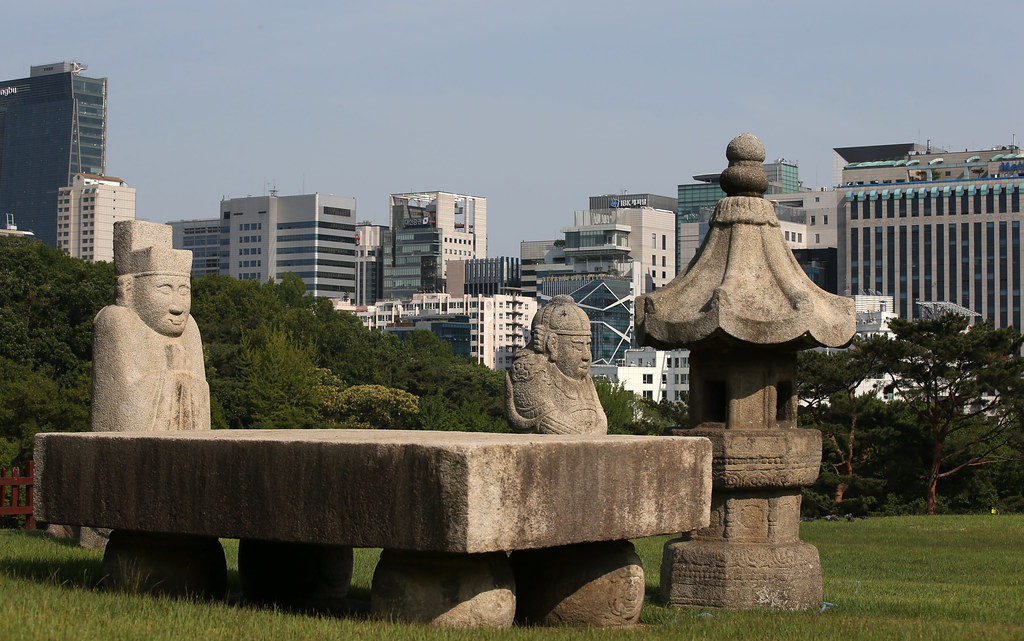
Photo: Stone guardian statues at Seonjeongneung with Gangnam towers behind — Korea.net, CC BY-SA 2.0 via Flickr.
The empty grave beneath the skyscrapers
This is where Seonjeongneung turns genuinely gripping. During the 1592 Japanese invasion — the Imjin War — the tombs were dug up and burned by invading troops.
By most accounts, the remains of King Seongjong and Queen Jeonghyeon were never recovered. Seolleung is, it is said, an empty royal tomb. Read that again: an empty king’s grave, sitting in the middle of Gangnam, for more than four centuries.
It is a heavy thought to carry on a walk. Visitors report that the mounds — which may hold nothing but soil and memory — feel all the stranger with skyscrapers looming over the treeline. That contrast is the single best reason to make the trip.
For the full picture, the on-site History Center runs exhibits and guided tours that fill in the names, dates, and politics the quiet mounds cannot tell on their own.
What a walk through the grounds is like
The path is flat, soft, and easy. 🍃 It is a forest loop anyone can manage — no stairs to dread, no hills to conquer.
On a good day the park is shared with locals jogging, office workers eating lunch on benches, and grandparents taking a slow stroll. Birdsong floats over the dull hum of Teheran-ro traffic. It is a genuine breather.
The trees do most of the work. Spring brings blossoms, and autumn lights the whole park in red and gold. For photographers, late October through mid-November is the window. The softest light lands in the first hour after opening. Arrive near 06:00 in summer, or shortly after 07:00 in the shorter days of autumn, and you get near-empty paths and long shadows before the lunch crowd drifts in.
You won’t get close to the mounds, and that is fine. The roped-off distance is part of the dignity of the place. These tombs were always meant to be read from afar.
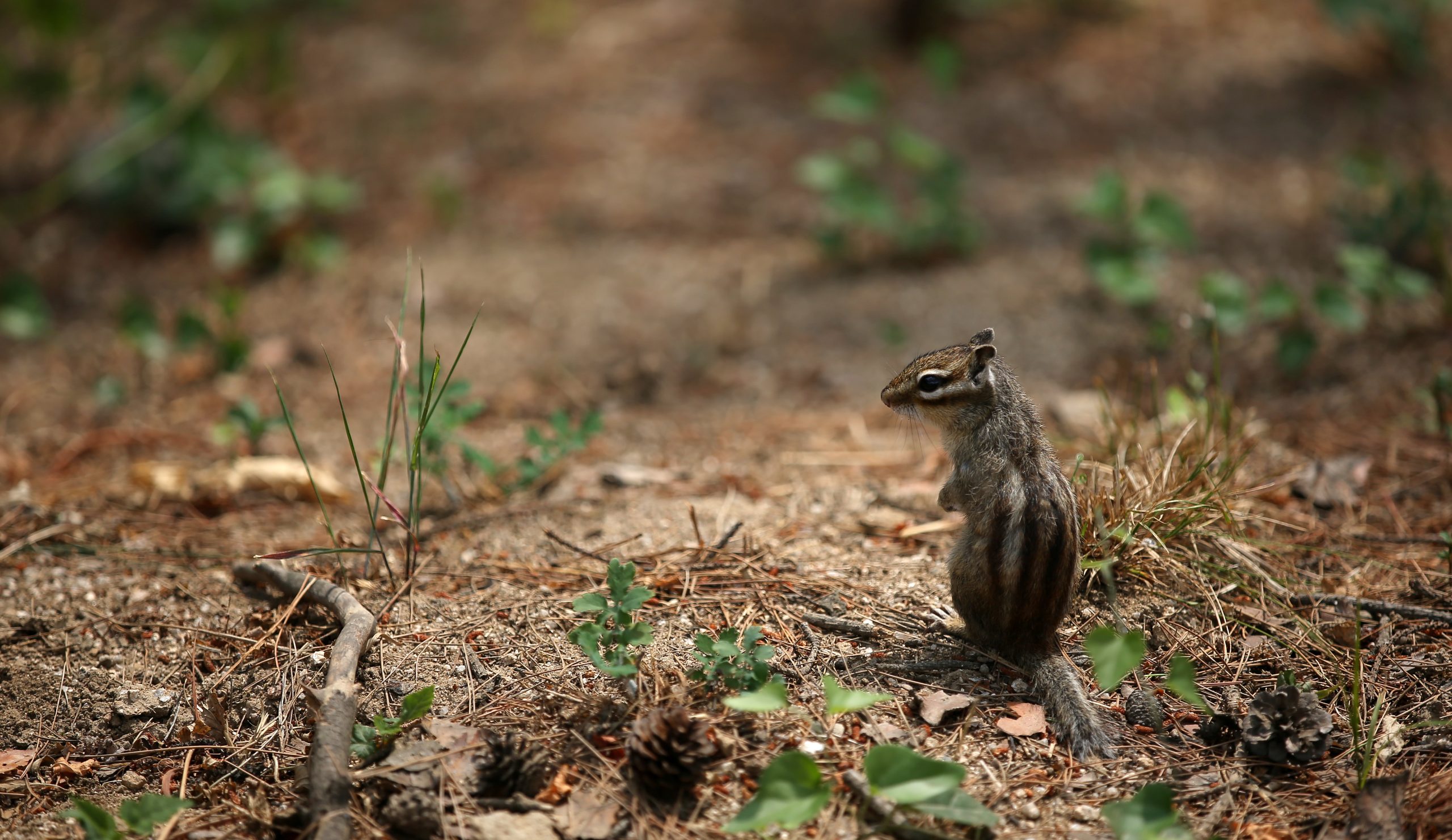
Photo: A chipmunk in the wooded grounds of Seonjeongneung — Korea.net, CC BY-SA 2.0 via Wikimedia Commons.
A sensible way to spend the morning
Most first-timers get the best of it on a weekday, early. That is when the park is quietest, before the office lunch crowd arrives. Entry is cash or card at the ticket window, though carrying a couple of ₩1,000 notes keeps the line moving. The ₩1,000 fee is a third of a Gyeongbokgung palace ticket (₩3,000), and a fraction of the ₩15,000-plus charged at private attractions nearby. This is one of the cheapest historic sites in the city.
A common approach is the full loop: start at Seolleung, follow the wooded path over the hill to Jeongneung, then circle back. The Seolleung-to-Jeongneung walk is short, maybe 10 minutes through the trees, and it is the prettiest stretch of the whole park. The History Center is worth a stop on the way. Its scale models and panels show how a royal tomb was laid out and maintained, which brings the roped-off mounds outside into focus. The center is small, so 15 to 20 minutes is plenty before heading back out into the grounds.
From there, the half-day can keep going. It is a 10–15 minute walk to COEX and the photogenic Starfield Library, or to Bongeunsa Temple for another dose of old Korea right beside the new. One quiet morning, two very different moods.
The downsides of Seonjeongneung to weigh first
The burial mounds are roped off and viewed from a distance, so anyone hoping to walk right up will be kept back.
English signage and interpretation are limited. Without a guided tour or a little reading beforehand, some of the meaning slips past. The small exhibition hall on site does not fill that gap either — visitors regularly come out saying there was not much in it.
Leave the car behind. The lot charges by the five minutes, and the rate steps up once you pass two hours, so a slow wander gets expensive. It also serves people visiting nearby restaurants, so spaces move. Worse, the lot is sometimes closed off for events with very little warning — one visitor got the notice the same day. Seolleung Station is a few minutes’ walk and removes the whole problem.
For anyone who has already toured a Joseon royal tomb or two elsewhere, this one can feel a touch familiar. The layout repeats across the dynasty’s tombs by design. There is also not much to actively “do” here — it is a quiet walk, not an attraction with activities or rides.
Weekend afternoons are the one time the calm breaks, as the local crowd arrives. Come on a weekday morning and you may have long stretches of path to yourself. One genuine exception worth knowing: during the Joseon Royal Tombs Festival each October, the grounds host processions, ritual ceremonies and open-air concerts. It is a completely different visit — busy, and worth timing for if that appeals.
A note on etiquette, since it shapes the experience. This is an active memorial site rather than a park, and Korean visitors treat it that way — quiet voices, no picnicking on the lawns. Arrive expecting somewhere to sprawl with a coffee and you will feel out of step.
Anyone expecting grand, palace-style halls and gates will likely leave underwhelmed. The fair counter: that quiet, that emptiness, that sense of green calm in the middle of Gangnam is precisely the value. Judged as a breather and a history lesson rather than a spectacle, it delivers.
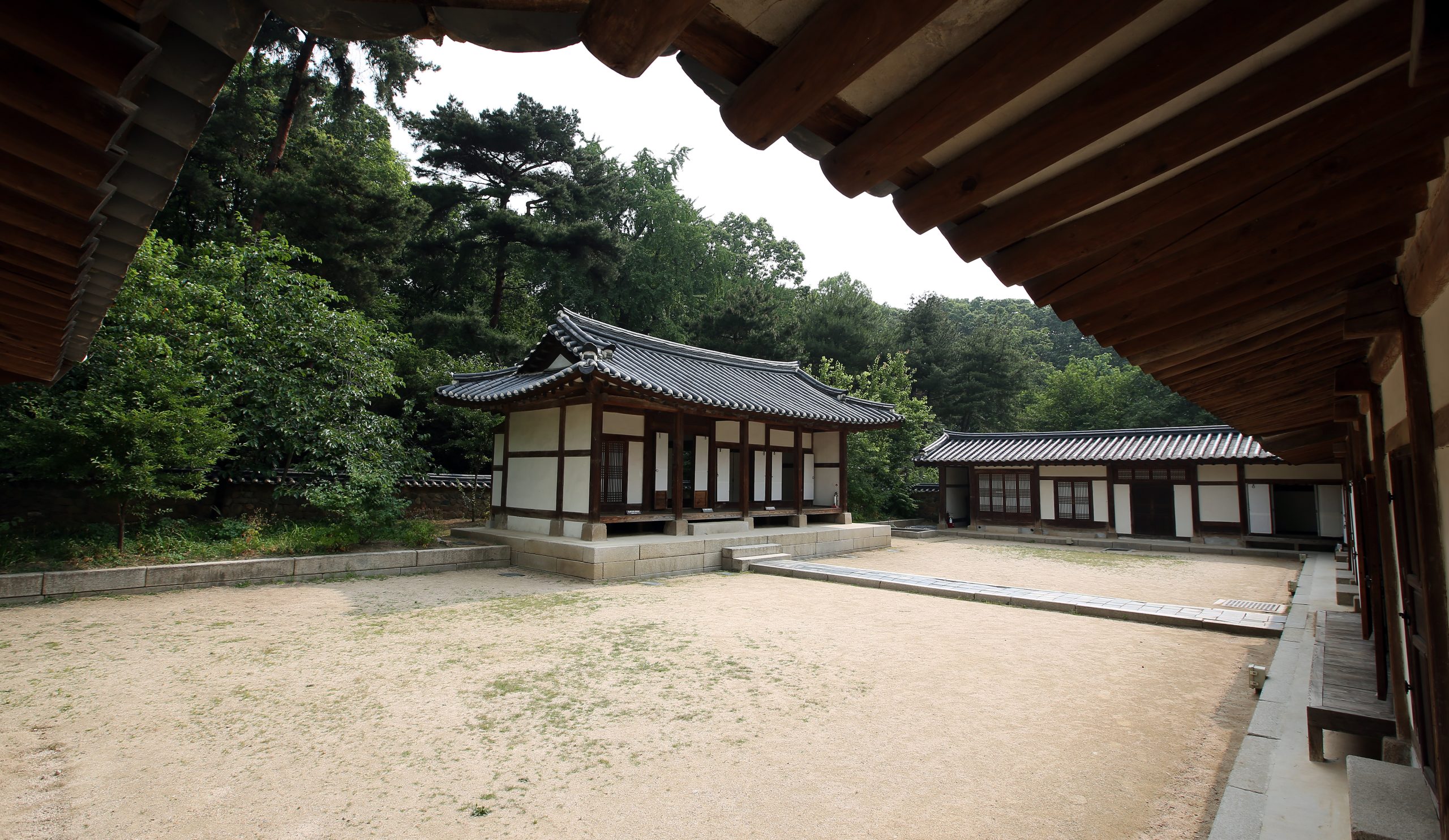
Photo: Traditional buildings amid pine forest at Seonjeongneung — Korea.net, CC BY-SA 2.0 via Wikimedia Commons.
Who Seonjeongneung suits best
It rewards anyone who loves history or craves green calm in the concrete heart of Gangnam. Walkers and joggers get a pretty loop, and autumn brings the photographers.
It disappoints travelers who are short on time and want big, dramatic spectacle. Same for anyone who has already ticked off several Joseon tombs and finds them blurring together.
Come for the calm, not the fireworks. Seonjeongneung is a soft, thoughtful hour and a reminder that old Korea never really left Gangnam. For anyone who catches the bug, there are plenty more Seoul heritage sites to wander next.