
Noryangjin Fish Market is the most electric food experience in Seoul. It is also the one most likely to leave first-timers grumbling about the bill. Noryangjin Fish Market is the real thing. Hundreds of tanks of live fish, king crab the size of a forearm, octopus still wriggling, and the whole salt-and-seawater theatre of Korea’s largest fisheries market. It is not quite a tourist trap, but it carries the reputation. The gap between the two comes down entirely to whether you know the rules. Arrive informed and it is unforgettable. Arrive unprepared and the market will teach the lesson the expensive way.
What follows is the practical playbook — the details that turn a stressful visit into a great one.
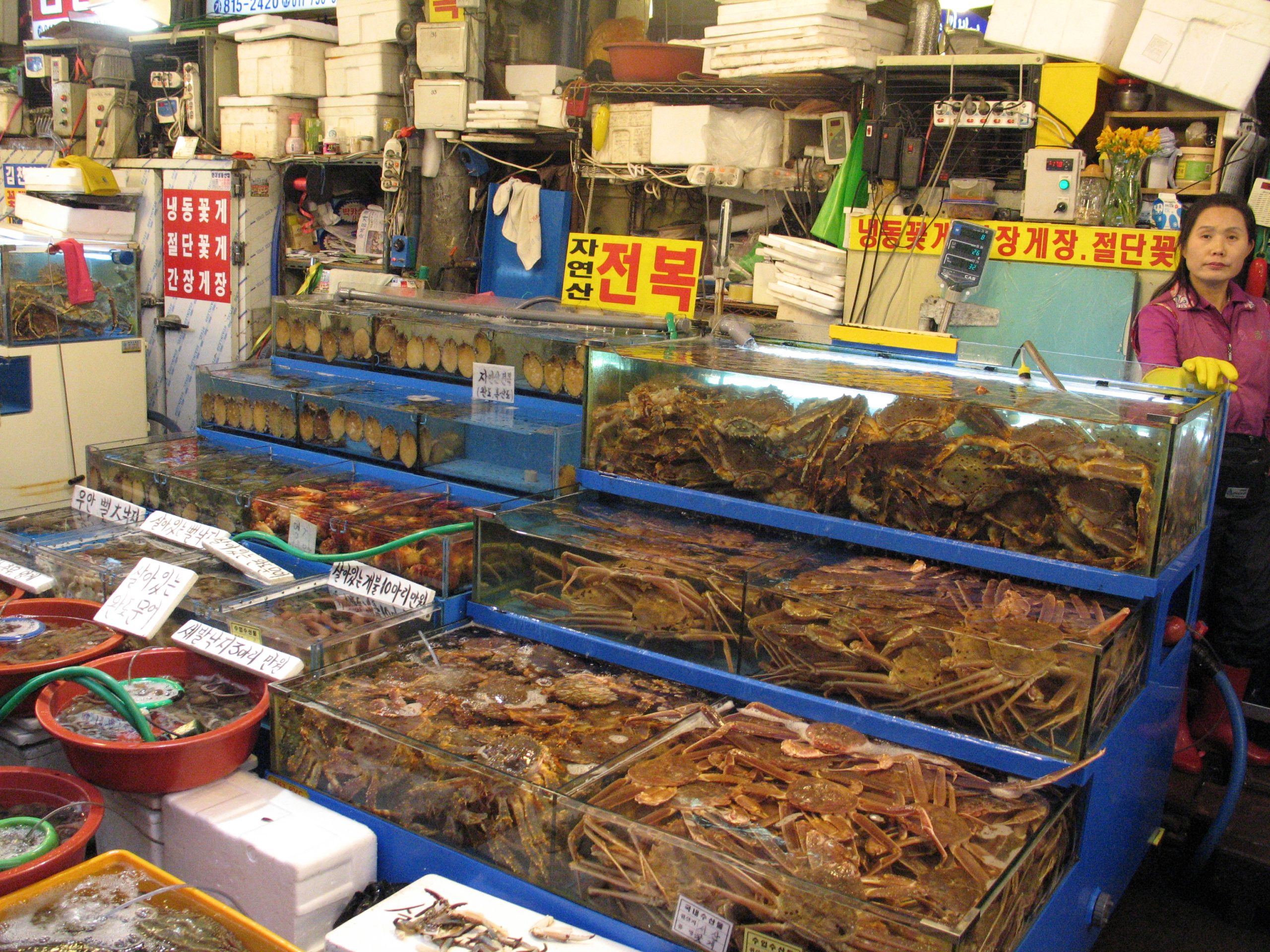
Photo: Live king crab tanks at Noryangjin Fish Market — Gaël Chardon, CC BY-SA 2.0 via Wikimedia Commons.
- Address: 674 Nodeul-ro, Dongjak-gu, Seoul
- Hours: The selling floor runs year-round with no closing day (most sections ~01:30–22:00; the premium hall 24h). The live auction is the part that pauses — none on Sundays, Jan 1, or the Seollal and Chuseok holidays — and runs roughly 00:00–04:00 depending on the section
- Price: Free entry; you pay for the seafood plus a per-person preparation fee (초장집) and cooking charges
- Getting there: Noryangjin Station — Line 1 Exit 9 or Line 9 Exit 7, then a ~5-minute walk via the connecting walkway straight into the building
- ⏱ Time needed: 1.5–2.5 hours
- 🔗 Nearby: Cup-Bap (컵밥) Street, Nodeul Island, and the 63 Building across the river
- Verified as of August 2026
A working market first, a spectacle second
Noryangjin is Korea’s largest fisheries wholesale market, and since 2016 it has occupied a big modern multi-floor building rather than the old corrugated sprawl. The clean concrete is deceptive. Step onto the main floor and it lands all at once. The briny air, the splash of the tanks, vendors calling out, aisle after aisle of live everything.
What is worth seeking out? Live flatfish (gwangeo/광어) is the headline, sliced into clean, sweet hoe on the spot. Spiny sea pineapple (meongge/멍게) and abalone (jeonbok/전복) deliver the deep-sea flavours locals prize. Giant king crab and snow crab are the splurge centrepieces, sold by weight straight from the tank. The boldest order is sannakji — live octopus, chopped and still moving on the plate. Sea squirts, lobster and buckets of shrimp round out the aisles.
The overnight wholesale auction is the market’s beating heart. It runs roughly midnight to 4am, when restaurant buyers haggle over crates by the ton. Auctioneers chant a rapid, sing-song patter, hand signals fly, and forklifts weave through the crowd. It is loud, fast and genuinely absorbing to watch from the edges. The immediacy is the appeal: choose a living fish, and minutes later it is dinner.
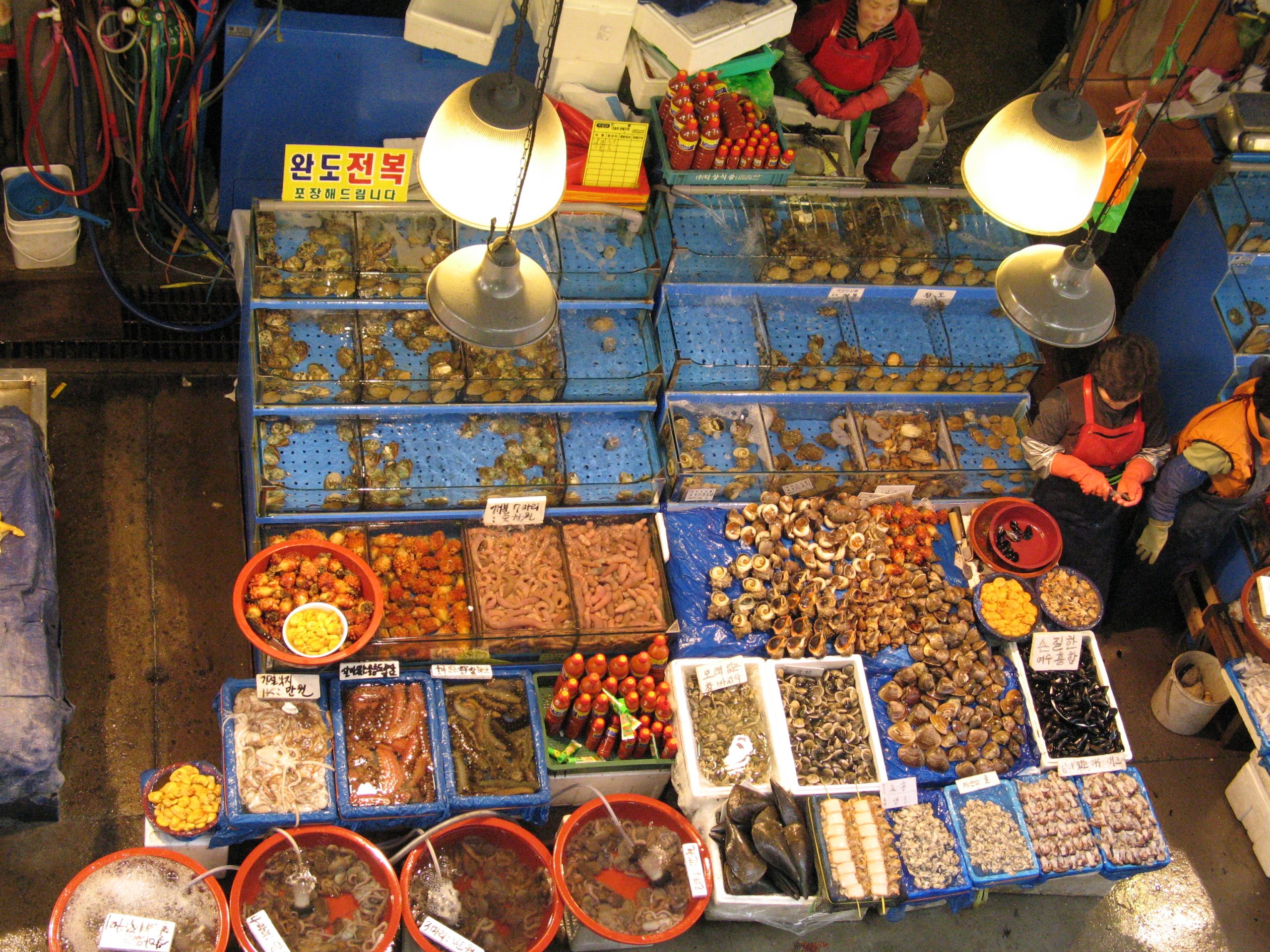
Photo: Abalone and shellfish stall at Noryangjin Fish Market — Gaël Chardon, CC BY-SA 2.0 via Wikimedia Commons.
How “buy downstairs, eat upstairs” actually works
This is the mechanic that trips up first-timers, so here it is plainly. Visitors buy live seafood from a stall on the first floor and pay the fishmonger on the spot. They then carry it upstairs to a partner restaurant, which preps it to order: hoe (sashimi/회), grilled, steamed, or simmered into maeuntang (spicy stew/매운탕).
The upstairs kitchen does not sell the fish — it charges to cook it. That charge is the per-person preparation fee, the 초장집, usually around ₩3,000–5,000 a head. On top of that come cooking charges for anything beyond raw hoe: grilling, steaming, or the maeuntang pot all cost extra. The final bill is therefore seafood price + prep fee + cooking. Two separate transactions, in two separate places — and two separate points where the total can surprise you.
Pricing the meal before you pay
The core of a good Noryangjin Fish Market visit is simple. Agree the price before buying, and watch the seafood get weighed without looking away. Confirm the prep and cooking fee in full before anything hits a pan.
As a rough anchor, a proper seafood feast for about four people runs somewhere around ₩200,000–300,000 in 2026, though prices swing hard with the season and the catch. It helps to break the Noryangjin Fish Market bill down. Budget roughly ₩50,000–70,000 per person for a mixed spread of hoe plus one cooked dish. Then add the ₩3,000–5,000 prep fee per head, and a maeuntang cooking charge that often lands near ₩10,000–15,000 for the pot. Pin down the weight before agreeing. King crab and abalone are priced by the gram, and a vague “one fish” can quietly become a far larger number on the scale. The economics also punish small parties: minimum portions and fixed prep fees do not scale down, so solo travellers and couples pay a poor rate. A group of three to five is where the math works.
One persistent myth is worth retiring: the fish is just as fresh at 6pm as at 4am. A relaxed early-evening window — roughly 5 to 7pm, after the lunch rush and before the late crowds — gives the same quality without the overnight chaos. On haggling, opinions split; some regulars insist prices are largely set and pushing back achieves little, while others say always confirm the total first. Either way, confirming costs nothing.
Two habits do more than haggling ever will. First, look up the day’s going rate before you arrive. Korean shoppers check a daily seafood price reference, the best known being a service called Ineo Gyoju Haejeokdan (인어교주해적단), which posts what flatfish, rockfish and crab should cost that day. It is Korean-only, but a translated screenshot is enough to tell whether a quote is fair. Second, order what is cheap and in season rather than what you recognise. The famous species carry a premium, and so do the stalls in the best positions near the entrances. Walking deeper into the hall and asking what is good today usually costs less and eats better.
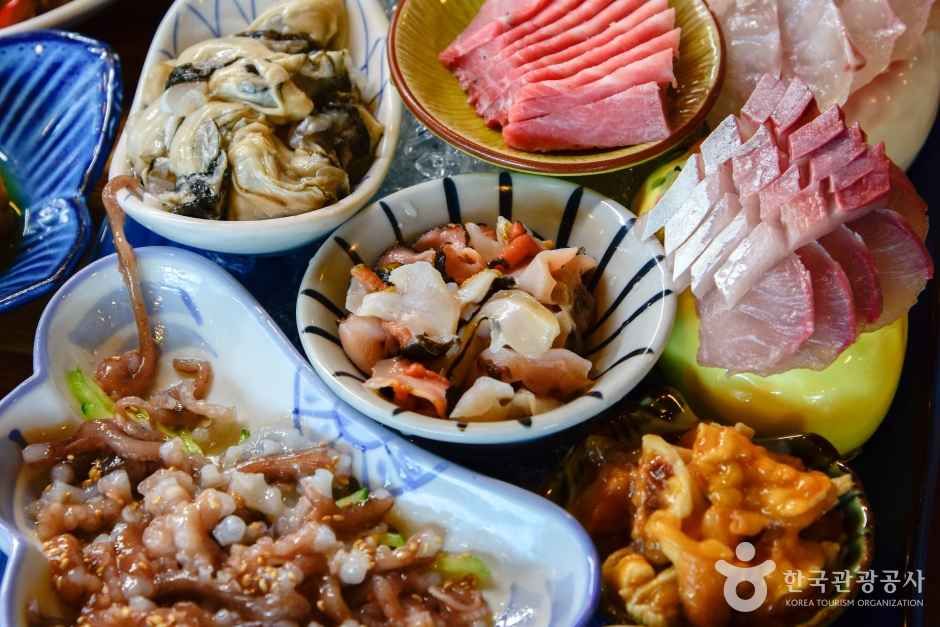
Photo: A Korean seafood spread — sliced raw fish (hoe) and live octopus (sannakji) — Korea Tourism Organization, KOGL Type 1.
A route that consistently works
For a single evening, a common and reliable approach looks like this. Arrive with a group of three or four in the early evening. Take a slow lap of the first floor first — no buying, just scouting. Choose one or two stalls that display their prices clearly, then negotiate one agreed total for the whole order.
Carry it upstairs and ask for it split half hoe, half maeuntang. That way the same haul yields both the clean raw plates and a hot, bubbling stew. Eat unhurried, then walk it off. With energy left, continue to Cup-Bap Street for a cheap-and-cheerful snack chaser. Or cross to Nodeul Island for a calmer riverside wind-down. The contrast between the market clamour and the quiet water is part of the appeal.
A few caveats worth knowing at Noryangjin Fish Market
The tourist-trap reputation is, in fairness, well earned. The classic complaints are real. Surprise add-on fees, overpricing aimed at foreign visitors, and the occasional misleading sell. Watch for a “deal” that quietly swaps in a smaller fish or pads the bill. Consumer complaints here get specific: a crab weighed and charged above its listed rate despite being visibly damaged, and shellfish sold as live that turned out not to be. Watch the scale and the actual animal, tank to bag, rather than only the number on the display. Note too that stalls often steer you toward one particular restaurant upstairs, and several of the worst bill stories come from those pairings. You are under no obligation to use the one you are pointed at. The language barrier compounds it, and plenty of non-Korean speakers leave feeling short-changed.
The touting at Noryangjin Fish Market deserves its own warning. Vendors compete hard for passing trade, so the aisles bring a constant stream of people calling you over and stepping into your path. Korean visitors say it wears them down, and as an obvious foreigner you will get more of it rather than less. A flat “괜찮아요” (gwaenchanayo, “I’m fine”) and steady walking is the whole technique.
Plan the upstairs half of Noryangjin Fish Market, too. On weekday evenings and at weekend mealtimes the restaurants queue at their ordering kiosks, with waits reported around fifty minutes at the busier ones. If you have a place in mind, call ahead or book. Otherwise eat slightly off the meal peak, since the market floor itself is no busier at 16:30 than at 18:30.
Quality upstairs is also a gamble. Some kitchens prep beautifully; others return a dry, overcooked grill or a watery, flavourless maeuntang. The floors are wet and slippery, and the fish smell is strong. The overnight auction is genuinely striking, but nobody stages it for tourists. Expect no polished show. There is a backstory, too. The old market came down, and the dispute over relocating vendors into the new building dragged on for years. It remains unresolved, with some longtime sellers still resisting. None of this is a reason to skip it. It remains a genuine, beloved Korean institution — it simply rewards preparation. Those wanting something calmer can browse more Seoul markets & shopping for gentler options.
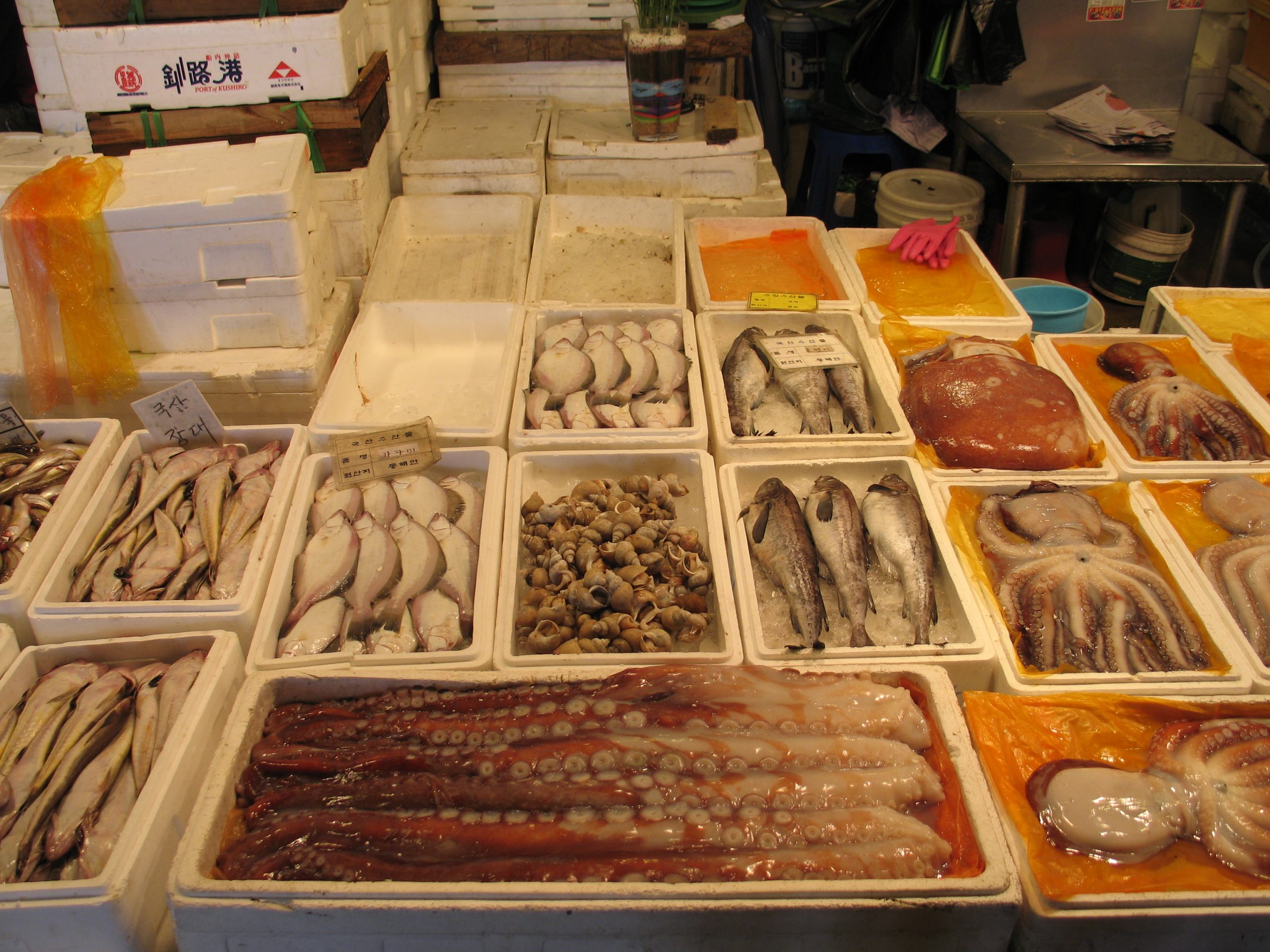
Photo: Fresh fish and octopus on display at Noryangjin Fish Market — Gaël Chardon, CC BY-SA 2.0 via Wikimedia Commons.
The right fit — and the wrong one
Noryangjin suits adventurous eaters, groups, and anyone who wants the freshest hoe in Seoul with a side of real market theatre. Little else compares to choosing a living fish and eating it twenty minutes later.
It is a poor fit for solo travellers on a tight budget, or anyone wanting a fixed-price, no-negotiation meal. The genuinely squeamish should also stay away. The tanks, the wriggling octopus and the whole live-to-plate reality are not for everyone. The pattern is consistent: go in a group, go in the evening, agree every price up front, and the market earns its slot. Go in cold and alone, and its reputation explains itself.