
Seoullo 7017 is not a destination in the ticketed-attraction sense. It is a free, breezy 30-to-60-minute stroll along an old highway overpass that the city replanted as an elevated garden. With a spare hour near Seoul Station, the walkway works best late in the day. Cross the roughly 1 km deck slowly, coffee in hand. Then drop down into Namdaemun for street food.
Expectations decide how much visitors enjoy it. Arrive at noon in July expecting a lush botanical garden and the appeal is hard to see. Come with the right frame and the right timing, and it delivers exactly what it promises.
- 📍 Address: 432 Cheongpa-ro, Jung-gu, Seoul (서울 중구 청파로 432)
- 🕒 Hours: Open 24 hours, year-round (the walkway never closes)
- 💵 Price: Free
- 🚇 Getting there: Seoul Station (Subway Line 1 & 4, AREX, KTX). Use Exit 1 or 2 for the Malli-dong/Seoullo entrance, or Exit 7 toward the station plaza; the NE end is near Hoehyeon Station (Line 4) by Namdaemun.
- ⏱ Time needed: 30–60 minutes end to end (it’s ~1 km / 1,024 m)
- 🔗 Nearby: Culture Station Seoul 284, Namdaemun Market (~10 min walk), Sungnyemun gate, Myeongdong
- ✅ Verified as of August 2026
From 1970s car bridge to a walkable tree library
The odd name carries the whole backstory. The structure began as a highway overpass built in 1970 to carry cars above the tangle of rail tracks at Seoul Station. By the 2010s it was judged too old to trust with traffic. Rather than demolish it, the city commissioned Dutch architecture firm MVRDV and its founder Winy Maas to convert it, reopening the deck in 2017 as a pedestrian sky-garden.
So “7017” reads as 1970 plus 2017 — built and reborn. It also nods to a deck that sits about 17 m above ground with 17 connecting walkways. The concept borrows openly from New York’s High Line, the elevated park on a former rail line.
What visitors actually walk through is a curated “tree library”: roughly 228 plant species and around 24,000 plants, set in about 645 round concrete pots arranged along the deck. The route passes small cafés, an info booth, and viewpoints over the rail yards. There is also a genuine foot bath you can dip into, plus the Bangbang Playground with trampolines for kids.
The pots are grouped loosely by plant family, so the deck changes mood as you move along it. One stretch of magnolias, another leaning into roses or pines. Reading the little labels turns the walk into a quiet, nerdy pleasure. Most people skip them, and the deck still works fine as a plain stroll.
Seventeen ramps, stairs, and bridges branch off the main deck to street level, which is the second “17” in the name. Practically, you can join or leave near Malli-dong, Cheongpa-dong, the Seoul Station plaza, or Namdaemun. It depends on where your day is heading, and nobody is locked into the full length.
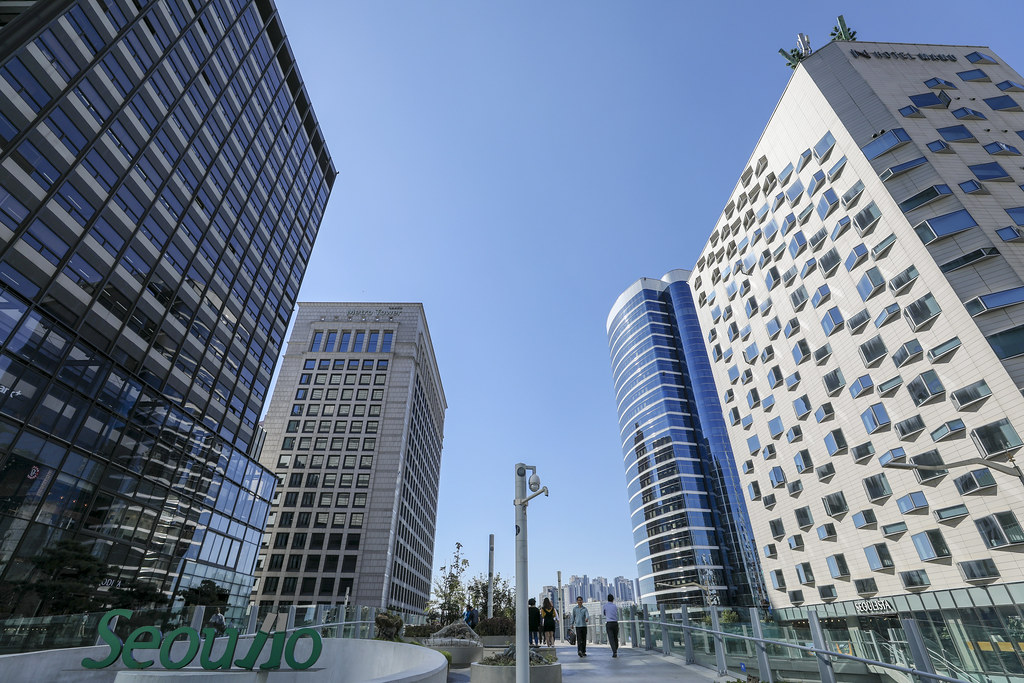
Photo: Walking the Seoullo 7017 deck past the green “Seoullo” sign. Source: bryan… / Flickr (CC BY-SA 2.0).
The walkway earns a slot precisely because it asks so little. Nothing to pay, nothing to book, and it deposits you right between Seoul Station and the old downtown. Among Seoul’s other icons & views, it demands far less effort than the climb up N Seoul Tower or Lotte World Tower. That matters if you are rationing energy across a packed itinerary.
Why the timing is the whole trick
The single most important tip is to time the visit for sunset or after dark. The deck carries around 1,000 blue LED lamps in an installation called “Seoul Night,” also designed by Winy Maas. Once the sun drops, they glow across the walkway like a small Milky Way. That is when the place earns its photographs.
Daytime is honest about what it is: a row of plants on a concrete bridge, pleasant enough in spring and early summer when everything is green. Blue hour is when it turns genuinely lovely. Aim to be on the deck about 20–30 minutes before official sunset. That lands you with greenery still lit, then the LED switch-on as the sky darkens. Sunset in Seoul falls near 5:20 pm in midwinter and closer to 7:55 pm in high summer, so check the day’s time before you plan dinner around it.
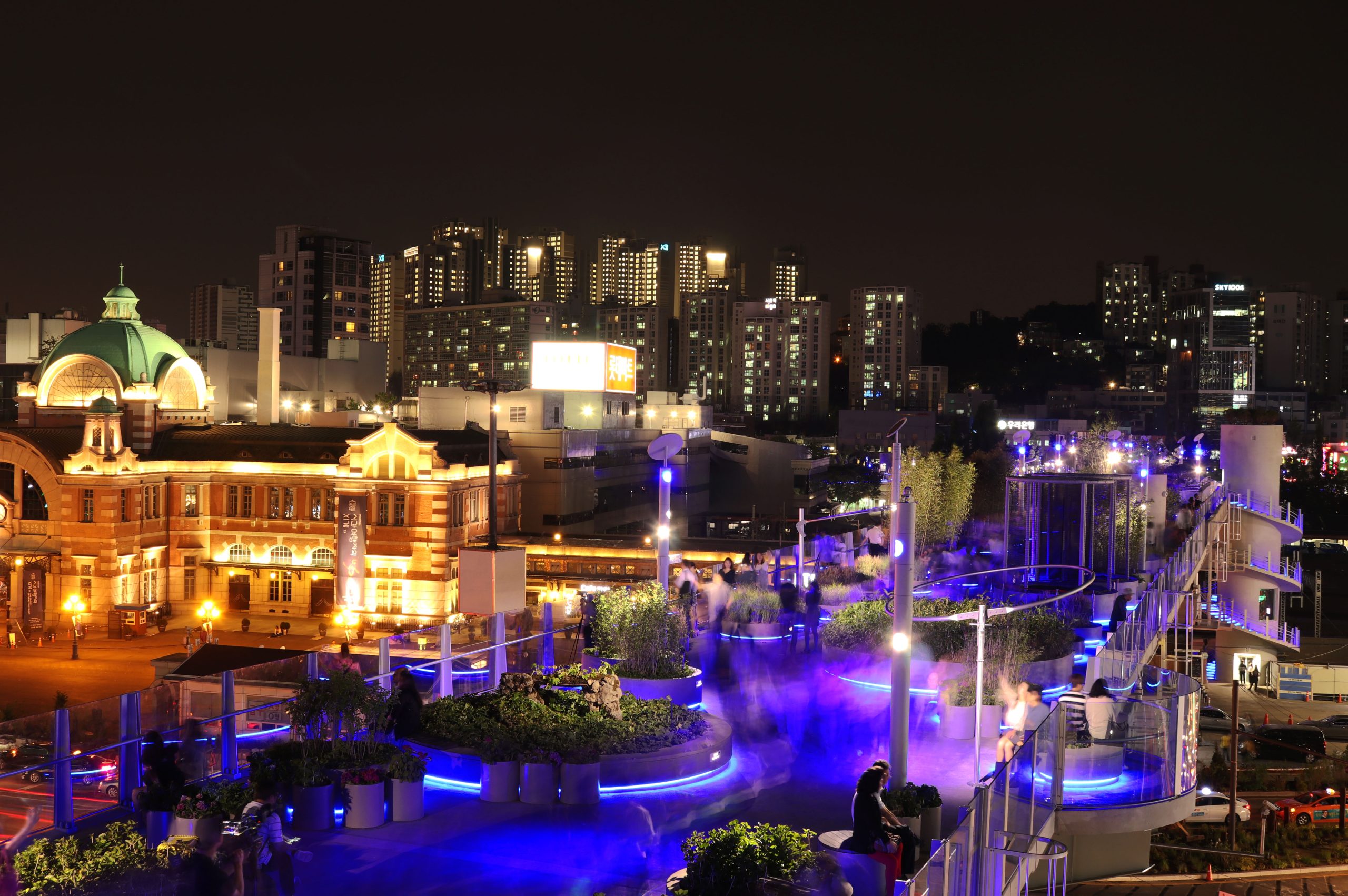
Photo: Seoullo 7017 lit blue at night beside Culture Station Seoul 284. Source: 분당선M / Wikimedia Commons (CC BY-SA 3.0).
A few caveats worth knowing at Seoullo 7017
To be fair about it: compared with the High Line, the planting here feels sparse, and the round concrete pots read as industrial rather than lush. There is a structural reason. Because this is a repurposed car bridge, it supports only about 10 cm of soil over roughly 10% of the deck. The High Line carries around 40 cm across its full width. Critics nicknamed Seoullo “the naked bridge,” and the label lands.
Credit where it is due, though. The planting is genuinely tended rather than left to fend for itself, and the displays rotate with the season. Hydrangeas peak through August, magnolias come earlier, autumn colour arrives later on. Regulars notice the changes, which is more than you can say for most municipal landscaping.
Shade is almost nonexistent, so summer middays get hot and exposed. By deep summer the planting itself looks tired, which gives you the worst of both: full sun and greenery past its best. It is also short — 30 to 60 minutes covers the whole thing. The views are mostly railway tracks and city infrastructure rather than scenery, and in winter the plants die back and the deck looks bare. Wind can pick up on the exposed span, too.
Two more things the photos hide. The deck is a road surface with pots set on it, so you walk on concrete the whole way and there is no grass to sit down on. An hour up here is harder on the feet than an hour in an ordinary park, and Korean visitors routinely say comfortable shoes matter more than you would expect. Weekends compound it. The walkway is narrow for its popularity, and a Saturday evening turns the stroll into a shuffle behind other people’s photos.
Don’t drive to it either. Parking around Seoul Station is scarce and expensive, and the whole point of Seoullo 7017 is that it lands you at a major transit hub. Walk out of the station and you are already on it.
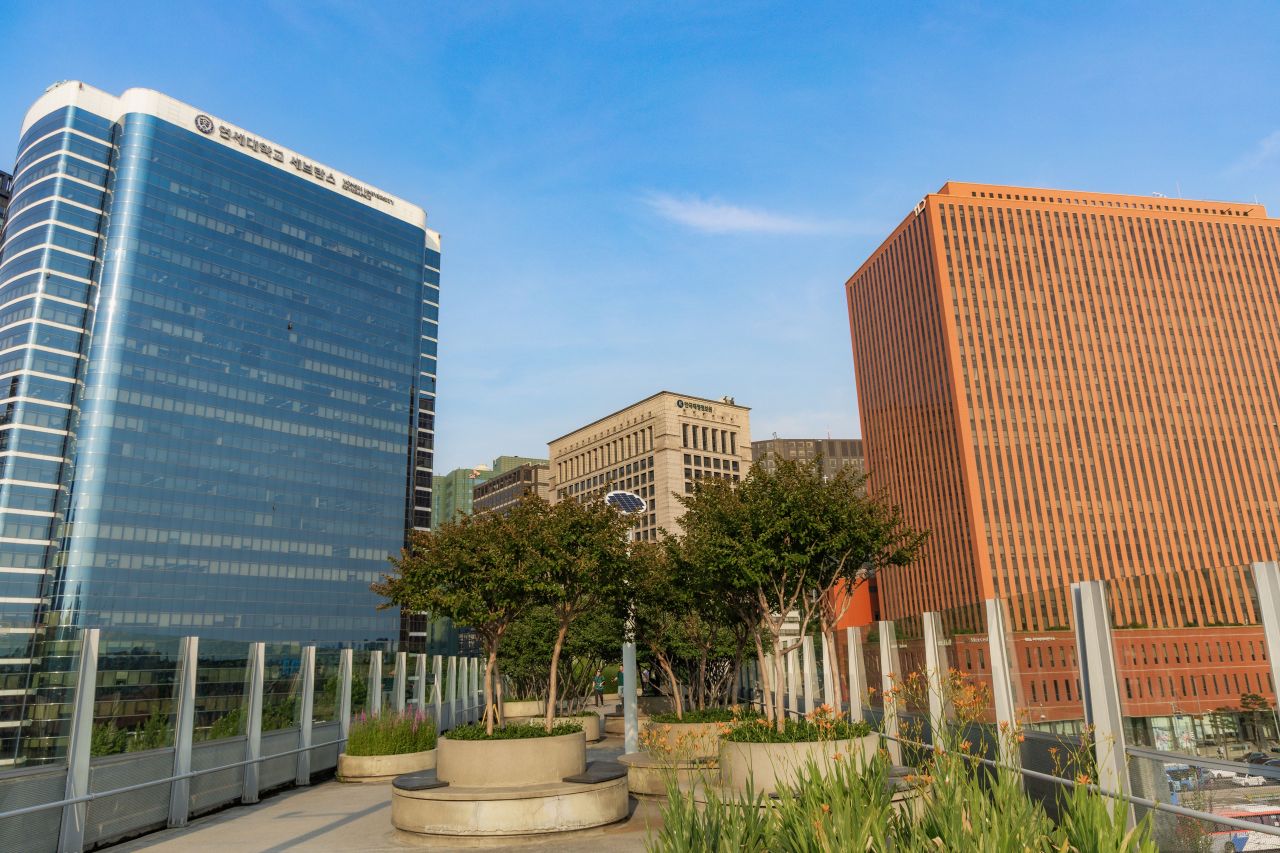
Photo: The round concrete planters and greenery lining the Seoullo 7017 deck. Source: Korea Tourism Organization 관광사진갤러리 (KOGL Type 1).
None of this is a reason to skip it. It simply means treating Seoullo 7017 as a free detour rather than a headline attraction. Opinion genuinely splits on whether it rivals the High Line, and the High Line camp has a fair case.
The right visitor for this walkway
It suits anyone already near Seoul Station with a spare hour, especially at sunset or after dark. Urban-design enthusiasts and photographers tend to get the most out of it. Families do well here too. The trampolines and foot bath give children and tired feet something to do, and it pairs naturally with a Namdaemun or Myeongdong outing.
Those picturing a lush, NYC-style sky garden are likely to come away disappointed, and anyone chasing shade on a summer afternoon should choose a different hour. Travelers on a tight schedule hunting a genuine “wow” moment will get a bigger payoff elsewhere.
Building it into an easy half-day loop
The walkway shines most as a connector. Begin at Culture Station Seoul 284, the grand 1925 former Seoul Station building, now a striking art space. Then cross the Seoullo deck over the tracks.
From the far end, the route drops into Namdaemun Market for street food and a look at Sungnyemun, the great south gate. Carry on toward Myeongdong for shopping and more eats. The whole loop stays within roughly 1.5 to 2 km, making it an easy, flat half-day. One branch of the walkway even connects directly to Lotte Mart Zettaplex for a shopping detour.
The Malli-dong end is worth knowing about too, because most visitors never bother with it. Step down there and you land in a dense little strip of restaurants and bars that fills up in the evening. It is a better dinner option than it looks from above. The Son Kee-chung Memorial Hall sits a few minutes further, honouring the Korean marathoner who won gold at the 1936 Berlin Olympics while running under a Japanese flag. It is small and free, and it gives the walk a bit of weight.
The quieter, better-timed version runs the loop in reverse during the evening. Eat through Namdaemun first, while the stalls are busy. Then climb onto the deck as the sky turns pink, and finish at the Seoul Station end as the blue lights come on. That sequence stacks dinner, a sunset walk, and the best of the lighting into one straight line. Note that most Namdaemun street stalls run cash-first, so carry small won before the walk rather than counting on cards up on the deck.
One small warning for the Namdaemun leg. In the kalguksu (knife-cut noodle) alley, staff stand outside and actively wave people in, and it can feel pushy if you are not used to it. This is ordinary touting rather than anything to worry about. Smile, say no and keep walking, or just pick a stall and sit down. The noodles are good and cheap either way.
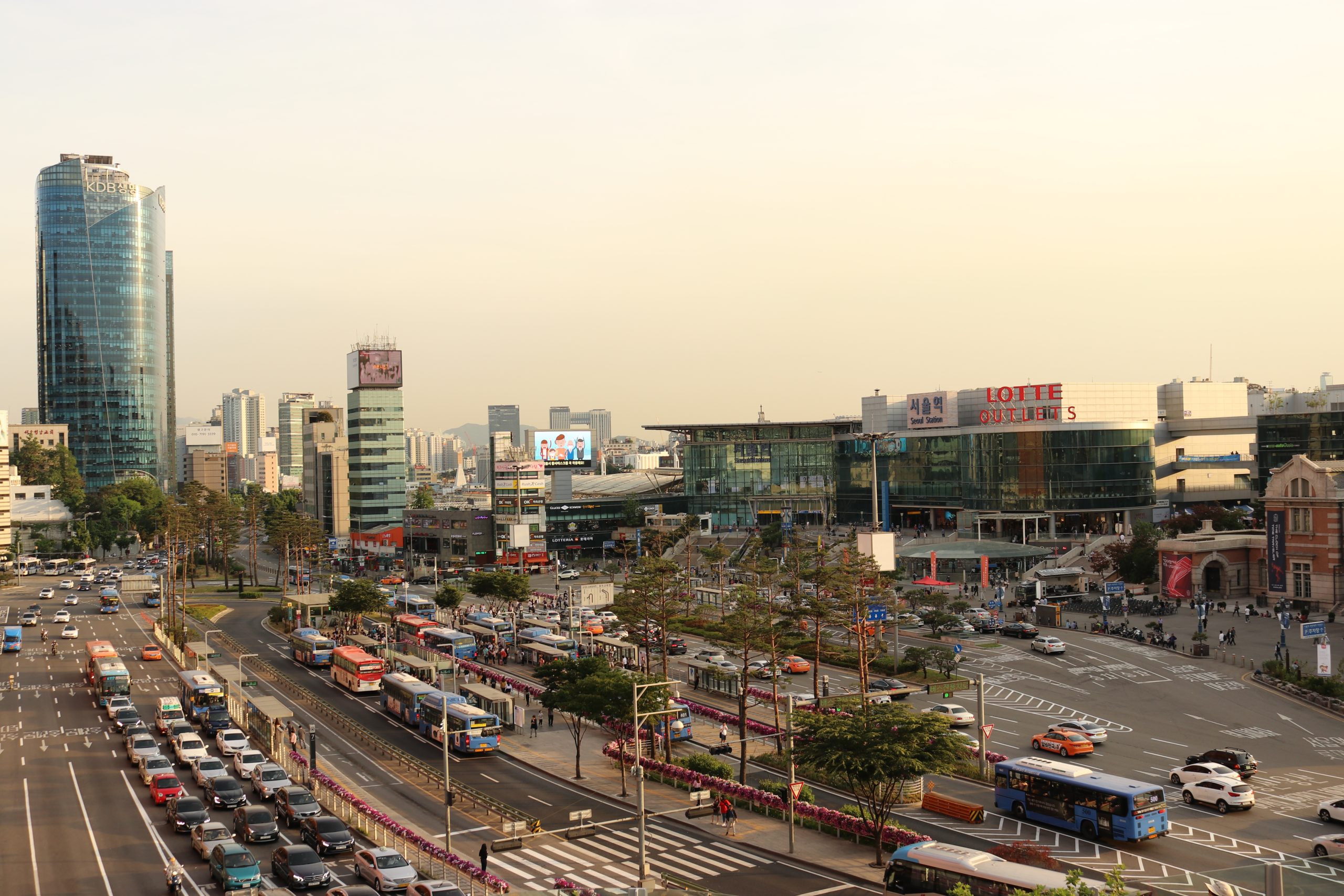
Photo: The view of Seoul Station and the city from Seoullo 7017. Source: 분당선M / Wikimedia Commons (CC BY-SA 3.0).
The verdict: Seoullo 7017 is a small pleasure done well — free, central, and quietly beautiful once the lights come on. Set the bar at a nice 40-minute walk, arrive at dusk, and it rewards the detour.