
If Bukchon is the buzzy, lived-in hillside that fills everyone’s camera roll, Namsangol Hanok Village is its quiet cousin tucked at the foot of Namsan. It is free, it is flat, and it is a curated pocket of old Korea where the courtyards do not fight visitors for elbow room.
Set expectations correctly and it rewards the visit. This is a calm one-hour culture-and-photo stop, not a half-day epic. Most first-timers come for the stillness, the hanbok shots, and one or two hands-on programs — and leave glad they carved out the time.
- Address: 28, Toegye-ro 34-gil, Jung-gu, Seoul (서울특별시 중구 퇴계로34길 28)
- Hours: 09:00–21:00 Apr–Oct, 09:00–20:00 Nov–Mar; houses & Gugakdang theater closed Mondays (garden/grounds open later, walkable early & late)
- Price: Free entry; programs cost extra — hanbok rental ~₩10,000/hr, tea ceremony ~₩10,000, rice-cake (tteok) making ~₩10,000; Seoul Namsan Gugakdang performances ticketed (price varies by show)
- Getting there: Chungmuro Station (Subway Lines 3 & 4), Exit 3 or 4, ~3–5 min walk (~300 m)
- ⏱ Time needed: about 1–1.5 hours (more if you join a program or walk on up Namsan)
- 🔗 Pair it with: Namsan / N Seoul Tower, Myeongdong (10–15 min walk), or the on-site Seoul Millennium Time Capsule Plaza
- Verified as of June 2026
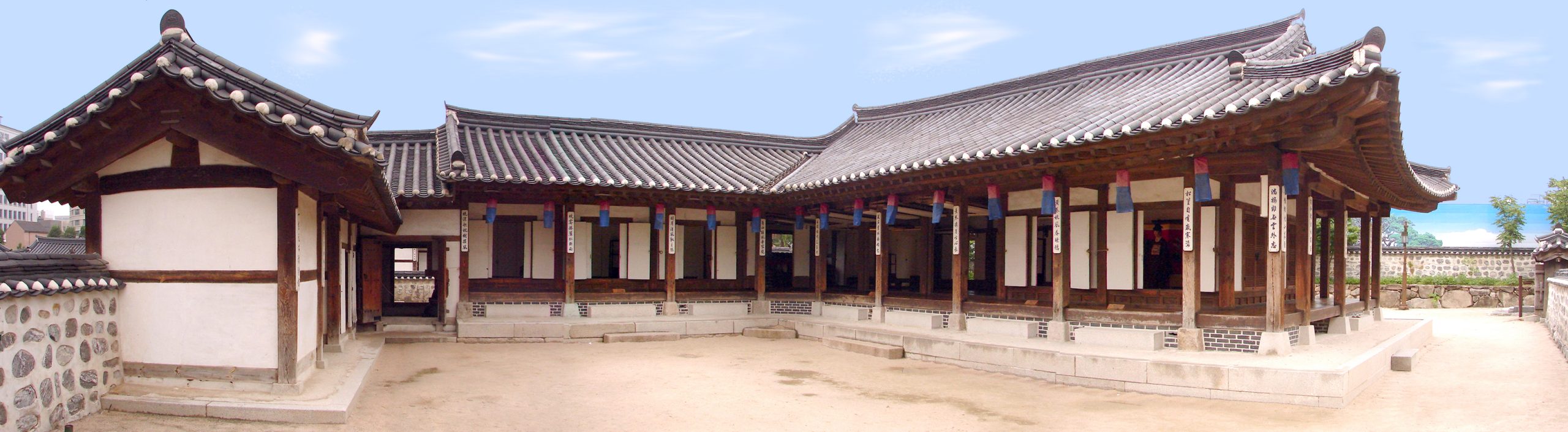
The reconstructed hanok courtyards at Namsangol. Photo: Steve46814, CC BY-SA 3.0 via Wikimedia Commons.
A folk museum built from relocated houses
The detail that surprises most arrivals: Namsangol is not an old neighborhood that survived. It is a free open-air folk museum, assembled between 1993 and 1998, where the city gathered five traditional hanok houses from across Seoul, relocated them, reconstructed them, and arranged them around a landscaped Joseon-style garden.
The garden anchors the whole site. A peninsula-shaped pond sits below the Cheonugak pavilion, and the layout is designed to feel like a scholar’s retreat. It is genuinely handsome, and it photographs well in any season.
Each of the five houses belonged to a real late-Joseon figure, chosen to represent a different rung of the social ladder. One belonged to the family of Queen Yun, consort of Sunjong — the last Joseon king — so it is her relatives’ house, not her own palace quarters. Another belonged to master carpenter Yi Seung-eop, the man who led Gyeongbokgung’s reconstruction. A military officer’s house rounds out the group.
The furnishing is what makes the arrangement work. Each home is dressed to match its owner’s rank, so a low ondol floor, a scholar’s writing desk, or a noblewoman’s quarters each signal something. Together they give a tangible read on how class shaped daily life — far more than an empty shell would.
Two more features share the grounds. The Seoul Millennium Time Capsule Plaza marks where 600 artifacts were buried in 1994, sealed for the city’s 600th anniversary and not due to reopen until 2394. Nearby stands the Seoul Namsan Gugakdang, an intimate hall of roughly 300 seats for traditional Korean music, or gugak, performed the old way — no electronic amplification, just the room and the instruments.
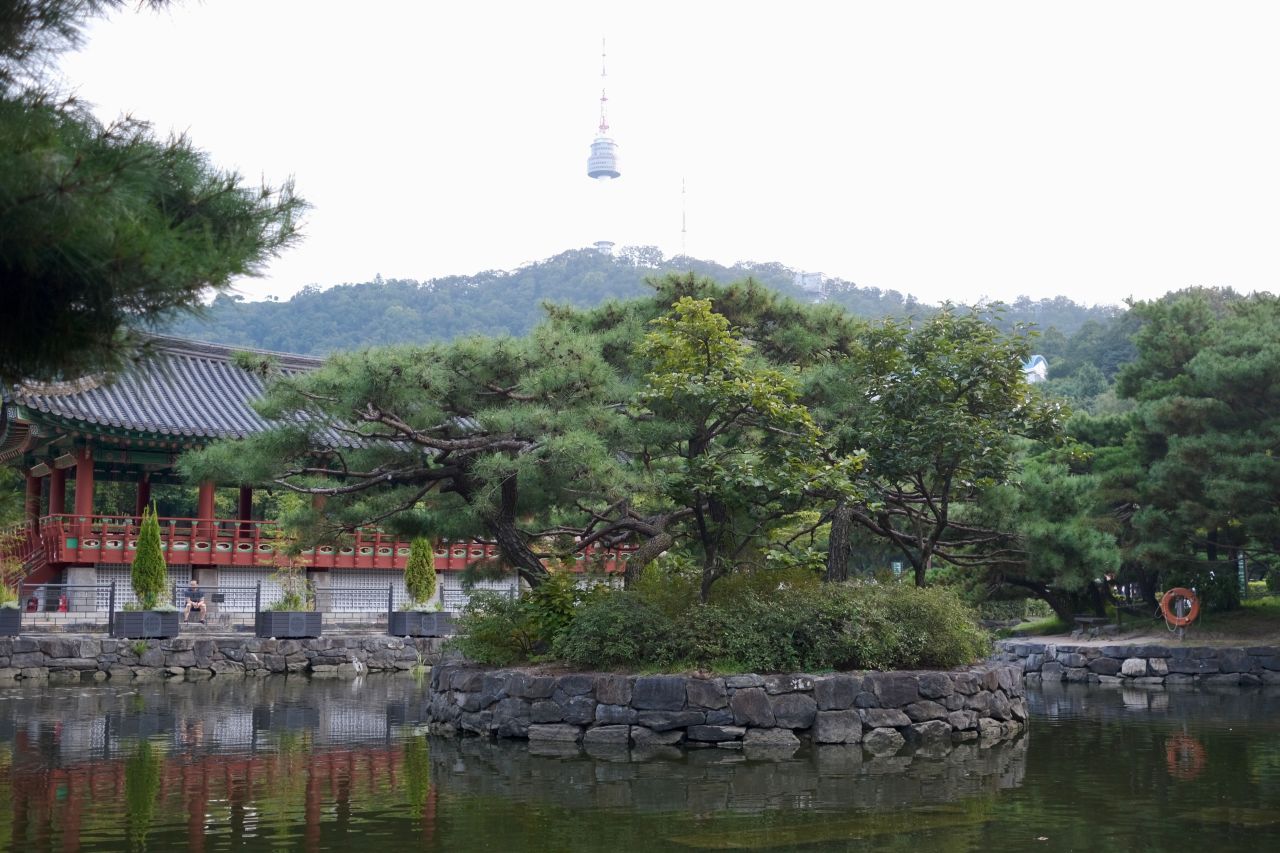
The garden pond and Cheonugak pavilion, with N Seoul Tower on the hill beyond. Photo: 남산골한옥마을 / Korea Tourism Organization (KOGL Type 1).
What draws visitors through the gate
Hanbok photos without the scrum
This is the village’s quiet advantage. Hanbok rents on-site for about ₩10,000 an hour, which buys clean traditional backdrops — tiled roofs, wooden gates, the pond — without a hundred strangers in the frame. On a weekday morning, visitors report having a courtyard almost to themselves.
Compare that to the palace courtyards or Bukchon’s busiest lanes, where the wait for a clear gap can be constant. Here the shots come easily, and that calm often matters more than any single dramatic backdrop worth queuing for elsewhere.
Hands-on programs
Namsangol leans into doing more than Bukchon does. Depending on the day, visitors can sit for a tea ceremony, shape their own tteok (rice cakes), try hanji paper craft or calligraphy, and on weekends may catch a traditional Korean wedding staged in one of the courtyards.
The garden through the seasons
Spring brings blossoms over the pond; autumn sets the foliage glowing. Those two windows are when Namsangol most earns a slot in an itinerary. Winter strips the garden bare but keeps it peaceful, and summer fills it with green.
Continuing up Namsan
A common approach is to fold the village into a Namsan half-day. It sits right at the base of the mountain, so visitors can wander the houses and then keep walking uphill toward N Seoul Tower for skyline views — a natural pairing that turns a quick stop into a relaxed afternoon.
If the full climb feels like too much, the Namsan cable car and shuttle buses close the gap. Doing Namsangol first eases you in before the ascent: culture at the bottom, a city panorama at the top.
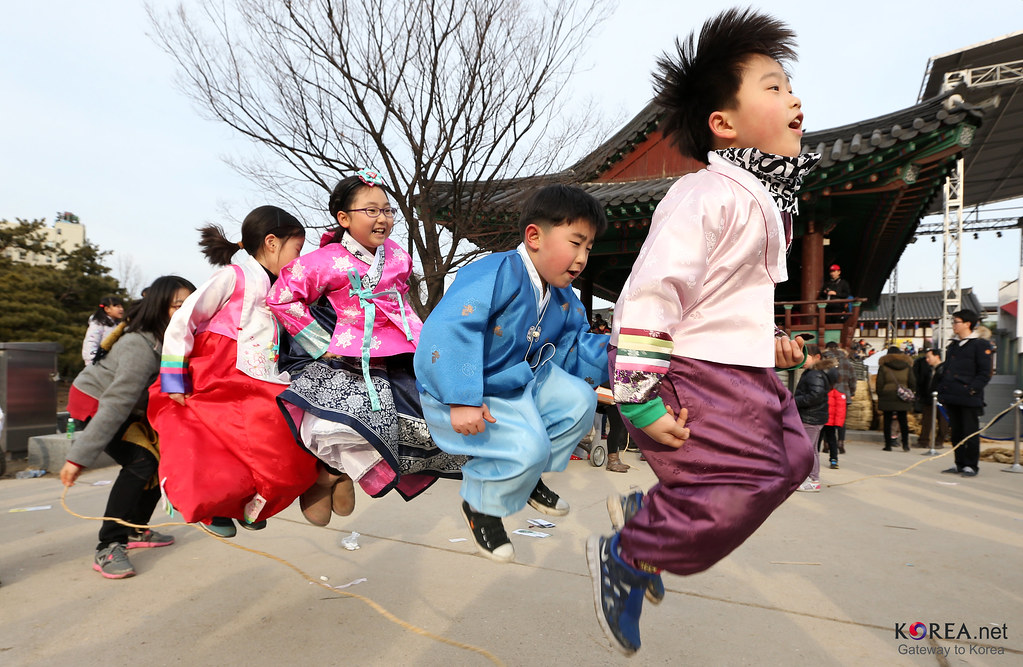
Children in hanbok at a folk-game event in the village courtyards. Photo: KOREA.net, CC BY-SA 2.0 via Flickr.
Bukchon or Namsangol: which one earns your hour
Travelers often agonize over choosing between the two. In practice they scratch different itches, and few people need both.
| Bukchon Hanok Village | Namsangol Hanok Village | |
|---|---|---|
| What it is | Real lived-in hillside alleys | Curated reconstructed museum in a garden |
| Terrain | Steep, hilly streets | Flat and easy |
| Crowds | Busy, sometimes packed | Quiet, often calm |
| Cost | Free to wander, no programs | Free, with hands-on programs |
| Vibe | Authentic, residential, atmospheric | Tidy, museum-like, relaxed |
Bukchon suits visitors who want real, atmospheric old-Seoul streets, do not mind hills or crowds, and are content to look rather than do.
Namsangol suits visitors who want calm, flat ground, free entry, and the chance to actually try a tea ceremony or a hanbok shoot without the chaos.
On cost: both villages are free to enter, so the real spending decision is programs. Budget travelers can treat Namsangol as a zero-won stop and simply walk the garden; those wanting the full experience should reckon on roughly ₩10,000 per activity, and most program payments and hanbok rentals can be settled by card, though carrying a little cash smooths smaller purchases at the tea house.
The downsides of Namsangol Hanok Village to weigh first
Because Namsangol is reconstructed rather than original, some visitors find it a touch manufactured, and opinions genuinely split on whether that matters. Anyone craving the worn, lived-in texture of a real old quarter may leave that itch unscratched.
Namsangol Hanok Village is also small and quick. Most house interiors are view-only, roped off so you peer in rather than walk through. Off-peak, the same quiet that draws people can tip into feeling empty or staged.
Beyond a small tea house and café there is little on-site dining or shopping, so this is not a food-street destination. The upside is that Chungmuro and Myeongdong sit right outside, so plan to eat there. And for anyone who has already toured a grand palace like Gyeongbokgung or strolled Bukchon, Namsangol can feel modest by comparison — the houses are smaller and the scope narrower.
One practical snag remains. Some activity instructions and signage are Korean-only, so a hands-on program may take patience without a Korean-speaking companion. The free cultural commentary helps here, but it runs at fixed times that vary by day and by language, so check the day’s English slots at the entrance rather than assuming.
Namsangol Hanok Village: the practical snags nobody warns you about
Parking at Namsangol Hanok Village is the loudest complaint by far. The lot is small, fills completely on weekends, and the approach ramp is steep. Drivers describe queuing to get in as the worst part of the day. Chungmuro Station sits a few minutes away on foot, which removes the problem entirely. If you must drive, compact, low-emission and multi-child-card vehicles get a 50% reduction, which brings it to roughly ₩2,500 an hour.
The way in to Namsangol Hanok Village is oddly hard to read. The path down to the entrance is narrow and winding, and it feels briefly maze-like before the village opens up. It is short — just don’t expect an obvious grand gate from the street.
Book the hands-on programs early. Each activity is priced separately, and most run first-come, first-served rather than by reservation. Popular slots go in the morning. The changing and locker area for hanbok is also cramped, so keep valuables on you.
Upkeep at Namsangol Hanok Village is showing its age in corners. Some painted details have faded and a few areas read as lightly maintained. It does not ruin the visit, but the polish is not palace-grade. None of this is a dealbreaker — it is just worth knowing before arriving with big expectations.
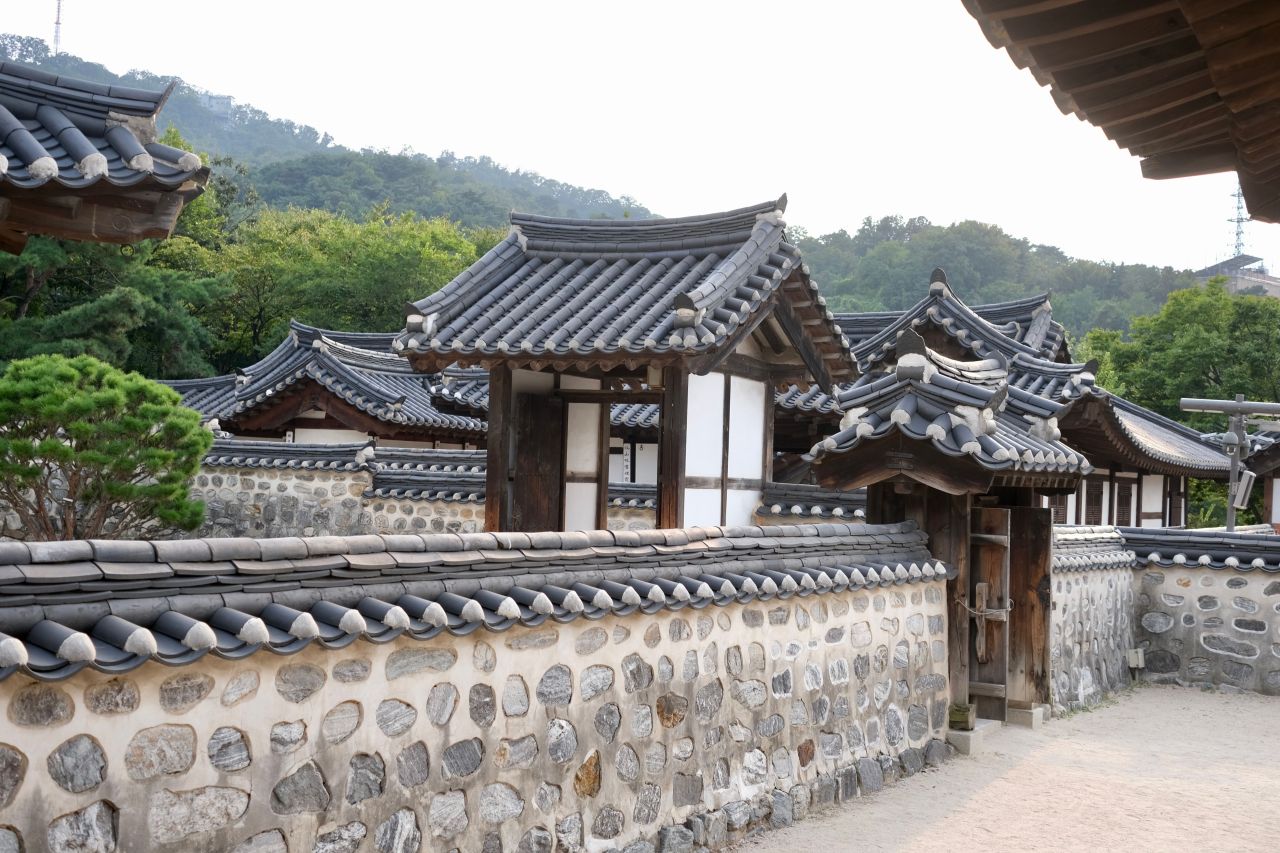
Stone walls and tiled gateways between the reconstructed hanok. Photo: 남산골한옥마을 / Korea Tourism Organization (KOGL Type 1).
Who fits this stop, and who can pass
It fits visitors after a calm, free hour of culture and photos, families with children, anyone dodging the Bukchon crowds, and those chasing a gugak performance or a hands-on program. For that kind of traveler, Namsangol Hanok Village is an easy, low-stress win.
It is skippable for anyone tight on time who is already seeing Gyeongbokgung plus Bukchon — that ground will feel covered. It is also the wrong call for anyone really after a bustling commercial street; that is Myeongdong, a short walk away, not here.
If hanok villages are the draw, browse more of Seoul’s hanok villages to plan the route. Paired with Namsan and slotted before a Myeongdong food crawl, Namsangol makes a genuinely lovely afternoon — minimal effort, zero won at the gate.