
Okay—real talk. You’ve done Seoul’s palaces and hanok lanes, and now you’re wondering whether the “original” hanok town down south is worth a KTX ticket. Here’s my honest answer: yes, but go for the food and the photos, not for a hushed, museum-quiet village. Jeonju Hanok Village is Korea’s biggest cluster of traditional tiled-roof houses—around 700 of them. They’re packed into one walkable neighborhood in Jeonju, a UNESCO City of Gastronomy. It’s lively, it’s touristy, and it’s delicious. If I had one day here, I’d rent hanbok and wander the lanes before the crowds, then eat my way through lunch.
This is a place-level guide to help you decide whether Jeonju Hanok Village deserves a slot on your Korea trip. What to actually do here, what to eat, and the honest downsides nobody puts on the postcard.
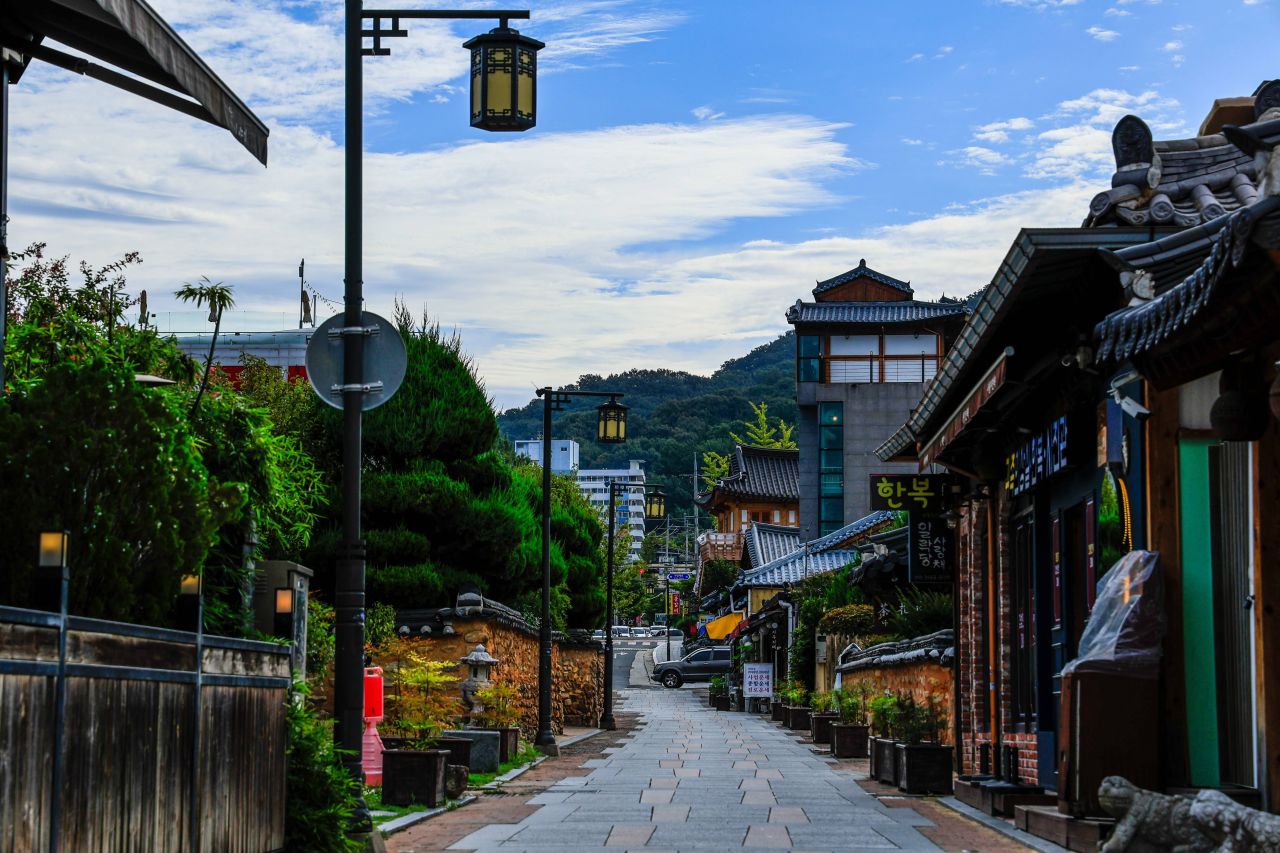
Photo: Korea Tourism Organization (KOGL Type 1) — an early-morning lane in Jeonju Hanok Village.
- 📍 Address: Pungnam-dong & Gyo-dong, Wansan-gu, Jeonju, Jeollabuk-do (전주시 완산구 전주한옥마을). Gyeonggijeon Shrine: 44 Taejo-ro.
- 🕘 Hours: The village streets are always open (it’s a living neighborhood). Gyeonggijeon Shrine: 09:00–19:00 (Mar–Oct), 09:00–18:00 (Nov–Feb), last entry 1 hr before close.
- 💵 Price: The village is free to walk. Gyeonggijeon ₩3,000 adults / ₩2,000 teens / ₩1,000 kids. Hanbok rental roughly ₩10,000–20,000 for a few hours.
- 🚆 Getting there: KTX from Seoul to Jeonju Station (~1h 30m–1h 50m, ~₩27,600–34,600), then taxi ~10 min / ₩5,000–7,000, or city bus (routes 12, 79, 119, 508, or tourist Bus 1000) to “Jeondong Cathedral / Hanok Village.”
- ⏱ Time needed: Half a day (3–4 hrs) for the core sights + a meal; a full day if you add Jaman Mural Village and Nambu night market.
- 🔗 Nearby: Jaman Mural Village (5-min walk), Nambu Market night market (10-min walk), Pungnammun Gate, Omokdae viewpoint.
- ✅ Verified as of July 2026.
Why give Jeonju Hanok Village a slot? 🏯
Seoul’s hanok pockets—Bukchon, Ikseon-dong—are lovely. But they’re small islands of old houses inside a mega-city. Jeonju is different: here the hanok are the town. You get street after street of curved black-tile roofs. The scale alone makes it feel like a proper time-slip rather than a photo corner. This is also the place that made hanbok rental a national trend. Renting a colorful robe and drifting through the lanes for an afternoon is basically the local sport—a blast, even if you feel a little silly at first.
The other reason to come is simpler: Jeonju eats better than almost anywhere in Korea. This is the birthplace of Jeonju bibimbap, and the city wears its UNESCO gastronomy badge with real pride. You are never more than a few steps from something worth eating here.
What I’d actually do here
Start early. Rent hanbok around 9am, before the tour buses arrive, and just walk—no fixed route. The lanes around Gyeonggijeon Shrine and the Jeondong Catholic Cathedral are the prettiest. The two make a striking contrast: a Joseon-era shrine holding the royal portrait of King Taejo, and a Romanesque-Byzantine red-brick church from 1914 right across the street. Pop into Gyeonggijeon—it’s the one paid sight I’d actually pay for, and the tree-lined courtyard is genuinely peaceful. Admire the cathedral’s exterior, but note the interior is often closed to sightseers during Mass.
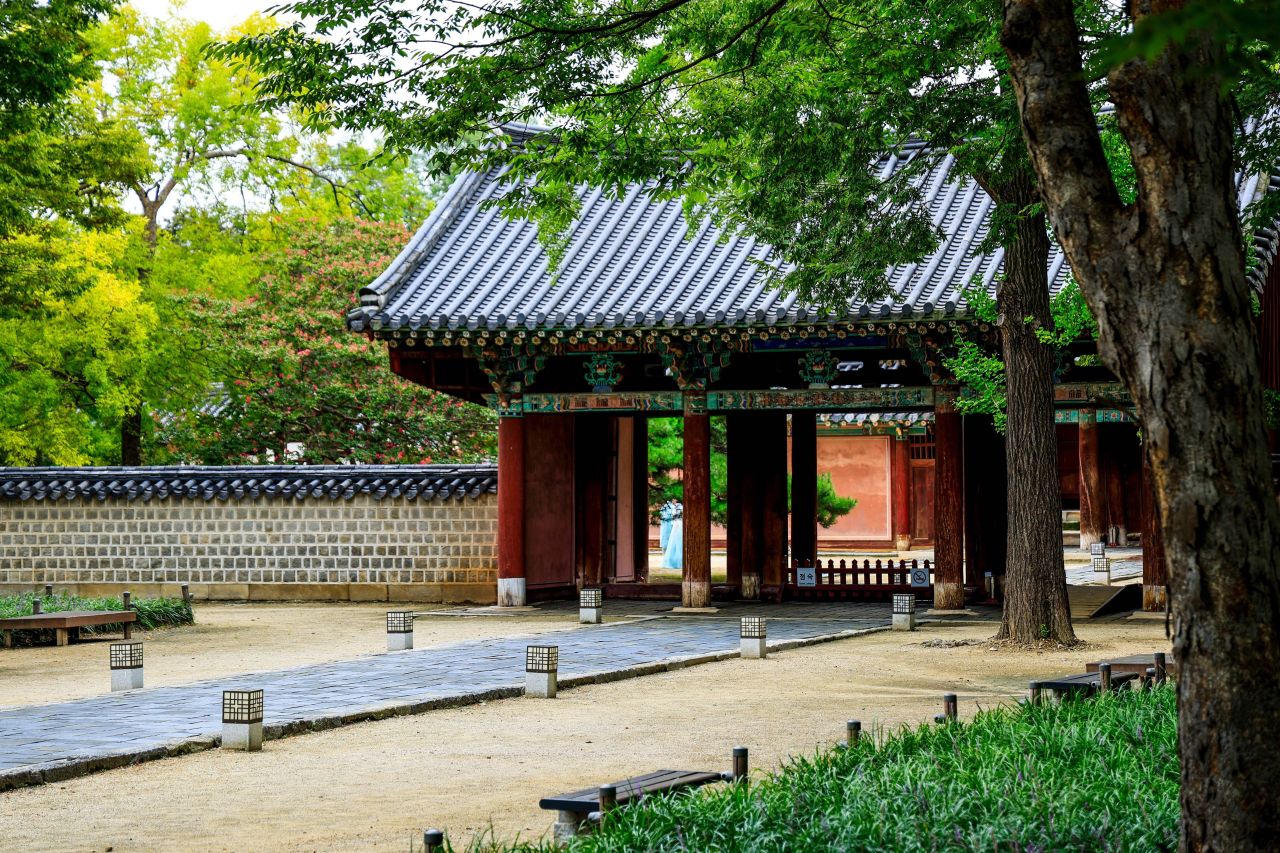
Photo: Korea Tourism Organization (KOGL Type 1) — a colorful dancheong-painted gate in Jeonju’s hanok quarter.
From there, walk five minutes up to Omokdae, a hilltop pavilion with a view back over the sea of tiled roofs. It’s the best free overlook in the village. Cross the footbridge and you’re in Jaman Mural Village, a steep residential warren of painted walls and tiny cafés. It’s free, quirky, and thins out the crowds.
Eat everything: the real reason you came 🍜
If you do one thing right in Jeonju, make it lunch. The headliner is Jeonju bibimbap—rice topped with a small mountain of seasoned vegetables, beef, an egg, and a dab of chili paste, traditionally served in a brass bowl. But don’t stop there. Have kongnamul gukbap (bean-sprout soup with rice) for breakfast. It’s the local cure-all, and the stalls in Nambu Market do it best. Grab a PNB choco pie from the famous bakery near the cathedral to take home. Then graze the street stalls: baguette burgers, grilled octopus skewers, bamboo-charcoal ice cream.
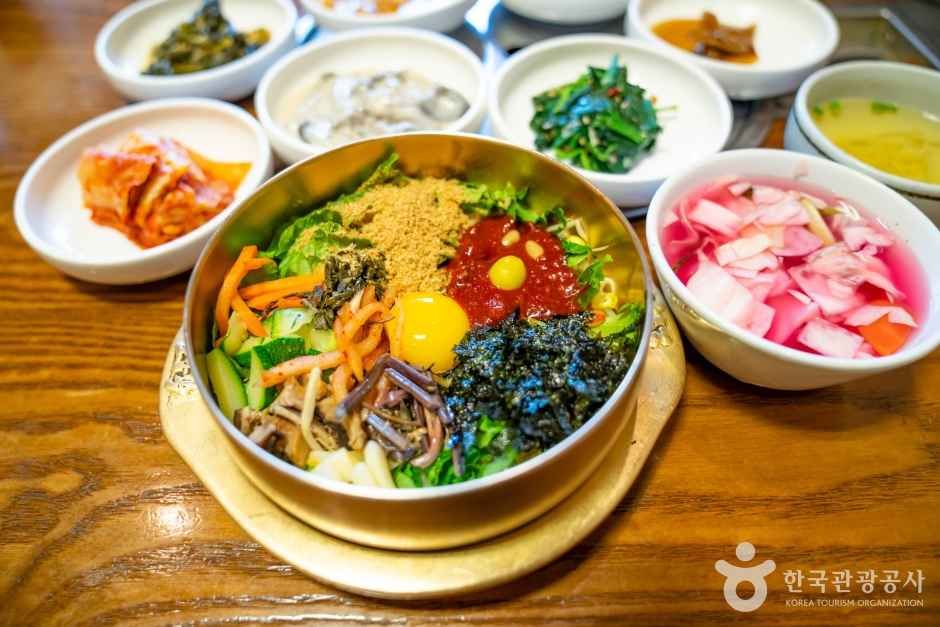
Photo: Korea Tourism Organization (KOGL Type 1) — Jeonju bibimbap in a brass bowl with a spread of banchan.
If you can, stay overnight in a hanok guesthouse. Sleeping on a heated ondol floor inside a courtyard house, then waking to an empty village before the day-trippers arrive, is when Jeonju is at its absolute best.
The honest downsides ⚠️
Here’s what the glossy photos leave out. Jeonju Hanok Village is heavily commercialized. Walk in expecting a hushed, lived-in heritage village and you’ll likely feel let down. A lot of these beautiful hanok now house souvenir shops, hanbok-rental outlets, ice-cream stands, and snack counters. More than half the village’s businesses opened after 2013. Traditional tea houses and craft workshops have dwindled, while visitor numbers ballooned from about 3 million a year to nearly 8 million. Some travelers describe it as a “traditional-themed shopping street” more than a museum piece, and that’s a fair read.
It’s also very crowded—weekends and the 11am–3pm window bring big tour and school groups, and the main lanes can get shoulder-to-shoulder. Step one lane off the main drag and it thins out immediately, which is the trick most people miss. The shops get repetitive (how many identical skewer stalls do you need?), and summer here is hot and humid. A minority of reviewers flatly say it’s “not worth the travel time” from Seoul.
The hanbok rental trap, and two things that cost you
There are too many hanbok shops, and that is a problem. Choosing one eats time you did not budget for, and on a busy day the getting-dressed queue eats more. Book ahead rather than browsing on arrival. One money note while you are in the chair: the basic hair styling is usually included, and the paid upgrade is rarely worth it — the free version photographs just as well.
Food and drinks run pricier than you’d expect for a regional town. Street snacks that cost a couple of thousand won elsewhere land nearer ₩5,000 here, and cafés price like a destination. It is not outrageous, just not the bargain the “Korea’s food capital” billing implies.
Jeondong Catholic Church shuts at 5pm. It is one of the village’s genuinely beautiful buildings and it appears in everyone’s photos, yet plenty of visitors arrive at dusk and find the doors closed. If the interior matters to you, go before mid-afternoon. Toddlers, meanwhile, tend to hate hanbok within about twenty minutes — worth knowing before you rent one for a two-year-old.
Who should go — and who should skip it
Go if you love food, want great hanbok photos, or are curious about traditional architecture at real scale. It’s an easy, rewarding day trip or overnight from Seoul, and families and first-timers tend to love the buzz.
Maybe skip if you’re chasing a quiet, “authentic,” untouched historic village. You’ll find the commercial energy grating. And if your Korea trip is tight and Seoul-only, the round-trip time is a real cost. A Seoul hanok pocket like one of these hanok villages may scratch the itch closer to home. But if you’ve got a spare day and an appetite? Jeonju Hanok Village rewards it.
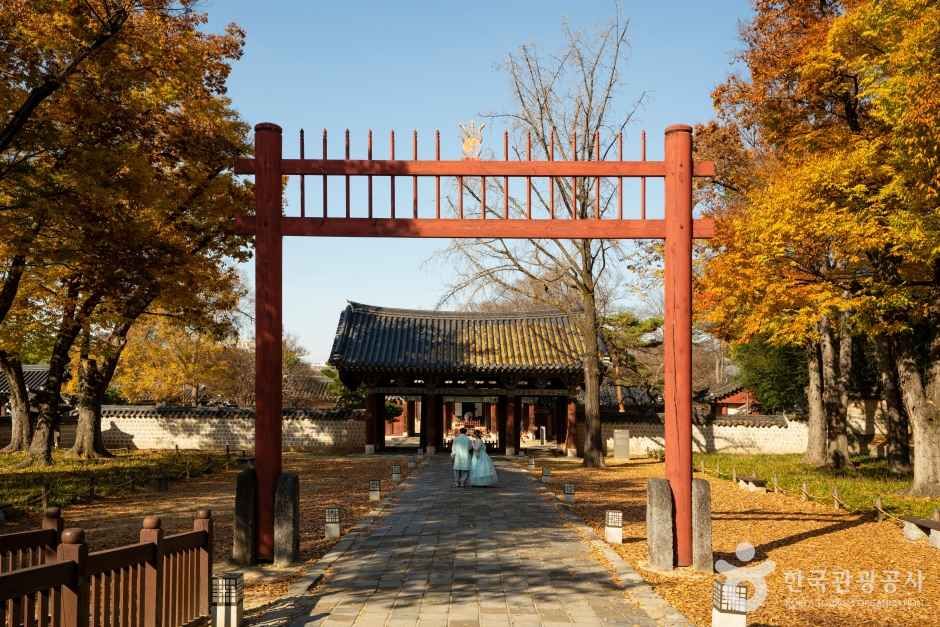
Photo: Korea Tourism Organization (KOGL Type 1) — visitors in hanbok at Jeonju Hyanggyo amid autumn ginkgo.
Where it is
Jeonju Hanok Village isn’t a serene museum—it’s a loud, delicious, camera-ready celebration of hanok living. Come hungry, come early, and let the food do the heavy lifting. Time it for spring or autumn, dodge the midday weekend rush, and give yourself an unhurried afternoon. That’s how you leave Jeonju Hanok Village loving it.
Pingback: Hahoe Folk Village, Andong: Honest Day-Trip Guide