
With one free evening in Seoul and any curiosity about how locals actually spend a night out, a KBO baseball game is one of the strongest alternatives to yet another palace visit. And among Seoul’s ballparks, Gocheok Sky Dome offers something the others cannot: a fully covered stadium that runs no matter the weather.
A Korean baseball game is only loosely about the baseball. It plays out more like a three-hour party with a soundtrack — closer to a K-pop concert crossed with a ballgame, where the entire stadium sings, claps, and bangs balloons in unison for nine straight innings. For the money, it is one of the most authentic and genuinely fun nights out in the city.
Gocheok’s edge is structural. It is Korea’s first and only domed ballpark, so games are never rained out, the air-conditioning holds up through a muggy August, and the show proceeds regardless of conditions. For a traveler working with a fixed itinerary, that reliability removes the biggest variable.
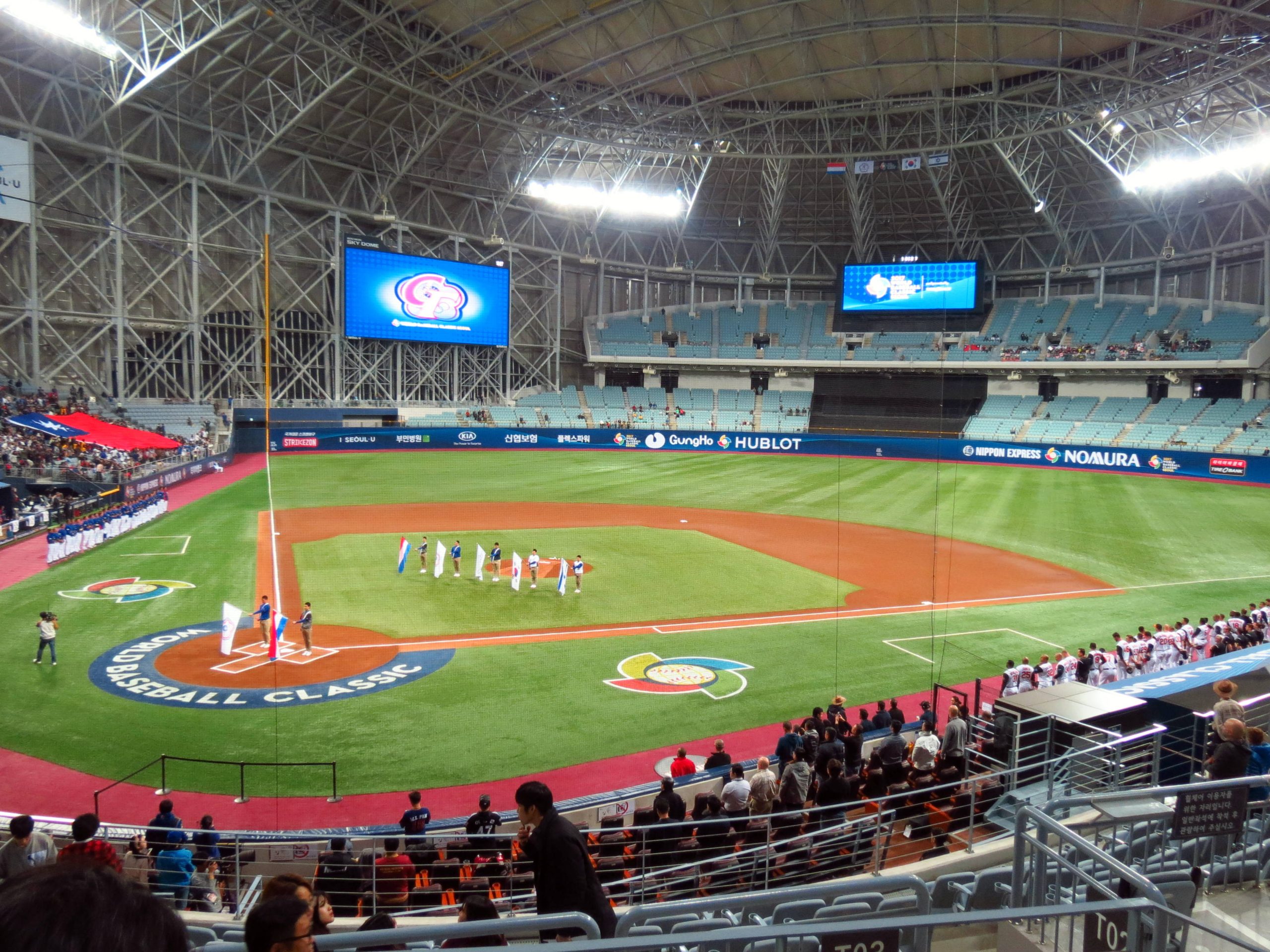
Photo: Inside Gocheok Sky Dome, Korea’s only domed baseball stadium — Source: Wikimedia Commons (CC BY-SA)
The practical stuff, up front
- Address: 430 Gyeongin-ro, Guro-gu, Seoul 08275
- Hours / Schedule: KBO season runs late March–October (2026 opening day was March 28). Games: Tue–Fri at 6:30pm; weekends at 2:00 or 5:00pm. No games on Monday. Playoffs run through October.
- Price: roughly ₩8,000–₩53,000 (about $6–$40) depending on seat — outfield is cheapest (~₩8,000–9,000), upper infield ~₩12,000–15,000, premium and table seats up to ~₩45,000–70,000. One of the cheapest pro-sports tickets on the planet.
- Getting there: Subway Line 1, Guil Station, Exit 2 — a 5–10 minute walk. You can spot the dome as you come up the stairs. Board a regular (not express) Incheon-bound train. Gaebong Station on Line 1 is a backup. No parking — go by subway.
- ⏱ Time needed: the game itself runs ~3 hours; budget 3.5–4 hours door-to-door if you’re buying tickets on-site. A solid half-day or one-evening plan.
- 🔗 Nearby: the immediate area is residential and industrial with little for tourists. Best pairings: Times Square Mall in Yeongdeungpo (about one Line-1 stop away) or Sindorim (D-Cube City / Hyundai Department Store). Most travelers pair the game with central Seoul.
- Verified as of June 2026
The cheering is the main event
This is the element most first-timers underestimate, and it is the real reason to come. Korean baseball crowds do not sit quietly waiting for a home run. They perform, more or less continuously.
Down by the dugout stands the cheermaster (응원단장) — a hype man on a platform who leads the entire stadium through nonstop synchronized chants. Around him, roughly five cheerleaders keep the energy at full tilt. Every player on the home team has his own walk-up cheer song, and regular fans know all of them by heart.
Visitors bang inflatable thunder-stick balloons together, sing the team anthems, and wave their arms on cue — no Korean required. The simplest approach is to copy whoever is sitting next to you. That is most of the fun.
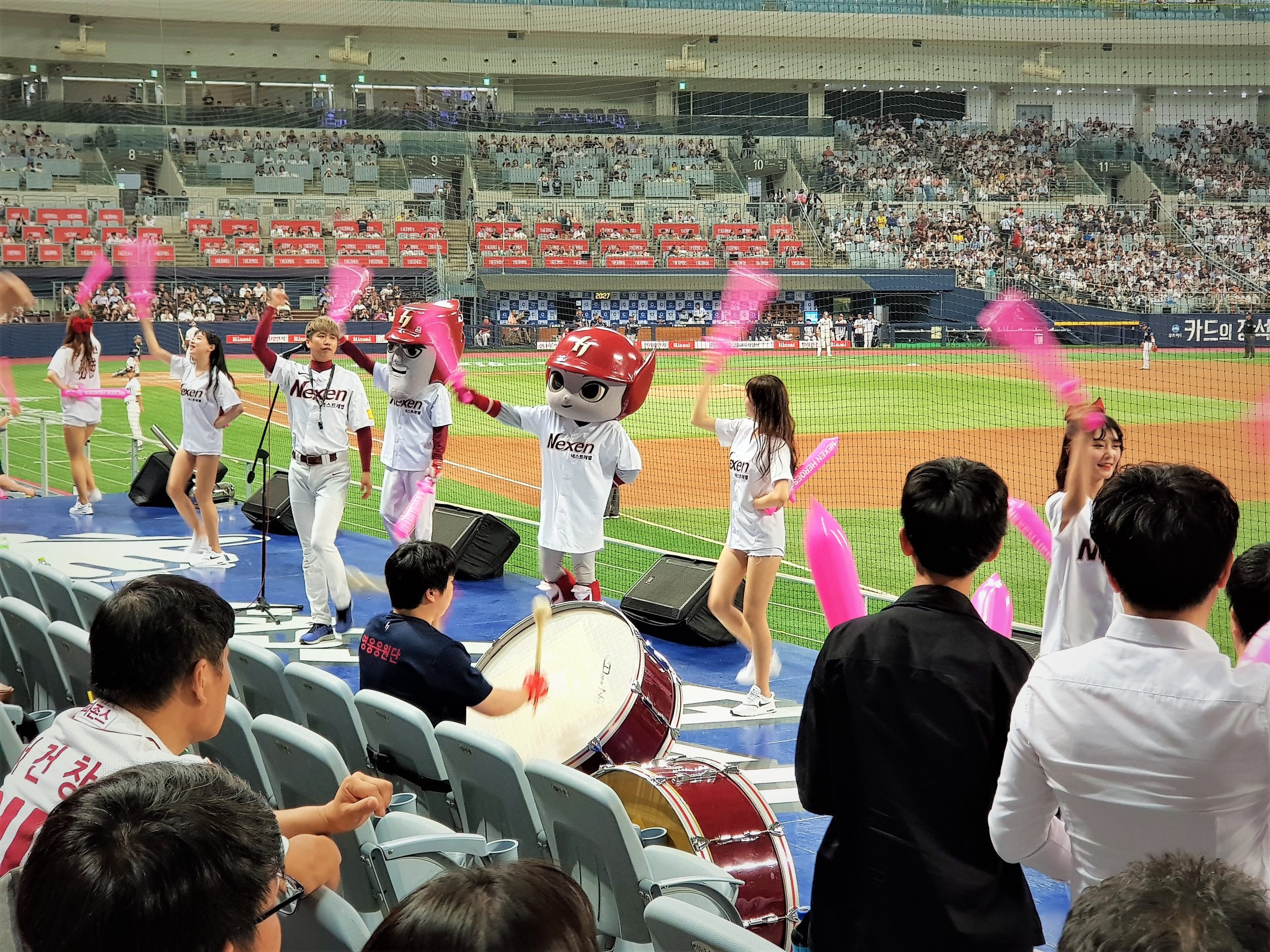
Photo: Cheerleaders and the team mascot fire up the crowd at Gocheok Sky Dome — Source: Wikimedia Commons (CC BY-SA)
For maximum volume, the Cheer Zone behind the home dugout is the block to target. It is the loudest and most chaotic section in the building, and the appeal tends to click after a single visit.
One rule surprises newcomers: you can bring your own food and drink, beer included. Korean stadium culture is built around chimaek (치맥) — fried chicken and beer, eaten in your seat. The standard move is a stop at a CU or GS25 convenience store before the gate to stock up.
Worth knowing: Gocheok doubles as one of Korea’s top concert venues. It hosted BLACKPINK’s Born Pink world-tour finale, NCT shows, and the 2024 MLB Seoul Series when the Dodgers came to town — so the building itself is a genuine landmark of modern Korean pop culture, not just a sports arena.
Getting a ticket without a Korean ID
Here is the sticking point. The major Korean ticketing sites — Interpark, Ticketlink, YES24 — almost all require a Korean phone number and national ID to register. For most visitors that is a dead end, so it is not the place to start.
The foreigner-friendly route is Interpark Global, which handles tickets for the Kiwoom Heroes, Gocheok’s home team. Registration needs only an email, no Korean phone, and it accepts international cards. Tickets usually release about 3–7 days before each game, and popular matchups do sell out, so it pays to check early and book the moment they drop.
Tour bundles also appear on Klook and similar platforms. They are reliable and hassle-free, but they typically run above face value. A rough comparison helps here: an outfield seat that costs around ₩9,000 on Interpark Global often lands near ₩30,000–40,000 once packaged into a guided bundle. For anyone comfortable with a little DIY, Interpark Global or the box office is the clear money-saver; the bundle mainly buys convenience and an English-speaking guide.
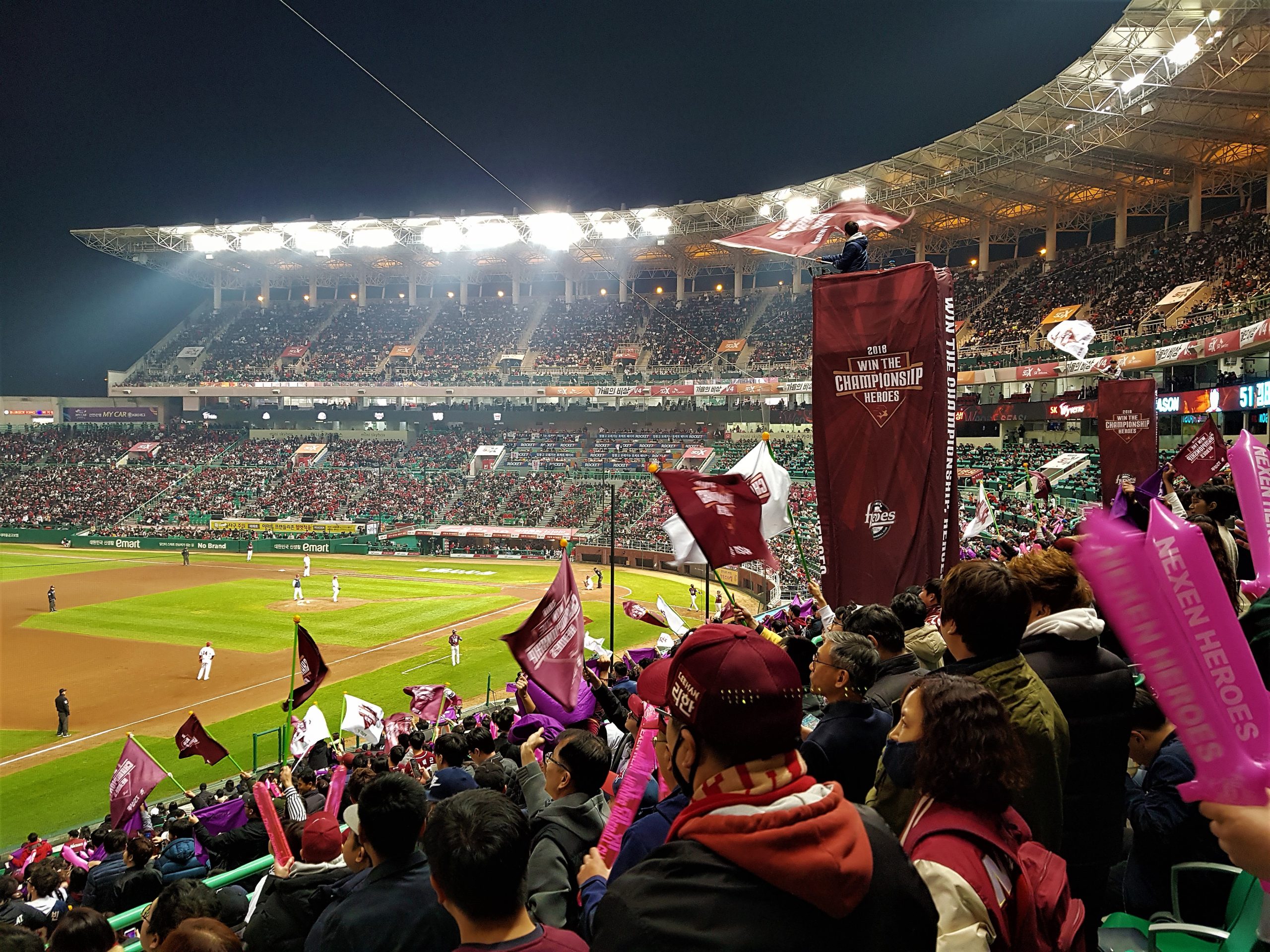
Photo: Fans wave flags and thunder-sticks during a night game at Gocheok Sky Dome — Source: Wikimedia Commons (CC BY-SA)
Before you go: the honest downsides of Gocheok Sky Dome
Gocheok has real strengths, but it is not flawless, and a few things are worth weighing first.
Gocheok Sky Dome is a trade-off in itself. It is weatherproof, but an enclosed roof feels less scenic and less atmospheric than open-air Jamsil across town. There is no night sky and no breeze, and some visitors find the indoor setting a touch sterile.
Seat geometry at Gocheok Sky Dome is the next thing to watch. Some far-down-the-line seats do not angle toward the field, which means craning your neck for three hours. When booking online, infield sections are the safer choice over the deep corners.
Location is the other catch. Guro and Gocheok are not a tourist district — little to do nearby and no real dining scene at the gates. Driving is a bad idea too: there is essentially no spectator parking at the stadium itself, so drivers end up hunting for space in the surrounding streets. The subway is the sane way in and out, and this stays a come-for-the-game, leave-afterward kind of trip.
Food, timing and noise inside Gocheok Sky Dome
Bring food in, or order it to your seat. This is the single most repeated complaint about Gocheok: the food inside is expensive and the choice is thin. Korean fans say it plainly — buy outside and carry it in, which is allowed and normal. If you want the stadium fried chicken anyway, the popular counters run long lines, and the fix locals use is a delivery app that lets you order ahead and collect without queueing.
Arrive far earlier than feels necessary. The concourses are busy two hours before first pitch, and fans routinely turn up that early by choice. Food lines back up hardest between innings, so eat before the game rather than during it.
Gocheok Sky Dome makes it loud. An enclosed roof traps the noise, and the cheering echoes in a way an open stadium never does. Most people love it. Anyone sensitive to sound — small children especially — may find three hours genuinely punishing. From the very top rows there is also a slight sound delay, and it can be hard to tell whether a deep fly ball was caught or cleared the wall.
And a plain warning: for anyone who genuinely dislikes baseball, three hours can drag. The crowd is the draw, not the sport.
Is a night at Gocheok your kind of evening?
The case for going is straightforward: it is a high-energy, low-cost slice of real Korean culture — a night of singing, convenience-store beer, and thousands of strangers moving in coordinated chaos. It suits first-timers, groups, families, and anyone curious about how Koreans actually unwind.
The case against is just as clear. Travelers short on time who want classic Seoul sights may find it a poor use of an evening, and a loud, packed three-hour event is not for everyone. Those set on the open-air ballpark feeling may prefer Jamsil — accepting the weather gamble that comes with it.
For more ways to feel the city’s modern pulse, browse our guides to Seoul’s icons and standout experiences — Gocheok fits right in alongside them.
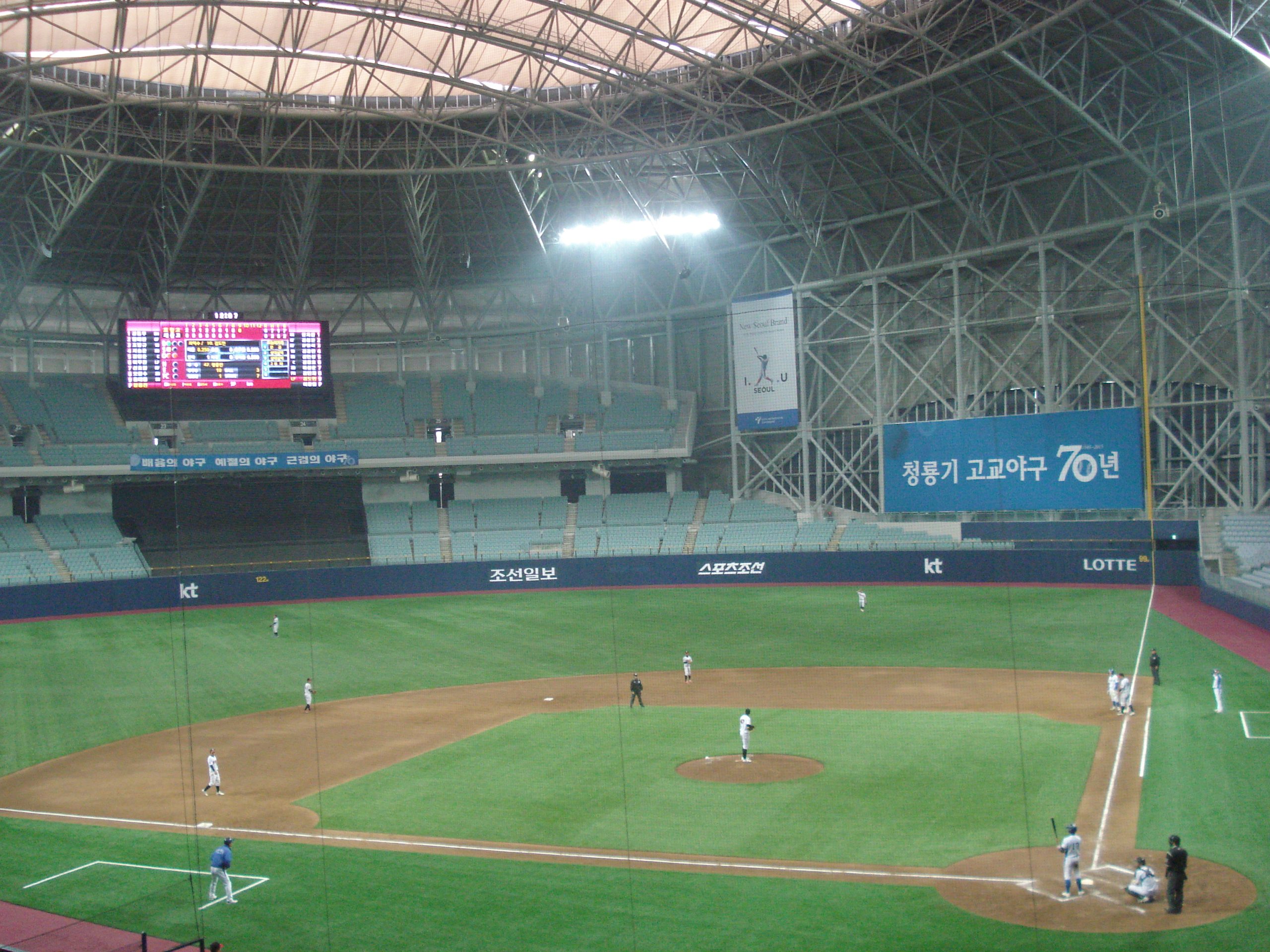
Photo: A KBO game underway inside Gocheok Sky Dome — Source: Wikimedia Commons (CC BY)
The full price of admission comes down to a few thousand won, a passport, a can of beer, and an open mind — and in return, one of the most joyful evenings Seoul has on offer.