
Of all the royal sites in central Seoul, Jongmyo Shrine is the one that refuses to dazzle. There are no painted eaves here, no gilded throne room, no photogenic pavilion mirrored in a pond. What you find inside Jongmyo Shrine is a single, impossibly long dark-wood hall in a vast empty stone courtyard. The hush feels almost physical. Given the right slot in an itinerary and the right frame of mind, it becomes the most quietly moving hour in the old city. Arrive palace-fatigued and short on context on day six of a trip, though, and it registers as little more than a long grey wall. The difference between those two experiences is almost entirely about preparation.
This is the Confucian royal ancestral shrine of the Joseon dynasty — the place where the spirit tablets of Korea’s kings and queens rest. Ancestral rites have run here unbroken for more than 600 years. UNESCO inscribed Jongmyo Shrine as a World Heritage Site in 1995. It remains the oldest and best-preserved Confucian royal shrine anywhere. That is a formidable résumé for a place that looks, at first glance, like almost nothing. The contrast between the weight of the history and the plainness of the architecture is the point.
- Address: 157 Jong-ro, Jongno-gu, Seoul (종로구 종로 157)
- Hours: 09:00–18:00 (Feb–May, Sep–Oct) · 09:00–18:30 (Jun–Aug) · 09:00–17:30 (Nov–Jan). Last entry ~1 hr before closing. Closed Tuesdays.
- Price: ₩1,000 for foreign visitors aged 19–64; free for foreign visitors 18 and under (Korean nationals enter free up to 24 and from 65), and free for anyone in hanbok. Free for everyone on Culture Day (last Wednesday of the month). The ₩6,000 Royal Palace Pass (valid six months) adds the four grand palaces, though not Changdeokgung’s Secret Garden.
- Getting there: Jongno 3-ga Station (Lines 1, 3, 5), Exit 11 — about a 5-minute walk.
- ⏱ Time needed: 1 to 1.5 hours
- 🔗 Nearby: Changdeokgung (next door), Changgyeonggung (now walkable via the reopened forest bridge), Insadong, Gwangjang Market
- Verified as of August 2026
A single long hall, and why it stops people
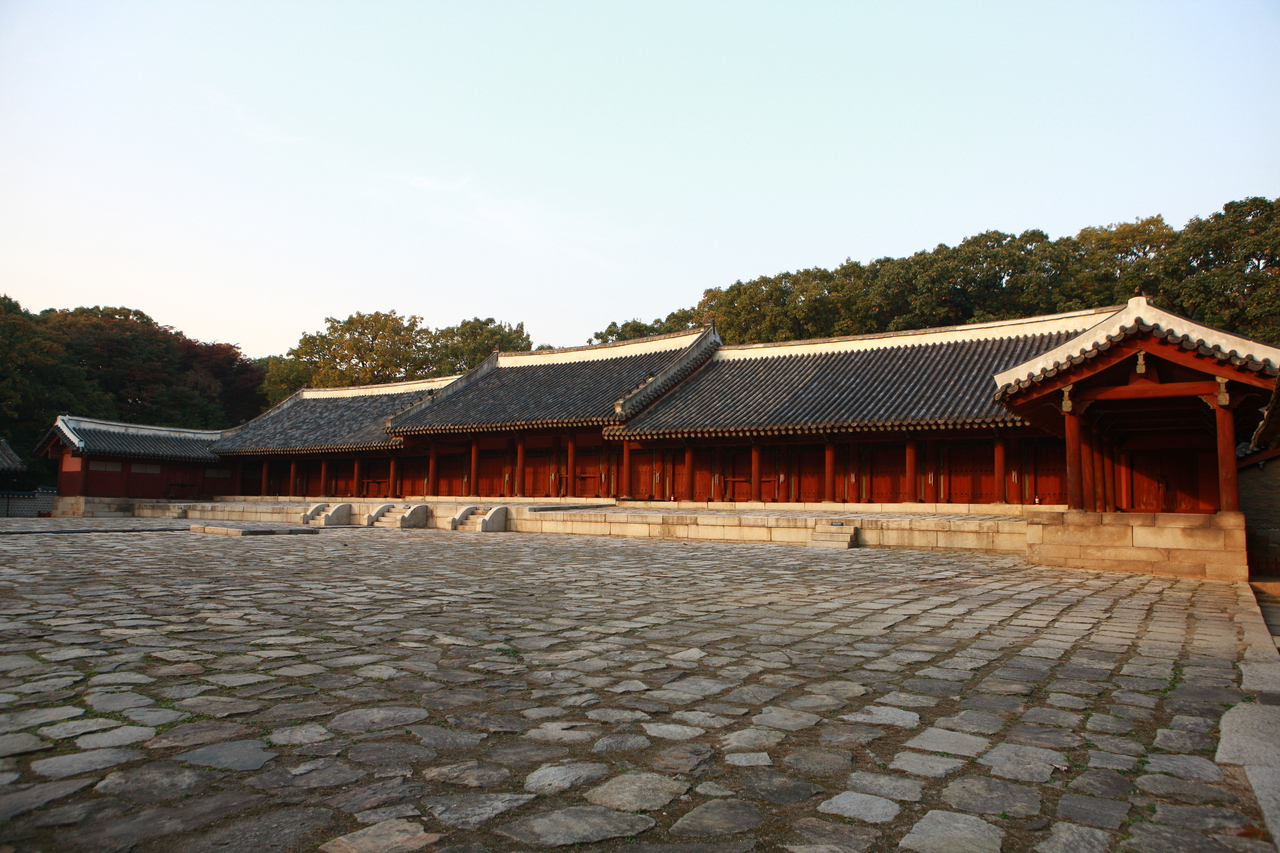
Through the gate, the raised stone spirit path leads to Jeongjeon — the main hall, and the reason Jongmyo exists. It is the longest single building of traditional design in Korea. A low, dark colonnade stretches on and on, with 19 identical spirit chambers behind 19 identical doors. The rhythm repeats like a held breath. There is no ornament to pull the eye anywhere in particular. The entire architectural language is Confucian restraint rendered in wood and stone — beauty through solemnity rather than color.
One current note, because older Korean blog posts will tell you otherwise. Jeongjeon spent five years behind scaffolding for structural repairs, and its spirit tablets sat in temporary safekeeping at Changdeokgung. That work is finished. The tablets were carried back in April 2025 in a procession last performed in 1870, and the annual rite returned to the restored hall that May. What you see today is the hall itself, not a construction screen.
Behind it stands Yeongnyeongjeon, the Hall of Eternal Comfort, holding additional tablets in a slightly smaller, gentler echo of the main hall. You view both from the outside. The chambers stay closed, exactly as intended. That is worth knowing before arrival — this is a place read and felt rather than photographed. The drama lives in the proportion and the silence, not in any single object on display.
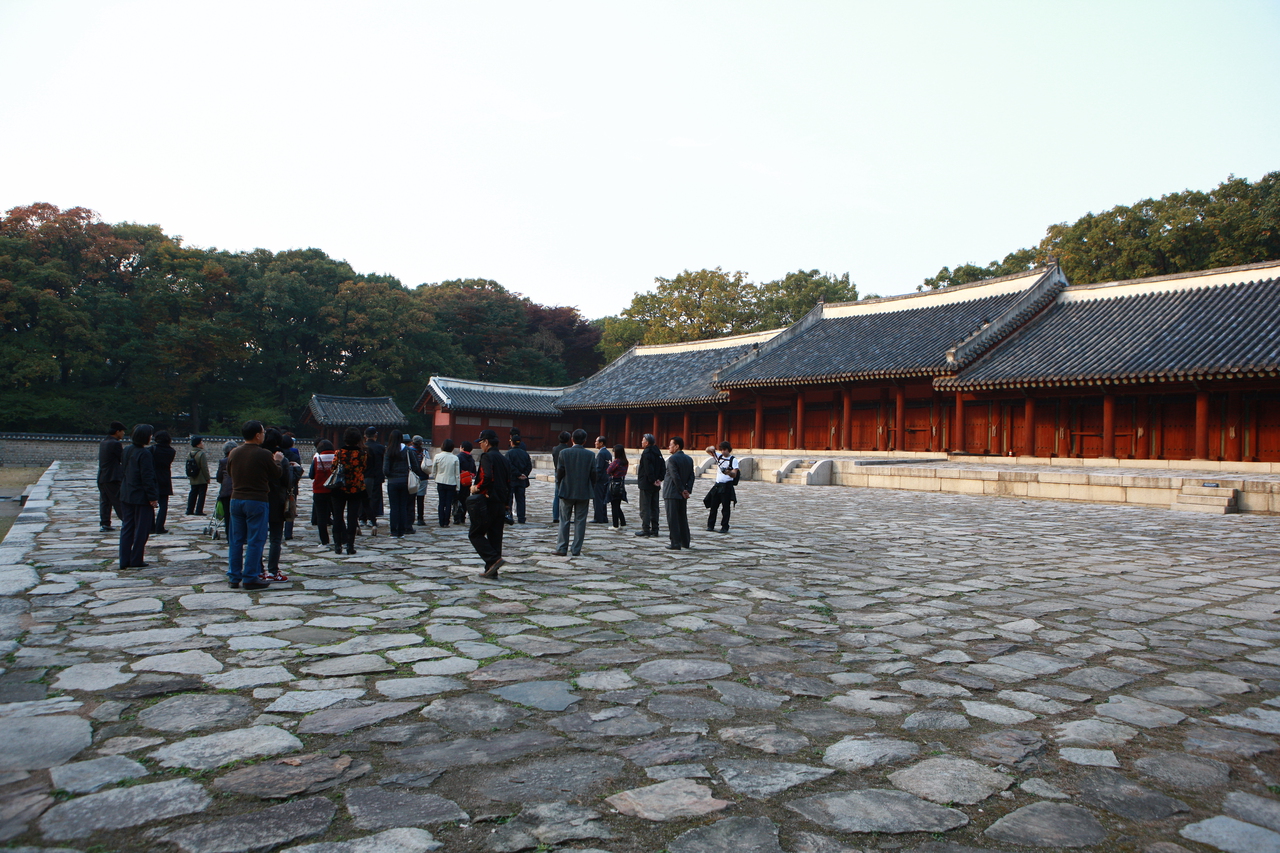
Photo: 종묘 / Source: Korea Tourism Organization 관광사진갤러리 (KOGL Type 1)
The weekday rule that catches most first-timers
One entry rule trips up more travelers than anything else here. Commit it to memory: on any day that is not a free-viewing day — Mondays, Wednesdays, Thursdays and Fridays, since Tuesday is closed — you can only enter on a timed guided tour. There is no free wandering — visitors join a group, move at the group’s pace, and leave when the tour does. English tours run at 10:00, 12:00, 14:00, and 16:00. They last about an hour, and the ticket covers them. You need no booking, but buy the ticket before the tour time, since slots can fill.
The exception makes for the better visit anyway. Saturdays, Sundays, public holidays and Culture Day (the last Wednesday of the month) are free-viewing days. The grounds open for self-paced roaming — linger as long as you like, and skip the herding. If a schedule has any flex at all, a Saturday is the day to aim for.
The quietest window is the first tour, or the first free-viewing hour. The 10:00 weekday slot and the 09:00 Saturday opening both land before the mid-morning tour buses reach nearby Changdeokgung. Pay cash or card at the gate. The ₩1,000 adult fee is one of the cheapest heritage tickets in the city, cheaper than a single palace. Hanbok wearers get in free.
The one weekend the shrine comes alive
Once a year, Jongmyo Shrine stops being a quiet museum-piece and becomes a living rite. Jongmyo Daeje, the royal ancestral ceremony, takes place on the first Sunday of May. A smaller version sometimes runs in November too. The day delivers the full UNESCO-listed program. Expect the ritual itself, the haunting Jongmyo Jeryeak court music, and the slow geometric Ilmu line dance. A royal procession sets out from Gwanghwamun. It counts among the most authentic living-heritage spectacles in Seoul.
Because it happens only once a year, it is not worth bending an entire itinerary around. But if your trip already overlaps that weekend, rearrange a day to be there. Nothing else in the city comes close.
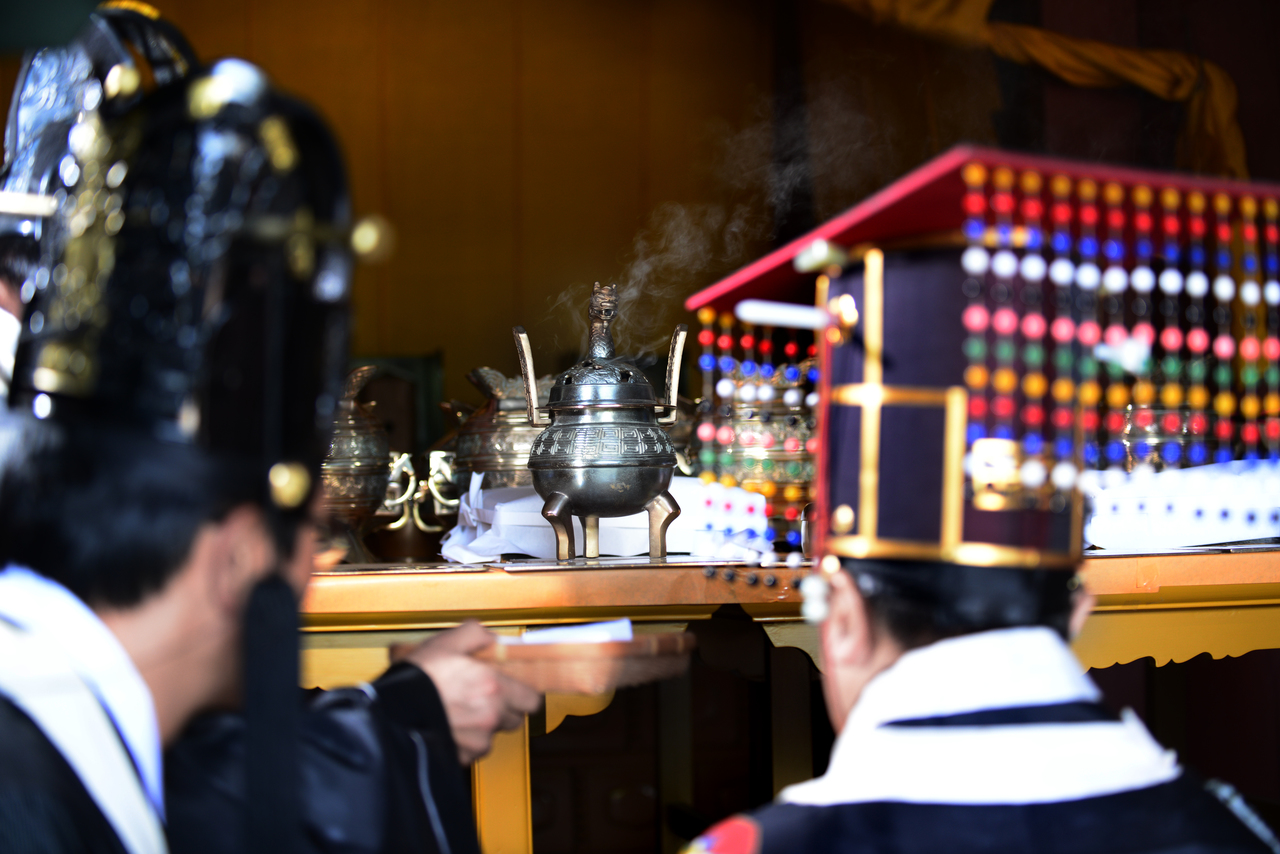
Photo: 종묘제례 (Jongmyo Daeje rite) / Source: Korea Tourism Organization 관광사진갤러리 (KOGL Type 1)
The downsides of Jongmyo Shrine to weigh first
It is better to arrive with clear expectations than to leave disappointed, so here is what genuinely frustrates visitors. This is the least visually flashy of central Seoul’s royal sites. Set beside the painted splendor of Gyeongbokgung or the garden romance of Changdeokgung, Jongmyo can read as austere, monochrome, even empty. That goes double if you arrive late in a long trip already saturated with palaces.
The guided-tour requirement is the other sticking point. On a weekday you spend much of the hour standing at a placard while the guide talks, then shuffling on. If you wanted to wander and reflect, it feels rushed. There is a bigger cost the schedule hides, though. The timed tour covers Jeongjeon, Yeongnyeongjeon and the Jaegung, and that is essentially it. The other buildings on the grounds — among them Hyangdaecheong, Jeonsacheong, Mangmyoru and the musicians’ hall Akgongcheong — are simply not on the route. Repeat visitors name this as their main frustration, and it is the strongest argument for coming on a free-viewing day. The halls stay closed and the on-site signage is thin. So visitors who don’t grasp the Confucian context sometimes leave calling it “just another palace.” It isn’t — but it rewards context and doesn’t hand that context over for free. Two practical caveats. The wooded approach paths are pleasantly shaded, but the great courtyard itself is wide open with none at all, so a summer midday visit heats up fast. A late-afternoon slot from June through August is markedly more comfortable. And the ground here is largely gravel and uneven stone, which makes hard going for a wheelchair or a pushchair. This is a beautiful place, but not a barrier-free one.
Who tends to love it — and who tends not to
Those who leave most moved come for history with real weight. Others are curious about Korea beyond the colorful-palace highlight reel. Some simply want one calm, contemplative hour in the middle of a loud city. That reward deepens on a Saturday, or when you pair the visit with the May rite.
Skip Jongmyo Shrine entirely if history holds little interest, palace-fatigue has set in, and your remaining Seoul time is short. In that case, spend the slot on Changdeokgung’s Secret Garden or a market. There is no shame in that call. Jongmyo Shrine is a deliberate, quiet choice rather than a crowd-pleaser, which is precisely why the right traveler finds it unforgettable.
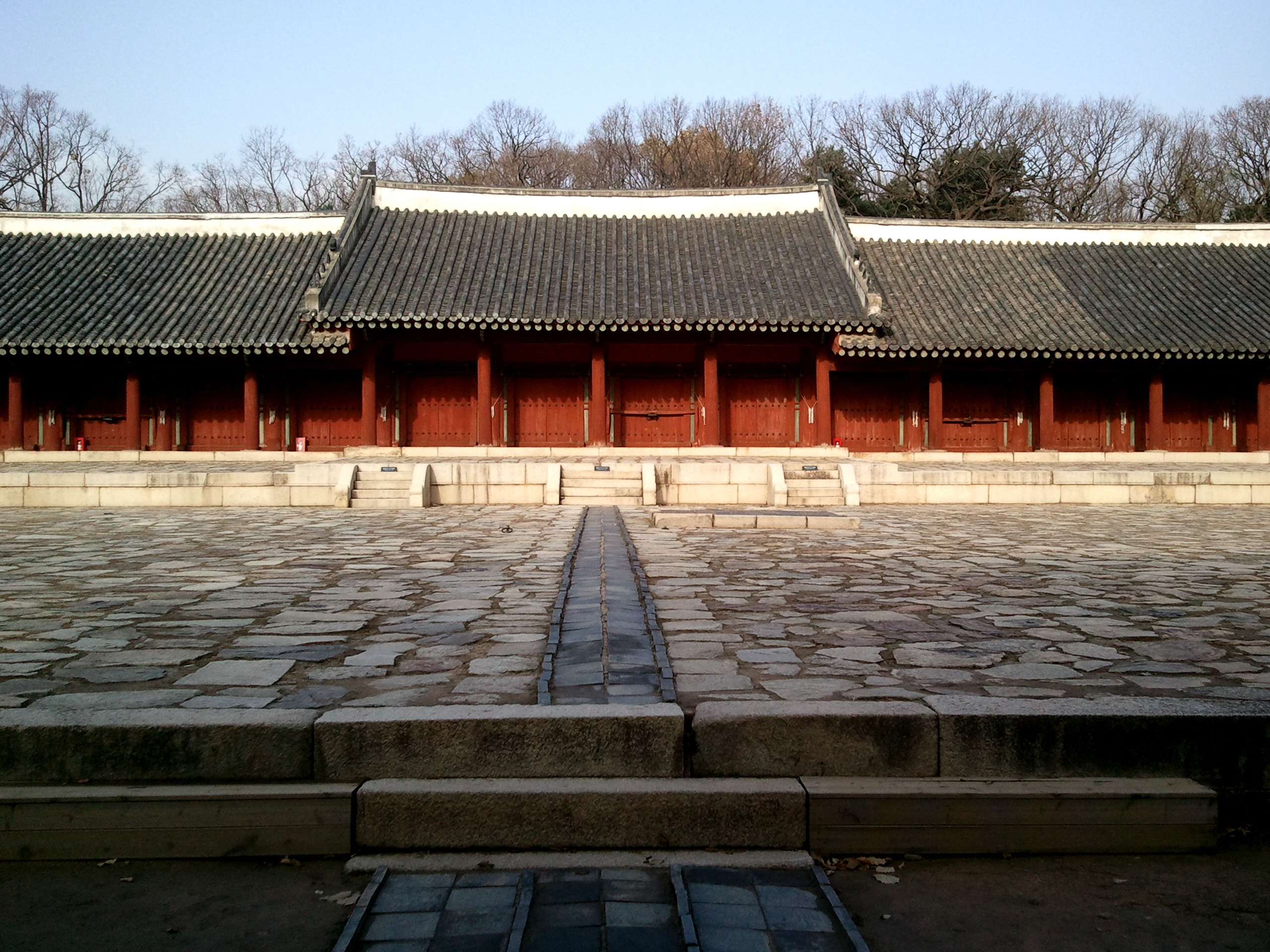
Photo: 종묘 영녕전 (Yeongnyeongjeon) — 지홍 민, CC BY-SA 4.0 via Wikimedia Commons
Building it into a Jongno day
Jongmyo sits squarely in the historic core, so it slots cleanly into a Jongno day. Here is the order that works. Do Jongmyo Shrine first, while attention is fresh and the quiet lands hardest. Then cross to Changgyeonggung or Changdeokgung next door, and finish in Insadong or Gwangjang Market. For anyone palace-hopping anyway, the ₩6,000 Royal Palace Pass pays for itself quickly against the à la carte fees of four separate palaces. For more solemn-Seoul ideas, browse the rest of our Heritage Sites guides.
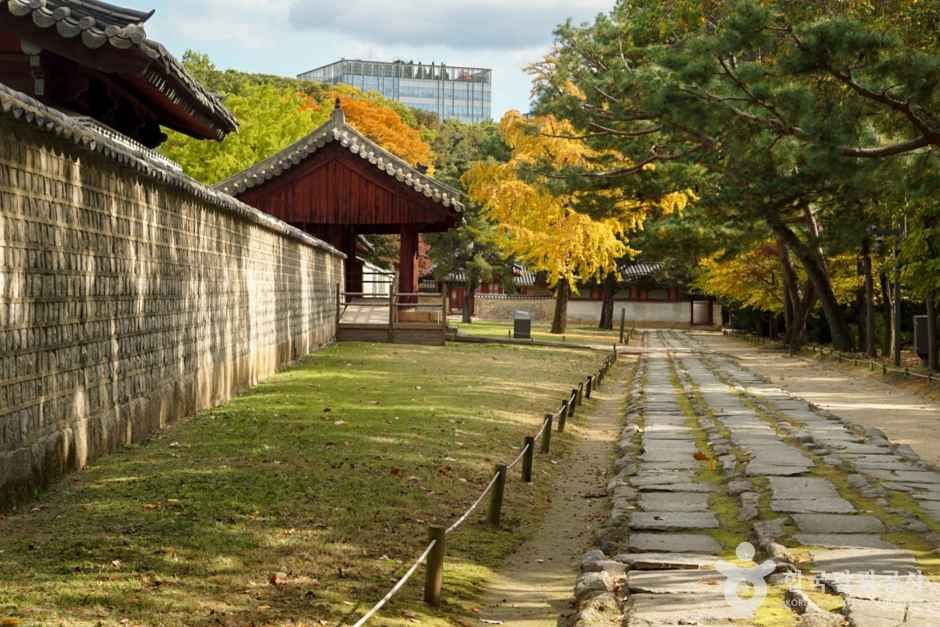
Photo: 종묘 (autumn spirit path) / Source: Korea Tourism Organization (KOGL Type 1)
Come for the UNESCO badge if that is the draw. What lingers, though, is the quiet. A single long hall, a wide empty courtyard, and 600 years of continuity settle a whole afternoon down. That is the real reason Jongmyo Shrine still matters.