
Few things read as “Seoul” faster than that slender spire on Namsan, glowing over the city after dark. N Seoul Tower is the capital’s most photographed landmark. It is also one of its most argued-over. The views genuinely impress. But the queues, the climb, and a ₩29,000 ticket leave plenty of travelers wondering whether it earns a slot on a tight itinerary. Here is what a visit actually involves — and where it falls short.
- Address: 105 Namsangongwon-gil, Yongsan-gu, Seoul — atop Namsan (Namsan Park), central Seoul.
- Hours (observatory): Weekdays 10:00–22:30; weekends & holidays 10:00–23:00. Last admission 30 minutes before close. Open year-round.
- Price: Observatory admission ₩29,000 adults / ₩23,000 children (3–12) & seniors (65+). The Namsan Cable Car is separate: about ₩15,000 round-trip / ₩12,000 one-way for adults. Prices change — confirm before buying, and check resellers for discounted e-tickets.
- Getting there: Myeongdong Station (Line 4), Exit 3. From there, it is a 10–15 minute uphill walk to the Namsan Cable Car base station. Alternatively, take a Namsan “orange” shuttle bus (routes 02, 03, 05) straight to the tower plaza, or hike up through Namsan Park.
- ⏱ Time needed: 2–3 hours, including getting up the mountain and queue time at peak hours.
- 🔗 Nearby: Myeongdong shopping & street food, Namsan Park trails and pavilions, and Namsangol Hanok Village.
- ✅ Verified as of June 2026.
A tower on a mountain: the layout most guides skip
N Seoul Tower opened to the public in 1980. It stands atop Namsan, a 243-metre forested hill rising straight out of central Seoul. Add the mountain to the tower and the deck lands around 480 metres above sea level. That is why the panorama runs clear across the city to the mountains ringing it. On a clear evening you can trace the Han River easily. The Gangnam and Yeouido high-rises stand out. Then the whole grid flips from grey daylight to a carpet of light.
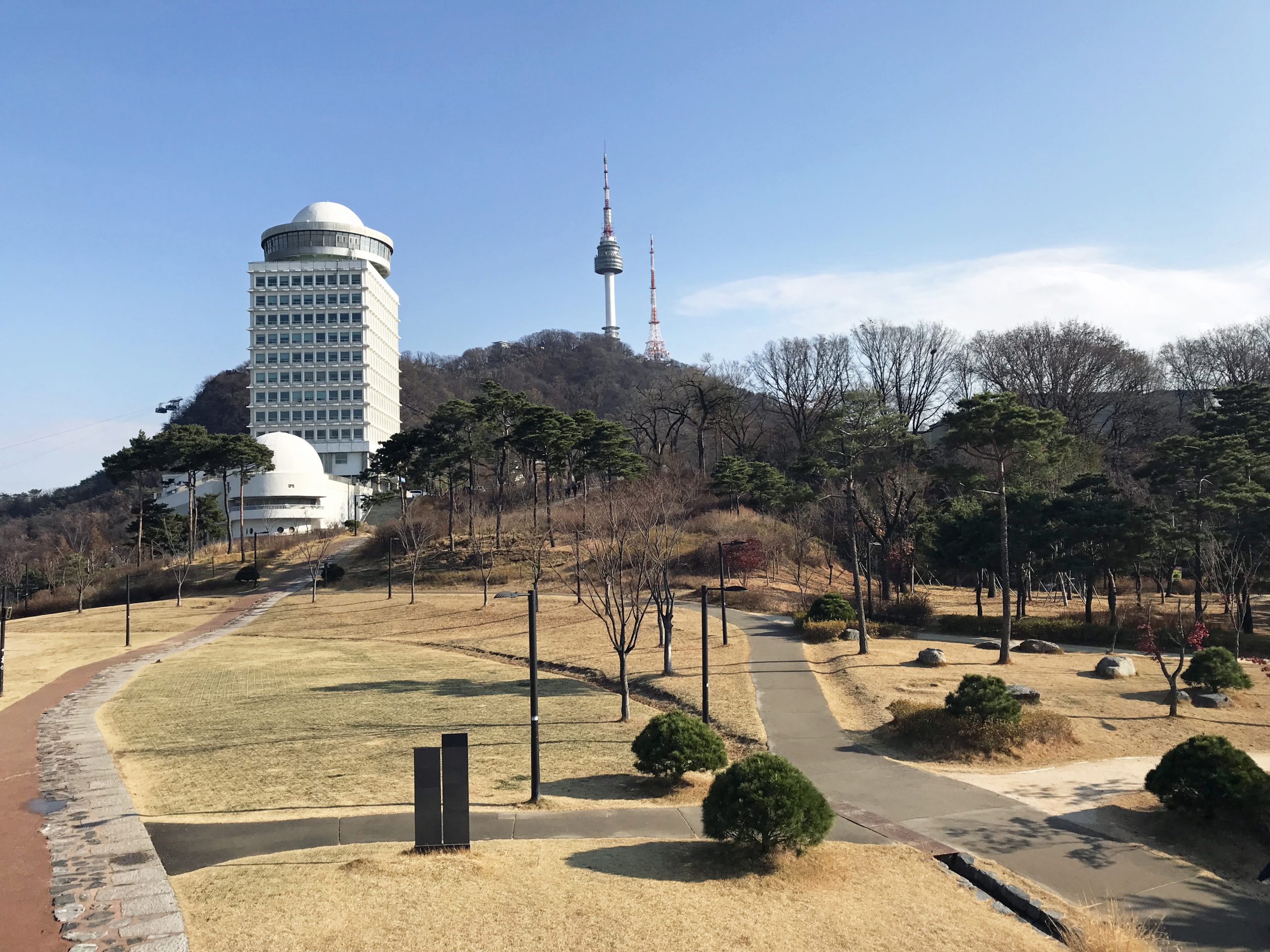
Photo: N Seoul Tower rising above Namsan Park — Wikimedia Commons (CC BY-SA).
Here is the detail worth understanding before you go. A visit is really three separate layers, and each one has its own price. Layer one is simply getting up Namsan — cable car, bus, or on foot. That already drops you at a breezy hilltop plaza with sweeping views and the famous “locks of love” railings. All free. Layer two is the tower’s base level: cafés, casual restaurants, a gift shop. Layer three is the only paid one. It is the enclosed observatory higher up the spire, with windows labelled toward world cities. Deciding which layers you actually want is the whole game. Most of the iconic images people associate with this place are shot from the free levels, not from behind observatory glass.
Doing the maths on the ticket
Because the costs stack, price the routes before you commit. A budget approach gets you a long way. The shuttle bus up runs roughly ₩1,500 with a transit card, and the hilltop plaza is free. That is the postcard skyline for the price of one fare. Add the cable car for the glass-sided ride and you are near ₩15,000 round-trip. Add the observatory and a solo visitor clears ₩44,000. A couple approaches ₩90,000. Note that the child and senior rate of ₩23,000 covers the observatory only, not the cable car. Free deck versus paid deck is the decision that moves your total the most.
What keeps the crowds coming
The night view is the headline. Seoul after dark from Namsan is the single best reason to come. The daytime view reads as comparatively flat. The scene changes completely as the sky colours and the lights switch on. That makes late afternoon into early evening the sweet spot. Arrive 30–45 minutes before sunset. You settle in, ride up in daylight, and watch the transition instead of fighting the queue at full dark.
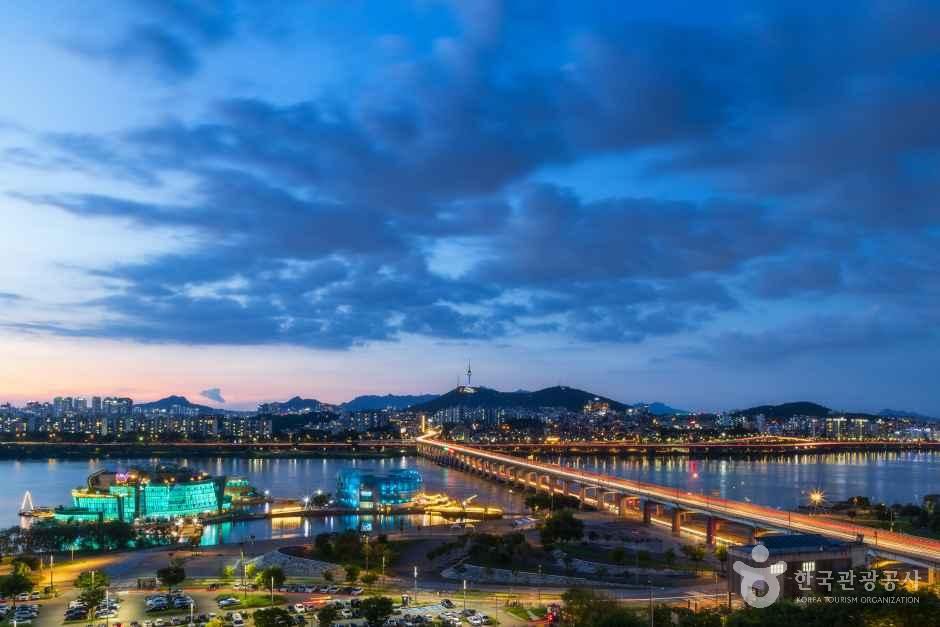
Photo: Seoul’s skyline at twilight, with N Seoul Tower on the Namsan ridge — Source: Korea Tourism Organization (KOGL Type 1).
The cable car has its own following. The short glass-sided ride up is part of the fun, not just transport. At the top, the free outdoor deck and the love-locks terrace earn their reputation. Romantic, iconic, and free. Above all, N Seoul Tower is a “do it once” Seoul experience. Even the skeptics tend to be glad they saw the city laid out beneath them at least one time.
The honest downsides of N Seoul Tower
Queues are the real cost here, and they stack. The observatory runs on just two elevators. Even with an early ticket number, expect around 20 minutes. At busy times the board quotes closer to 50. On a packed evening, a full hour is not unusual. The cable car keeps a separate queue of its own. Thirty to forty minutes at the platform is common, and that applies coming down as well as going up.
The ground floor is where the crush concentrates. It is a narrow space with a long line folded into it. Things ease once you are inside the observatory, where there is actually room to take photos. So the queue feels far worse than the deck itself.
Air, access, and the walk up
Then there is the air. Fine dust and haze flatten the panorama completely. More than one traveler has made the whole trip only to find the city smudged grey. Check the air quality alongside the forecast, not just the rain.
Access is a genuine problem in places. The route down to the Hancook restaurant level is stairs only, with no separate lift. That is awkward for wheelchair users, strollers, and older visitors. Anyone hauling luggage will struggle too. The walk up from Myeongdong is steep enough that people warn each other about it. If the hill worries you, the free Namsan Oreumi incline lift takes the worst of it out.
The value question also refuses to go away. That ₩29,000 ticket looks steep when the free terrace already delivers the view most people came for. Dining at the top runs expensive as well — enough that visitors wish afterwards they had hunted for a discount first.
Two practical stings to close. Parking fills up on busy days, so assume the lot is full and take transit. And everyone leaves at once, which turns the trip back down at closing into a crush — on the cable car and at the bus stops alike.
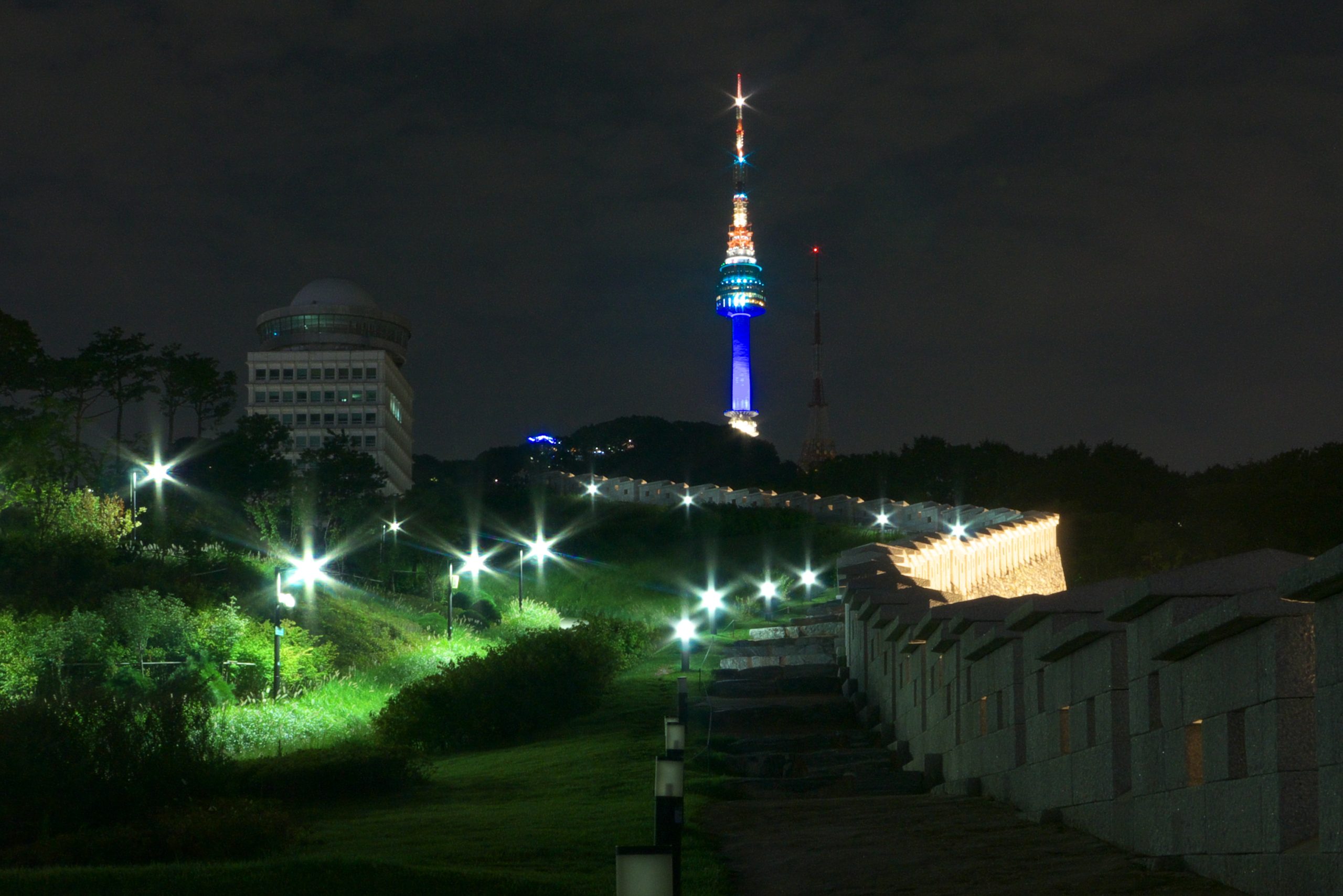
Photo: Seoul’s illuminated night skyline seen from Namsan — Wikimedia Commons (CC BY-SA).
The right traveler for Namsan
The tower rewards first-timers who want the classic, all-in-one view of the city. The best version is a clear evening around sunset. Treat the cable car ride and the love-locks terrace as part of the deal. Couples and night-photography fans get the most out of it.
The paid observatory is the easiest thing to skip, though not the hilltop itself. Skip it if you are on a budget, if you dislike crowds, or if the air is hazy. Plenty of travelers get exactly the view they wanted from the free outdoor deck. And if you have already found a quieter rooftop or riverside viewpoint you love, this one can feel like a box-tick.
Whichever route you choose, the strongest version of N Seoul Tower stays the same. Head up around dusk on a clear day. Buy tickets ahead to skip a line. Then pair it with Myeongdong’s street food just below. For more of the city’s landmarks, browse our other Seoul icons & views.