
Think of a Korean convenience store the way a local does: not as a place to grab a snack in a pinch, but as a full-service node in the city’s infrastructure. Travelers who crack this code eat better, spend less, and move through Korea far more comfortably than those who don’t. Here’s everything you need to know.
The Big Three: CU, GS25, and 7-Eleven
Korea has roughly 54,852 convenience stores across its four main chains as of end 2024 — with estimates pushing toward 60,000 by summer 2025. That density means you’re almost never more than a few minutes from one. But the chains aren’t interchangeable.
CU leads on sheer store count at 18,458 locations and earns its reputation for affordable everyday staples. Pricing tends to be slightly sharper on basics, and the store brand products are solid. If you’re watching your budget, CU is your default.
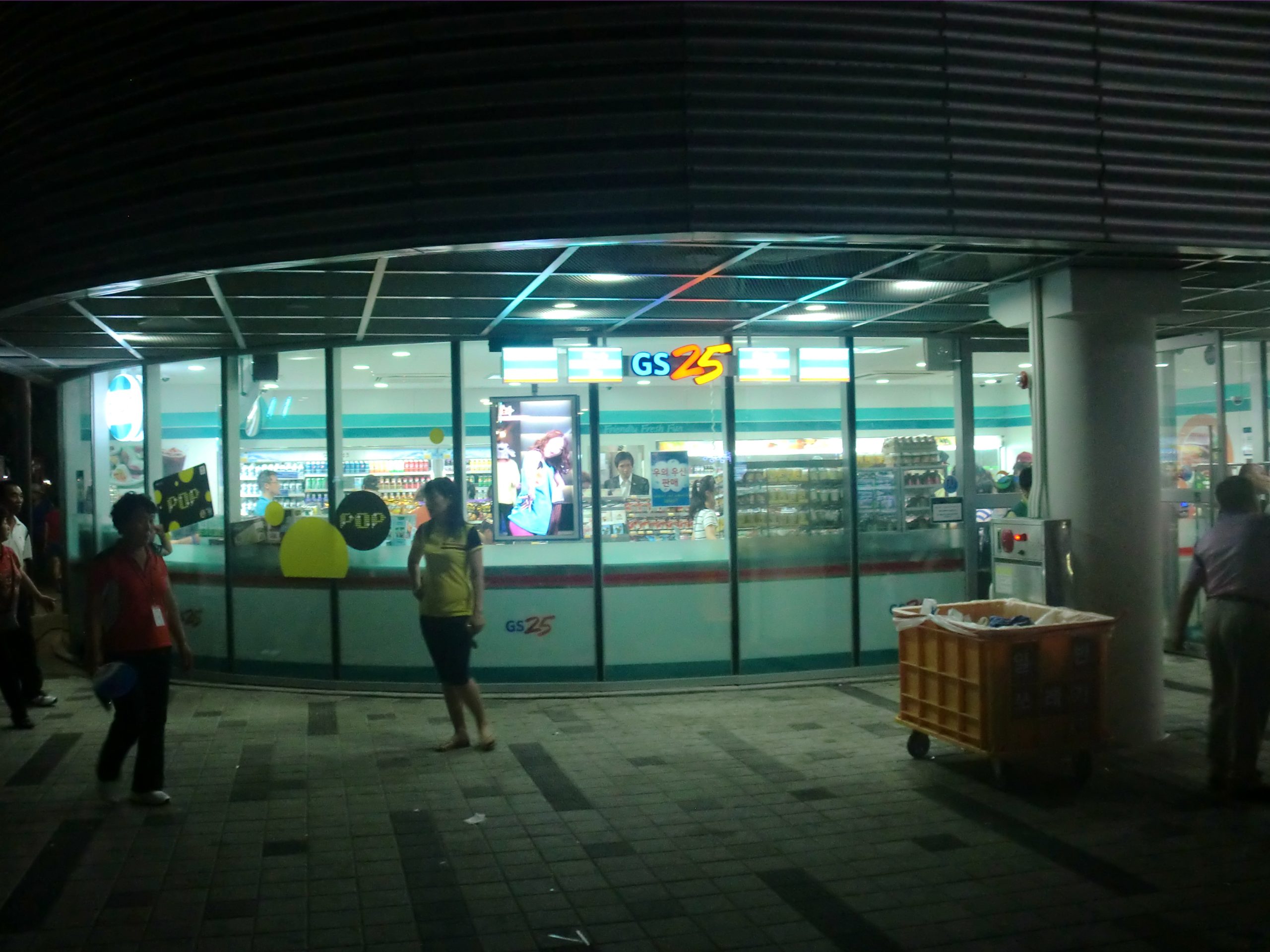
GS25 runs a close second at 18,112 stores and plays a different game: it drops new limited-edition products every Tuesday and Thursday. GS25 is where you’ll find the viral items first — the foods filling your Instagram Explore page are often a GS25 exclusive. The chain also runs GS Postbox, its own parcel logistics network, which is useful if you need to send luggage ahead.
7-Eleven sits at roughly 11,000 Korean locations and stocks more international brands than the domestic chains. If you’re craving something familiar from back home, 7-Eleven is worth checking. It also popularized the slice-pizza counter: Margherita at 7,500 KRW, pepperoni at 8,500 KRW — a surprisingly decent late-night option.
Emart24 rounds out the four major chains but is far less common; you can treat it as a bonus encounter rather than a planned stop.
Must-Try Korean Convenience Store Foods
The hot food section near the register is where Korean convenience stores separate themselves entirely from anything you’ve experienced elsewhere.
Triangular gimbap (삼각김밥) costs 1,200–1,800 KRW and is arguably the most practical food in Korea. Tuna-mayo, spicy tuna, bulgogi, kimchi — the fillings rotate constantly. Peel the packaging in three steps following the numbered tabs; the seaweed stays crisp until the moment you open it. Eat two and you’re properly fed.
Tteokbokki cups run 2,000–3,000 KRW. They’re spicy rice cakes in a compact cup format, heated in the microwave. The spice level is real — not adjusted for foreign palates.
Hoppang (호빵) is a steamed bun sold from a heated display case for around 1,300 KRW. Fillings include red bean paste, pizza, and kimchi. It’s a winter staple but increasingly available year-round.
Fried items — fish cakes on sticks, corn dogs, sausages — sit in heated rotating displays near the register. Point, pay, eat standing up. Prices range from 800 to 2,000 KRW per item.
Cup ramen costs 1,000–1,800 KRW for standard cups. The hot-water machine (라면 조리기) handles everything — see the quick tips section for the exact steps. Shin Ramyun and Buldak (fire noodle) varieties are the classic starting points, but seasonal and limited editions appear constantly.
Seasonal items are worth watching for. Winter brings sweet potato and chestnut flavors into everything. Summer pushes cold noodle cups and melon-cream desserts to the front of the aisle.
Snacks, Drinks, and Hidden Gems
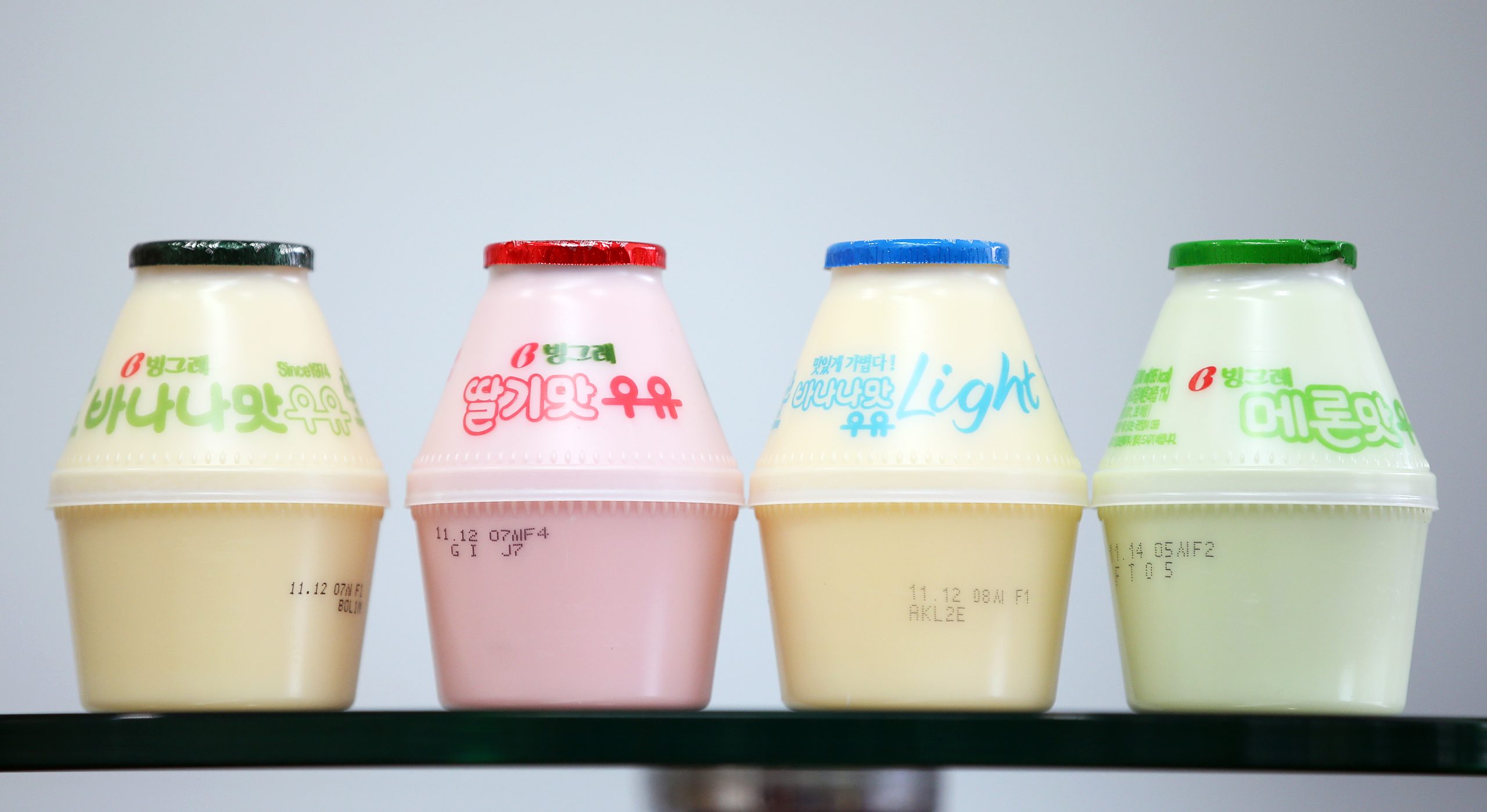
The refrigerated drink section deserves more attention than most travelers give it. Banana Milk (바나나맛 우유) in its iconic rounded bottle costs 1,500–1,800 KRW and is a genuine Korean cultural artifact — not tourist kitsch. Pocari Sweat at roughly 1,700 KRW is the electrolyte drink of choice after a long walking day or a night out.
Beer deals have evolved since the legendary 4캔 10,000원 (four cans for 10,000 KRW) era. Bundle pricing now runs 12,000–13,000 KRW for four imported cans — Heineken, Asahi, Hoegaarden — still a strong deal relative to bars or restaurants.
Two items defined 2025’s convenience store conversation. Yonsei Milk Cream Bread — a fluffy soft bread filled with fresh milk cream — became one of the most photographed foods in the country, sold in the refrigerated bakery section. The Dubai Chocolate bar, loaded with pistachio filling and kadayif (shredded wheat), went viral globally and sold out repeatedly at every chain. If you see either in stock, it’s worth trying; if you don’t, that’s also part of the experience.
Keep an eye on the snack aisle for limited collaborations between chains and Korean food brands. These rotate fast and are rarely replicated abroad.
How to Pay
Foreign Visa, Mastercard, AMEX, and JCB cards are accepted at the register in all three major chains, chip-and-PIN or contactless. You won’t be turned away for using a foreign card on small purchases — no minimum applies in practice.
T-money, Korea’s transit card, doubles as a payment method at convenience stores. If you’ve already loaded one for the subway, tap it at the register. One important catch: T-money kiosks in stores accept only cash (Korean won) for reloads. Most kiosks do not yet support foreign card top-ups, so carry some cash if you plan to reload.
Apple Pay and Samsung Pay are accepted at CU, GS25, and 7-Eleven. Tap-to-pay with your phone or watch works reliably — arguably the smoothest payment method if your home bank card is set up for mobile wallets.
For cash withdrawals, convenience store ATMs accept most foreign cards and run 24 hours. Fees are honest but not cheap: expect 3,000–5,000 KRW per transaction from the Korean ATM side, plus whatever your home bank charges. Withdraw enough to avoid repeated fees.
Services Beyond Food
The ATM is the obvious one. Beyond that, convenience stores have quietly absorbed a surprising slice of daily logistics.
Parcel pickup and drop-off (택배): GS25 runs GS Postbox, allowing you to receive or send packages directly at the store. CU operates its own network. If you’ve ordered something online in Korea or need to forward luggage to your next destination, this is far cheaper and faster than hotel concierge services.
Printing is available at kiosk machines in many locations — useful for boarding passes, visa documents, or photos. The interface has English options.
Phone charging stations (portable battery rentals) are installed in select locations across all major chains. Fees vary; the kiosk interface walks you through it.
Luggage storage through GS25 runs approximately 4,490 KRW per bag per day, booked through an app. It won’t replace a dedicated luggage storage facility near a major station, but for a day between check-out and a late flight, it’s a practical option.
24-Hour Culture — The Real Korea After Dark
Korean convenience stores don’t just stay open at night — they become a different kind of place. Near universities and in nightlife districts, the plastic tables and chairs set up outside become the most democratic eating space in the country. At 1am, students, office workers finishing late, couples, and solo travelers all share the same folding furniture without ceremony. Nobody finds this unusual because it isn’t.
What changes after midnight: the hot food counter often gets restocked rather than wound down. The beer fridges stay full. The seating outside is more occupied, not less. Street energy flows through the store.
If you want to understand how Korean cities actually function at night — beyond bars and clubs — sit outside a convenience store near Hongdae, Sinchon, or any university district at 1am with a cup of ramen. It’s one of the more honest windows into daily life here that no tour offers.
For more on navigating Korea’s cities and neighborhoods, browse our Travel Tips archive.
Quick Tips for First-Timers
Hot-water machine (라면 조리기) — step by step:
- Peel the ramen cup lid back to the halfway point
- Remove the flavor packet and add it to the cup
- Place the cup in the machine’s holder
- Press the button — the machine dispenses the correct water amount automatically
- Close the lid (press down or fold it back over) and wait 3 minutes
- The machine is fully self-serve; no staff assistance needed
Microwave use: The microwave near the register is free for any paying customer. Open your packaging slightly before heating — sealed plastic bags can burst. Staff will not help you operate it, but it’s a standard residential-style unit.
Trash sorting: Bins are labeled and separated — food waste, bottles and cans, general plastics. Sorting is mandatory in Korea, not optional. Three separate bins are usually clustered together near the exit; use them correctly.
Seating etiquette: Indoor and outdoor seating is available to any paying customer. The unwritten norm is roughly 15–20 minutes if the space is crowded. During off-peak hours, no one will rush you. Reserving seats with bags while you shop is accepted practice.
Check the app: Both CU (CU멤버십) and GS25 (나만의냉장고) have apps with loyalty points, coupons, and digital receipts. They require Korean phone verification for full features, but browsing sale items is open to anyone. Worth downloading if you’re in Korea for more than a few days.
The Korean convenience store rewards the traveler who slows down and pays attention. Almost every chain stocks something new this week that wasn’t there last week. That restlessness — constant product rotation, seasonal specials, viral items — is part of what makes it worth stopping in even when you don’t need anything.